Book Review: The Witch Who Came In From The Cold

witch who came in from the coldThe Witch Who Came In From The Cold (The Complete First Season)
by Lindsay Smith, Max Gladstone, Cassandra Rose Clarke, Ian Tregillis, and Michael Swanwick
Magical Realism / Historical Fiction
616 pages
Published 2016

The Witch Who Came In From The Cold was originally published as a serial novel, so it’s divided up into distinct episodes, written by different authors. It’s still very coherent as an entire novel, though. This is Season One; there’s a Season Two that I absolutely have to get my hands on. Because this was great.

So it’s Prague, 1970, height of the Cold War. There’s lots of KGB vs CIA secret squirrel stuff going on, but our main CIA spy discovers there’s a second struggle happening behind the scenes, between Ice and Fire, two sects of magic-wielding sorcerers. This makes things incredibly complicated, because Ice and Fire are philosophical groups; Ice likes the world the way it is, Fire wants to change it, even if that change comes at the cost of destroying the world. Because these differences are philosophical, they cross national loyalty lines. So a CIA agent and a KGB agent might find themselves on the same side of a magical problem, and risk their careers and lives to work with each other to solve it.

It’s a fascinating skewing of a the spy genre, and I really enjoyed it. Most of the problems center around Hosts – mortals who have (usually unknowingly) bonded with an elemental spirit, and so have incredible, earth-shattering powers. Fire wants to use these Hosts to change the world, even if it means bring about the Apocalypse. Ice wants to prevent this, and so struggles to keep Hosts out of the hands of Fire. And when a Host is also a key player in the struggle between Russia and the US, things get VERY complicated.

I really want to learn more about the Hosts and their powers; I’m hoping Season Two gets into that more. The magic is mostly charms and ley lines, with chants and Elemental spirits mixed in. I’m also hoping Season Two gets more into the conflict between Ice and Fire, and maybe explains how it started? I’d love to learn that.

All in all, it was a great book, and I need to track down the second.

From the cover of The Witch Who Came In From The Cold:

PRAGUE, 1970

Great powers eye each other across the Iron Curtain. Secret warriors wage secret wars – some with guns, some with words, and some with magic.

CIA officer Gabe Pritchard has a mission: to transport a critical defector back to the US. But Gabe also has a secret. On a job in Egypt he stumbled into what he thought was a Soviet cell meeting – but Soviet cells don’t have altars or sacrificial knives. Now Gabe has splitting headaches, like there’s something burrowing inside his skull, and finding help means joining a different, and much colder, war.

Tanya Morozova works for the other shop in town – at least, when her KGB bosses are watching. But the young intelligence officer has a second secrete life as an agent of the Ice, an ancient order of sorcerers fighting for control of elemental Hosts who have the power to change the world – or destroy it. As Tanya’s enemies catch a critical Host in their web, she’s running out of options. Gabe Pritchard may be her only chance – or the  bait of one last deadly trap.

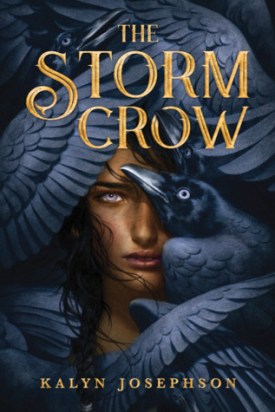
Book Review: The Storm Crow

the storm crowThe Storm Crow
Kalyn Josephson
Young Adult Fantasy
352 pages
Published July 2019

There is so much to love about this book. In some ways, it’s your typical young adult fantasy. The actual plot isn’t anything outstanding; but the characters – oh, the characters.

The book opens on the crippling of Rhodaire and the slaughter of its main strength, the magical, elemental crows that are woven into the fabric of Rhodairian life. The crows help plow, bring rain, bring sun, help heal, and even help man the forges and supply the materials worked therein. In one fell swoop by Rhodaire’s enemies, the crows are erased, and the kingdom struggles to stay afloat as a society. The queen is killed in the same cataclysm that kills the kingdom’s crows, leaving her two daughters to rule in her stead. Princess Caliza, the elder of the two, steps into her new role as queen while Princess Anthia, who was about to be a crow rider, falls into a deep depression. Her depression is named on the page, but I think she also has some PTSD going on.

Thia’s depression and PTSD are core parts of her character, and it’s wonderful to see that kind of representation in heroic fantasy like this. Thia eventually finds a reason to struggle forward, but her fear of fire continues to haunt her and give her flashbacks.

Thia’s best friend/sister of her heart (and bodyguard) is also into women, so that’s another bit of representation. She’s also just incredibly amusing.

I’m a little worried about the love triangle that’s forming; the person Thia falls in love with is just – it’s too easy. Too convenient. I don’t like it. I prefer the other option – the boy who loves Thia but is far too complicated. He is so conflicted, torn between actively opposing the rule of the evil Empress or more subtly staying in her good graces to try to take power peacefully. The book ends with the triangle still unresolved, though, so I’m definitely going to need the sequel to this.

I love how the crows were explained; that they’re more reptilian than bird-like, with anatomy that allows for riders. The author definitely thought through how this could work. I do think it’s a little unlikely that not a single adult crow survives the purge at the beginning of the book; I know the plot requires it, but it seems -really- unlikely. Just – come on. Not a SINGLE crow escapes? But it’s fantasy, so we need to suspend disbelief I suppose.

Ultimately, I loved this book. I definitely have a thing for riders – whether they’re riding phoenixes, dragons, horses, crows, or other magical creatures, I like riders. I will always pick up books with this trope. I can’t wait for the sequel, The Crow Rider!

From the cover of The Storm Crow:

A STORM IS RISING

In the tropical kingdom of Rhodaire, elemental crows are part of every aspect of life . . . until the Illucian empire invades, destroying all the crows and bringing Rhodaire to its knees.

That terrible night has thrown Princess Anthia into a deep depression. Her sister, Caliza is busy running the kingdom after their mother’s death, but all Thia can do is think of everything she has lost, including her dream of becoming a crow rider.

When Caliza is forced to agree to a marriage between Thia and the crown prince of Illucia, Thia is finally spurred into action. And after stumbling upon a hidden crow egg in the rubble of a rookery, she and her sister devise a dangerous plan to hatch the egg in secret while joining forces with the other conquered kingdoms to ignite a rebellion.

Friday 56 – The Storm Crow

the storm crowThe Friday 56 is hosted by Freda’s Voice. The rules are simple – turn to page 56 in your current read (or 56% in your e-reader) and post a few non-spoilery sentences.

This week’s quote is from The Storm Crow, the first volume in a duology. I’m very excited because the main character struggles with depression and PTSD – the first one stated, the second one obvious but not named on the page. Yay for representation! My full review will be up soon.

Kiva eyed me as if seeing something she hadn’t expected to find. “I hate to say it, but Ericen might actually be good for you.” I must’ve looked absurd, because a grin split across Kiva’s face, and she hastened to explain. “Don’t get me wrong. He’s worse than an ice bear in heat, but I haven’t seen you that engaged with something in months.”

I stared at her. “An ice bear in heat?”

She shrugged. “They’re notoriously foul and vicious. And strangely fond of chocolate.” I rolled my eyes, and she laughed. “I’m serious, Thia. You’ve always needed an opponent. Your mother, Caliza, other riders; you’re the most competitive person I know, and Ericen’s nothing if not a challenge.”

Book Review: Periodic Tales

periodic talesPeriodic Tales: a Cultural History of the Elements, From Arsenic to Zinc
by Hugh Aldersey-Williams
Nonfiction / Scientific History
428 pages
Published 2011

I’ve always been more interested in people than science, so I like coming at science from the side, through the stories of scientists. It’s why I ADORED Bill Bryson’s A Short History of Nearly Everything, and giggled my way through Mary Roach’s Bonk. Periodic Tales was billed as a very similar book, but focused on the chemicals that make up the Period Table.

It does tell the stories of the elements and their discoveries. It is quite good. But it has neither the feeling of close friends gossiping that characterizes Mary Roach’s book, or the enthralling storytelling of Bill Bryson. It took me nearly a month to read, a few pages at a time while I ate my breakfast or lunch, whereas I could barely put down either of the other two.

The author tends to rhapsodize about the cultural significance of some of the elements to a rather boring degree, honestly. This was especially evident – and uncomfortable – in the section on calcium. Aldersey-Williams goes on quite the tangent about how calcium/lime is used to make things white, and white is the color of purity, and so calcium is linked with purity, and quotes Melville’s Moby Dick, saying “whiteness refiningly enhances beauty, as if imparting some special virtue of its own, as in marbles, japonicas, and pearls.” This goes on for two entire pages, and nowhere in this sermon on the purity and superiority of whiteness is race mentioned. Anywhere. On one hand, you could say since race is never mentioned, it’s not a screed on white superiority, on the other hand, it’s not denied, either. How did this get past an editor? None of the rest of the book implies racial discrimination, but that section had me side-eyeing the book hard.

It’s a good book for what it is, though a little long-winded. Between the weird section on calcium and the general boring-ness of the writing, I don’t think I can recommend it. Though it does have me thinking I should re-read A Short History of Nearly Everything.

From the cover of Periodic Tales:

Like the alphabet, the calendar, or the zodiac, the periodic table of the chemical elements has a permanent place in our imagination. But aside from the handful of common ones (iron, carbon, copper, gold), the elements themselves remain wrapped in mystery. We do not know what most of them look like, how they exist in nature, how they got their names, or of what use they are to us. Welcome to a dazzling tour through history and literature, science and art. In Periodic Tales, you’ll meet iron that rains from the heavens and neon as it lights its way to vice. You’ll learn how lead can tell your future and why zinc may one day line your coffin. You’ll discover what connects the bones in your body with the White House in Washington, the glow of a streetlight with the salt on your dinner table.

From ancient civilizations to contemporary couture, from the oxygen of publicity to the phosphorous in your pee, the elements are near and far and all around us. Unlocking their astonishing secrets and colorful pasts, Periodic Tales is a passionate journey through mines and artists’ studios, to factories and cathedrals, into the woods and to the sea to discover the true stories of these fascinating but mysterious building blocks of the universe.

Library Loot Wednesday

Just two books this week: Moonshine by Jasmine Gower, a jazz-age sorcerous fantasy, and Waking The Tiger: Healing Trauma, by Peter A. Levine, a self-help-ish book about PTSD.

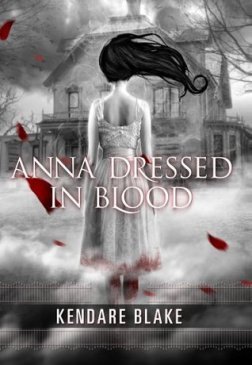
Book Review: Anna Dressed In Blood

anna dressed in bloodAnna Dressed In Blood
by Kendare Blake
Young Adult / Horror
316 pages
Published 2011

Another spooky story for October! On first glance, this one is very similar to Rin Chupeco’s The Girl From The Well, but the plot is actually quite different. It’s still human boy, murderous ghost girl, but here the girl is bound to her house and forced to murder whoever comes inside. Unraveling the WHY is a major part of the plot.

I’d say this one is actually less creepy than The Girl From The Well, though one of the evil things Cas encounters is VERY creepy. Both of these were just about the right amount of spooky for me. I’m actually REALLY disappointed that the sequel is proving very difficult to get my hands on! I had to request it through Marina, my statewide lending program, so I’m not sure when it will arrive. But I NEEEEEEED to know what happens to Cas and Anna after this book ends!

I think I liked the relationship between boy and ghost better in Girl From The Well; you could clearly see the draw for the ghost, and the connection between them. Not so much here; Cas is trying to kill Anna, but then they become fascinated with each other for…some reason? Anna isn’t compelled to kill Cas, and that’s never explained, and seems to be her main source of fascination with the boy.

Another major difference is that while Tark in Girl From The Well is rather isolationist and creeps out his peers, Cas seems to attract his peers, and quickly finds friends wherever he goes. He’s typically used them as contacts in the past, not really valuing them as friends, but that changes with the events of this book, as he actually comes to know a couple of the kids at his new school and value their friendship. He even puts up with their jokes about being Ghostbusters and who would be which character, which is kind of hilarious.

Both stories are great; I’d say this one is slightly more light-hearted than Girl From The Well, but only slightly. There’s still lots of creepy ghosts, life-or-death situations, gory deaths of side characters, and curses. It’s another great spooky October book for scaredy-cats like me!

From the cover of Anna Dressed In Blood:

Just your average boy-meets-girl, girl-kills-people story . . . .

Cas Lowood has inherited an unusual vocation: he kills the dead.

So did his father before him, until his gruesome murder by a ghost he sought to kill. Now, armed with his father’s mysterious and deadly athame, Cas travels the country with his kitchen-witch mother and their spirit-sniffing cat. Together they follow legends and local lore, trying to keep up with the murderous dead – keeping pesky things like the future and friends at bay.

When they arrive in a new town in search of a ghost the locals call Anna Dressed in Blood, Cas doesn’t expect anything outside of the ordinary: track, hunt, kill. What he finds instead is a girl entangled in curses and rage, a ghost like he’s never faced before. She still wears the dress she wore on the day of her brutal murder in 1958: once white, but now stained red and dripping blood. Since her death, Anna has killed any and every person who has dared to step into the deserted Victorian she used to call home. 

And she, for whatever reason, spares his life.