Book Review: Educated

educated memoirEducated: a Memoir
by Tara Westover
Memoir
334 pages
Published 2018

I blurbed this on my Friday 56, but I actually read it a couple weeks ago. I had to take enough time to distance myself from the text before I could formulate my reaction into words. More than once, I had to set this book down and walk away because something hit me so hard I couldn’t continue. A phrase, a quote, or a chapter title would jump out and sucker-punch me.

Tara’s family was much more extremist than mine; though we were homeschooled until 8th grade (with public school after that), we had actual books and tests. Oregon actually has yearly required standardized tests for homeschoolers, so in that respect I was years ahead of Tara. (Though my science and history education were still very poor – I thought dinosaurs and humans existed at the same time until I was in my twenties.) We had birth certificates, and saw doctors regularly. We lived in town. But my family is conservative Christian, and learning that there are viewpoints outside that caused similar emotions to what Tara goes through. Educating myself out of bigotry, at the cost of a relationship with my family – THAT is what I have in common with this author.

Tara had a pretty horrific childhood. There were a lot of severe injuries among her family members that really should have been seen by a doctor, and never were. Her father’s bullheadedness (and undiagnosed bipolar disorder) probably led to several of the family’s injuries. Her father was more neglectful than abusive, though. It was one of Tara’s older brothers that was abusive.

Between her family, her isolation, her lack of education, and her poverty, Tara overcame so many issues to get into university. It’s really astounding. The pushback from her family is sadly unsurprising. What she’s done with her life is something to be proud of, not ashamed of.

And what I really mean by that is that I’m proud of my life and my beliefs, even if my family doesn’t understand them or me.

There are so many parts of this book that speak directly to me, from quotes like

Their voices were forceful, emphatic, absolute. It had never occurred to me that my voice might be as strong as theirs.

to the part where she devours the classic books of feminism in grad school because until that point, feminism had always been a bad thing. I’ve done that. I grew up on Rush Limbaugh yelling about feminazis. To realize that was wrong, and read the books of the first and second wave, is an awakening I know all too intimately.

I checked this book out from the library, but I’m going to buy my own copy. This is a book I need to keep around to remind me that I’m not alone in this journey – someone else has been through it too.

From the cover of Educated:

Tara Westover was seventeen the first time she set foot in a classroom. Born to survivalists in the mountains of Idaho, she prepared for the end of the world by stockpiling home-canned peaches and sleeping with her “head for the hills” bag. In the summer she stewed herbs for her mother, a midwife and healer, and in the winter she salvaged metal in her father’s junkyard.

Her father distrusted the medical establishment, so Tara never saw a doctor or nurse. Gashes and concussions, even burns from explosions, were all treated at home with herbalism. The family was so isolated from mainstream society that there was no one to ensure the children received an education, and no one to intervene when an older brother became violent.

When another brother got himself into college and came back with news of the world beyond the mountain, Tara decided to try a new kind of life. She taught herself enough mathematics, grammar, and science to take the ACT and was admitted to Brigham Young University. There, she studied psychology, politics, philosophy, and history, learning for the first time about pivotal world events like the Holocaust and the Civil Rights Movement. Her quest for knowledge transformed her, taking her over oceans and across continents, to Harvard and to Cambridge University. Only then would she wonder if she’d traveled too far, if there was still a way home.

Educated is an account of the struggle for self-invention. It is a tale of fierce family loyalty, and of the grief that comes from severing ties with those closest to you. With the acute insight that distinguishes all great writers, Westover has crafted a universal coming-of-age story that gets to the heart of what an education is and what it offers: the perspective to see one’s life through new eyes, and the will to change it.

Book Review: A Whole New World

a whole new worldA Whole New World
by Liz Braswell
(#1 in the Twisted Tales series)
Fairy-Tale Retellings
376 pages
Published 2015

I’ve been wanting to read the Twisted Tales series for quite some time, and finally requested the first book. To be honest, I’m not thrilled. Aladdin was never my favorite Disney movie, though, so it might just be unfortunate that it’s the first book in the series. I’ll probably still try the rest.

The book actually sticks pretty closely to the Disney movie in descriptions, characters, and setting. Everyone looks like their Disney movie counterparts. I had to check the inside cover to find that the book is indeed an official Disney product. There’s no way they’d get away with it, otherwise; it’d be blatant copyright infringement, and Disney is rather strict about that.

Basically, the book takes the script of Aladdin and asks one question – what if Aladdin really did give Jafar the lamp instead of keeping it when he got stuck in the cave? We know what Jafar does with the lamp eventually, but what if he had it first, before Aladdin? A lot of the plot is familiar – Jasmine and her tiger, the hourglass with people stuck inside of it, the Sultan playing with his toys. It’s really interesting to see the plot elements deconstructed and put back together in new ways.

I’m not sure whether I like this plot or the movie plot more; I never had strong feelings about Aladdin so I’m probably not the best judge.

It’s alright. If you’re a fan of Aladdin you might like it more than I did. I’m withholding judgment of the entire series until I read a few more, though.

From the cover of A Whole New World:

What if Aladdin had never found the lamp?

Aladdin is a street rat. There’s really no getting around that. Like most, he’s just trying to survive another day in impoverished Agrabah.

Jasmine is a princess, one who is about to enter into an arranged marriage. All she wants is to escape her fate, to see what lies beyond the palace walls.

But everything changes when the sultan’s trusted adviser, Jafar, suddenly rises to power. With the help of an ancient lamp, Jafar becomes determined to break the laws of magic and gain control over love and death. Soon Aladdin and the deposed princess Jasmine must unite the people of Agrabah in rebellion to stop the power-mad ruler. But their fight for freedom grows costly when it threatens to tear the kingdom apart.

This isn’t the story you already know. This is a story about power. About revolutionaries. About love. And about one moment changing everything. 

Book Review: How to Find Love in a Bookshop

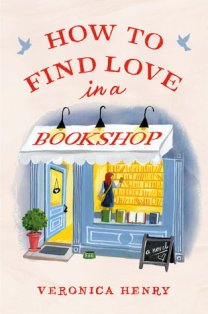
how to find love in a bookshopHow to Find Love in a Bookshop
by Veronica Henry
Contemporary Fiction
340 pages
Published 2016

From the title, you’d think this is a love story – and it kind of is – but not a traditional one. We don’t have a center couple with side characters, and the plot doesn’t revolve around their misunderstandings. No, the main character here is Emilia Nightingale, entrusted with her late father’s book shop, and the romance is with the town. There are several side characters, and while Emilia does get a romance, it’s the side characters’ love lives that we spend the most time with. We have the heiress to the local estate and her devoted gardener, the property developer’s minion and his estranged wife, the housewife longing to be a career woman again and her career husband who wants to stay home, the shy but sweet chef and the cheesemonger. (That one’s my favorite! Bonding over books and food? Girl after my own heart!)

The main conflict in the book comes from the financial straits of the bookshop and Emilia’s efforts to stay afloat – everything else revolves around that. We dip back in time to Emilia’s father’s life to learn about the founding of the shop and his own romances, which helps us see how some characters are emotionally invested in Emilia and the current status of the bookshop.

This is a sweet, gentle book that’s perfect for a rainy day and a cup of tea. Combining characters who love books, the enchanting magic of a good bookshop, and the (mostly) serene atmosphere of a quiet English village, the book is just cozy and comforting and I absolutely loved it.

From the cover of How to Find Love in a Bookshop:

The enchanting story of a bookshop, its devoted new owner, its loyal customers, and the extraordinary power of books to heal the heart.

Nightingale Books, nestled on the main street in an idyllic little village, is a dream come true for book lovers – a cozy haven and welcoming getaway for the literary-minded locals. But owner Emilia Nightingale is struggling to keep the shop open after her beloved father’s death, and the temptation to sell is getting stronger. The property developers are circling, yet Emilia’s regulars have become like family, and she can’t imagine breaking the promise she made to her father to keep the store alive.

There’s Sarah, owner of stately Peasebrook Manor, who has used the bookshop as an escape in the past few years; now it seems there’s a very specific reason for all those frequent visits. Next is roguish Jackson, who, after making a complete mess of his marriage, looks to Emilia for advice on books for the son he misses so much. And the forever shy Thomasina, who runs a pop-up restaurant for two in her tiny cottage, has a crush on a man she met in the cookbook section, but can hardly dream of working up the courage to admit her true feelings.

Enter the world of Nightingale Books for a serving of romance, long-held secrets, and unexpected hopes for the future – and not just within the pages on the shelves. How to Find Love in a Bookshop is the delightful story of Emilia, the unforgettable community whose lives she has touched, and the books they all cherish.

Series Review: The Bannerless Saga

bannerlessBannerless/The Wild Dead
by Carrie Vaughn
Dystopia/Murder Mystery
274/264 pages
Published 2017/2018

I first fell in love with Carrie Vaughn’s work with the Kitty Norville series – a werewolf named Kitty who ran a late-night radio show. Kitty and the Midnight Hour. (Both the name of her show and the first book.) So when I discovered she’d starting writing a dystopia that revolved heavily around reproductive rights, I was SO ON BOARD. Bannerless and The Wild Dead are the first two books of the Bannerless saga. And they’re GREAT. They’re technically murder mysteries set in a dystopian society; Enid, our main character, is an investigator, the closest thing this society has to police.

The dystopia part of the society involves epidemics and natural disasters nearly eradicating humanity; with so few people left and less of the earth habitable, they’ve regressed to a mostly agrarian society. Farmers, weavers, hunters. To keep the population from exploding past the land’s ability to feed it, birth rates are strictly controlled. As civilization was falling, people realized birth rates were going to be massively important, and the birth control implant, and the technology to make it, was one thing they managed to save. They also have solar-powered cars, lights, and flashlights, though they’re uncommon enough to be notable.

the wild deadI find it a little improbable that they still have the tech to make the implants; they say that before the supplies from “before the Fall” ran out, the medics figured out how to make the hormone from “what they had on hand” – but – I feel like a more interesting plot point would be that they’re running out of implants, and how the society would have to deal with that changing. But that is not the case, at least not in the first two books.

Regardless of how improbable the birth control issue is, the rest of the plot is pretty good. There’s a good mix of salvaged goods and subsistence farming; of new houses built in low-tech ways and the occasional ruins from Before the Fall. They have some books and records of what it was like, and Enid often wishes she had the tools that forensic investigators had, Before. Fingerprints, and DNA, though she doesn’t call it DNA. They don’t have cameras, she has to sketch crime scenes and take notes.

I really enjoyed both books; Carrie Vaughn’s writing style is wonderful to read. The first book rambles a little bit, but while some of it doesn’t seem necessary for the first book, it’s important for the second. I’ll definitely be following this series.

From the cover of Bannerless:

Decades after economic and environmental collapse destroyed much of civilization in the United States, the Coast Road region isn’t just surviving, but thriving – built on a culture of population control where people are organized into households that must earn the right to bear and raise children by proving they can care for them. Those who are deemed worthy proudly display the symbolic banners that demonstrate this privilege, while those who are not are outcast, living alone and branded as “bannerless.”

Enid of Haven is an investigator, called on to mediate disputes and examine transgressions against the community. She’s young for the job and hasn’t yet handled a serious case. But now she’s summoned to investigate the suspicious death of a man rumored to be bannerless. Was it murder or an accident? Was he truly bannerless or simply a loner? As Enid races to answer these questions while confronting unhelpful townsfolk and her own past, the secrets she reveals could expose the cracks in the entire foundation of the Coast Road society.

From the cover of The Wild Dead:

A century after environmental and economic collapse, the people of the Coast Road have rebuilt their own sort of civilization, striving not to make the mistakes their ancestors did. They strictly ration and manage resources, including the ability to have children. Enid of Haven is an investigator who, with her new partner, Teeg, is called on to mediate a dispute over an old building in a far-flung settlement at the edge of Coast Road territory. 

The investigators’ decision seems straightforward – and then the body of a young woman turns up in the nearby marshland. Almost more shocking than that, she’s not from the Coast Road, but from one of the outsider camps belonging to the nomads and wild folk who live outside the Coast Road communities. Now one of them is dead, and Enid wants to find out who killed her, even as Teeg argues that the murder isn’t their problem. In a dystopian future of isolated communities, can our moral sense survive the worst hard times?

Book Review: The Poppy War

poppy warThe Poppy War
by R. F. Kuang
Asian Military Fantasy
530 pages
Published May 2018

Have you ever read a book that is so good you don’t know what to say about it? It’s taken me almost two weeks to even attempt this review because I just don’t know what to write. The Poppy War is your typical story of downtrodden, disadvantaged girl testing into the highest school in the land and gaining the opportunities and privileges that come with that, but then the book takes a sharp twist into war. Rin doesn’t exactly get the most typical of educations, even before war breaks out. And when war breaks out, the school is disbanded, the students getting flung all over the land to where the government thinks they will help the most. For Rin, that’s joining The Cike. The Bizarre Children. The division of people who can do….things. Things the rest of the military isn’t comfortable with. The Cike can call on the powers of gods, and doing so makes them not-quite-untouchables. Rin, who was never short on resentment before this, grows ever more resentful.

Rin is an interesting character; she’s been hard done by, yes, but she makes decisions that only make things harder on herself. So I feel for her a little, but at the same time, girl. Check yourself. What’s been done to you doesn’t justify what you plan to do to others. I am hoping she comes to see that in the next book, because her rage and need for vengeance definitely gets the best of her in this one.

The Poppy War is an excellently written blend of military fantasy, epic fantasy, and coming-of-age novel. Unlike some books, where the military aspect far overshadows the characters, leaving them flat, Poppy War doesn’t ignore the characters to focus on the bigger picture. It’s a very good mix of both close-up focus on characters, fights, battles, and zoomed-out strategy and war. It’s probably the best military fantasy I’ve read, and the Asian aspect of it makes it even better. So much military fantasy is western European, or Steampunk, or both. I’ve been finding more and more Asian and African fantasy, and I am SO HERE FOR IT. I need to try to find more South American fantasy. I know it’s out there.

I will definitely be watching for the next book in this series, because it’s awesome.

From the cover of The Poppy War:

She is a peasant.
She is a student.
She is a soldier.
She is a goddess.

When Rin aced the Keju – the Empire-wide test to find the most talented youth to study at the academies – it was a shock to everyone: to the test officials, who couldn’t believe a war orphan from Rooster Province could pass without cheating; to Rin’s guardians, who always thought they’d be able to marry Rin off to further their criminal enterprise; and to Rin herself, who realized she was now finally free of the servitude and despair that had made up her daily existence. That she got into Sinegard – the most elite military school in the Nikara Empire – was even more surprising.

But surprises aren’t always good.

Being a dark-skinned peasant girl from the south is not an easy thing at Sinegard. Rin is targeted from the outset by rival classmates because of her color, poverty, and gender. Driven to desperation, she discovers she possesses a lethal, unearthly power – an aptitude for the nearly mythical art of shamanism. Exploring the depths of her gift with the help of a seemingly insane teacher and psychoactive substances, Rin learns that gods long thought dead are very much alive – and that mastering control over her powers could mean more than just surviving school.

For even though the Nikara Empire is at peace, the Federation of Mugen still lurks across a narrow sea. The militarily advanced Federation occupied the Nikara Empire for decades after the First Poppy War, and only barely lost the continent in the Second. And while most of the people in the Empire would rather forget their painful history, a few are aware that a Third Poppy War is just a spark away.

Rin’s shamanic powers may be the only way to save her people. But as she finds out more about the god who has chosen her, the vengeful Phoenix, she fears that winning the war may cost her her humanity.

And it may already be too late.

Book Review: Snow Like Ashes

snow like ashesSnow Like Ashes
by Sara Raasch
YA Fantasy
422 pages
Published 2014

The world-building in this book is fascinating. At first, it seems like yet another YA novel about displaced royals trying to win back their kingdom, but this royal is in much more dire straits than most. Meira is a refugee living on the run with seven others, one of them her rightful King. All the rest of their people have been enslaved by the conquering country, and their kingdom’s link to the magic inherent in the land has been broken.

A little backdrop is needed. In Meira’s land, there are eight countries. The Rhythm countries, where seasons proceed as normal, and the Seasons – 4 countries locked in one season each. The rulers of each country have a magic conduit that lets them feed magic to their people – but the conduits are gender-locked. In four of the countries, only women can use the conduit; in the other four, only men. Meira and her little band are all that’s left of the free people of Winter. Spring invaded sixteen years ago, killed Winter’s queen, broke the locket that was their magic conduit (each ruler has one) and enslaved their people. Because the queen only had a son, he can’t wield Winter’s magic anyway. They’re still trying to find the two pieces of the locket so when he has a daughter, she can wield it. You’d think at this point, since he’s of age, he should be trying to get as many women pregnant as possible to up the odds of getting a royal heir who can wield the magic, but that…doesn’t come up.

The book does delve into the country’s people being oppressed, used as slaves, and being incredibly abused by the conquering country, and this is where I ran into a quandary. The Season’s people reflect their countries: Autumn’s people have copper skin, Spring’s citizens are blond-haired and green-eyed – and Winter’s people are white. Pale skin, snow-white hair, blue eyes. Writing white people as the oppressed people just rubs me the wrong way. (In that false “help I’m being oppressed because other people want equal rights!” kind of way.) Yes, this is fantasy, yes, it has nothing to do with our world’s politics – but it bothers me. It’s at least not white-savioring, as Meira’s trying to save her own people, but I don’t know. Is it better or worse to write white people as the oppressed protagonists?

That question aside, this was a well-written novel of fighting against an oppressor. There is definitely still work to be done at the end of the book, and there are two more books, as well as two short stories. While I am a little curious what ultimately happens, I don’t know if the series has earned more time on my reading list.

From the cover of Snow Like Ashes:

Sixteen years ago the Kingdom of Winter was conquered and its citizens enslaved, leaving them without magic or a monarch. Now the Winterians only hope for freedom is the eight survivors who managed to escape, and who have been waiting for the opportunity to steal back Winter’s magic and rebuild the kingdom ever since.

Orphaned as an infant during Winter’s defeat, Meira has lived her whole life as a refugee, raised by the Winterians’ general, Sir. Training to be a warrior – and desperately in love with her best friend and future king, Mather – she would do anything to help Winter rise to power again.

So when scouts discover the location of the ancient locket that can restore their magic, Meira decides to go after it herself. Finally, she’s scaling towers and fighting enemy soldiers just as she’s always dreamed she would. But the mission doesn’t go as planned, and Meira soon finds herself thrust into a world of evil magic and dangerous politics – and ultimately comes to realize that her destiny is not, never has been, her own.