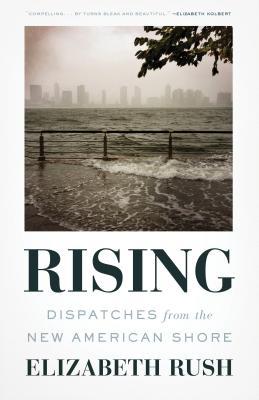
Book Review: Rising: Dispatches from the New American Shore

risingRising: Dispatches from the New American Shore
by Elizabeth Rush
Nonfiction/Climate Change
300 pages
Published 2018

Content Warning: Sexual Assault

This is actually the second book on climate change I read. The first one, The Water Will Come, by Jeff Goodell, was quite good until halfway through the book when it abruptly was not. Because halfway through the book, we get this tiny little scene from the signing of the Paris Climate Accords:

Standing among them, I watched French president Francois Hollande stand at the podium in the front of the hall and slam the gavel down, marking formal acceptance of the 2015 Paris climate accord. Everyone cheered. Some cried. To my surprise, I hugged the person next to me, a young Asian woman I had never met or talked to. I felt her pull away, perhaps shocked that a stranger would grab her so suddenly, but then she hugged me back. I never learned her name or even what country she represented, but our shared expression of the power of the moment was genuine. (p. 165)

I stared at this paragraph in shock. He really just – just sexually assaulted a woman he’d never met, and just moved on to other things. He didn’t realize what he’d done, to the point that he put it in his book with absolutely no idea what effect that paragraph would have on any survivors reading his book. I skimmed through the rest of the chapter, and he never mentions this scene or woman again. He felt her pull away, he says, but assumes her hug back means she’s excited too, not that she’s decided hugging back is the best way to avoid further violence.

I set aside the book. I couldn’t read any further. Up until that point it had been quite good – lots of facts and investigation, interviews and adventures with climate scientists and geologists and other neat stuff. But I could not continue, and instead picked up Rising.

Halfway through the first book on climate change, I find a depiction of sexual assault perpetrated by the male author. Halfway through the second book on climate change, I find an entire chapter devoted to the sexual assault of the female author.

“Hold on,” he says, turning my body away from him. Then he reads aloud the E. E. Cummings quote I have tattooed on my back, the final line of which reads, “will never wholly kiss you.”

Suddenly I feel his damp lips pressing into my skin, into the letters inked there. My stomach slams into the roof of my mouth, locking my words in instead of out. And my body takes over. It wants to punch him but knows it shouldn’t. Instead it walks straight out into the ocean, into a flotilla of spawning jellyfish at the northernmost edge of the Gulf. It starts to swim.

What are the chances? Yes, it’s only an unwanted kiss. It could have been worse. (How often have we heard, or said, THAT statement?) The first part of this chapter, titled “Risk” had been devoted to the calculated risk taken by people living in flood plains, and her initial fear upon going to interview a man by herself who might have been a threat. It’s revealed, after this scene, that she wasn’t actually alone; the man in this scene, her colleague, was with her, as a kind of safety net. It turned out she’d misjudged who was a risk and who was not. The rest of the chapter weaves these ideas together, and extends to one of the author’s students, who was also sexually harassed in the field.

I was struck by the difference in the two books; the male author casually mentioning forcefully hugging a woman he didn’t know, and not appearing to realize he’d even done anything wrong, and spending a single paragraph on it, vs. the female author freezing up when the victim of a similar action, and spending an entire chapter on the topic. She turns down an advancement in her career because of this interlude; it was offered by the colleague who kissed her. She’d intended to take it until then. She eventually tells him why, and his reaction is telling.

Eventually I tell Samuel that I cannot continue our professional relationship and I tell him why. First he says, “Oh my god.” Then he says, “I had no idea.” Followed by, “I don’t remember.” And then, “I had no further intentions.” He says, “I love my family.” And, “Let me know when you get over it.” The words spill out of him fast like floodwater.

He can’t stop talking, so I invent a student knocking on my door and hang up. I don’t present at the National Academy of Sciences. I don’t take the senior fellowship. I don’t coauthor an article with him. When I put down my cell phone, I realize I have been shaking.

In the era of #metoo, how can men not understand the effect these things have?

*deep breath*

All of that unexpectedness aside, Rising is an insightful, evocative book. Elizabeth Rush spends time not only with climate scientists and biologists, but with the people that actually LIVE in the places most affected by sea level rise. It’s an intimate look at the real, human cost of sea level rise and climate change. Spaced throughout the book are letters from people she interviewed, writing to her weeks to months after she met them, telling her of changes in the areas she visited. When she first visited the Isle de Jean Charles, for example, the Native Americans there weren’t interested in leaving the island. Then she includes a letter from one of them, saying they were leaving together, selling their land to the state and being provided a new community, together, farther inland. She then goes back to visit.

While Goodell is taking helicopter rides over glaciers, Rush is slogging through rotting tidal marshes with teams of scientists and grad students, and that is really indicative of the difference between the two books. Rush is on the ground, getting her hands dirty, while Goodell interviews and gathers information about the big picture. And that would make the two books an excellent pair, were it not for the casual sexual assault in the middle of his book. That isn’t to say that Rush doesn’t talk about the big picture; she does, it’s just not her focus.

If you’re interested in climate change, you’ll probably enjoy Rising. The Water Will Come was also very enjoyable, at least the half that I read, but I don’t believe in giving a man like that more of my time. So you can make your own decision there.

From the cover of Rising: Dispatches from the New American Shore:

Harvey. Maria. Irma. Sandy. Katrina. We live in a time of unprecedented hurricanes and catastrophic weather events, a time when it is increasingly clear that climate change is neither imagined nor distant – and that rising seas are transforming the coastline of the United States in irrevocable ways.

In this highly original work of lyrical reportage, Elizabeth Rush guides readers through some of the places where this change has been most dramatic, from the Gulf Coast to Miami, and from New York City to the Bay Area. For many of the plants, animals, and humans in these places, the options are stark: retreat or perish in place. Weaving firsthand accounts from those facing this choice – a Staten Islander who lost her father during Sandy, the remaining holdouts of a Native American community on a drowning Isle de Jean Charles, a neighborhood in Pensacola settled by escaped slaves hundreds of years ago – with profiles of wildlife biologists, activists, and other members of the communities both currently at risk and already displaced, Rising privileges the voices of those usually kept at the margins. 

At once polyphonic and precise, Rising is a shimmering meditation on vulnerability and on vulnerable communities, both human and more than human, and on how to let go of the places we love.
Book Review: The Complete Guide to Saving Seeds

complete guide to saving seedsThe Complete Guide to Saving Seeds: 322 Vegetables, Herbs, Flowers, Fruits, Trees, and Shrubs
by Robert Gough and Cheryl Moore-Gough
Gardening
310 pages
Published 2011

This is an amazing reference book. It begins with some general chapters on why you should save seeds, the anatomy of seeds, and some basic techniques for harvesting seeds, hand-pollinating, basic general principles of seed storage and the like. Then it dives into the real meat of the book, the chapters on the specific plants. They’re divided into the six broad categories listed in the subtitle: vegetables, herbs, flowers, fruits, trees, and shrubs. Within those chapters, each species is listed separately, with notes on the scientific name, the species family, the plant type (annual, biennial, perennial), seed viability, how many plants to save seed from, spacing for seed saving, and then a few paragraphs on flowering and pollination, any isolation requirements, and specifics on how to harvest, clean, and store the seeds for that species. It also has germination and transplanting notes for each species.

This would be an invaluable reference manual if you intend to save seeds from your plants and become self-sufficient, but it’s still useful if not, for its notes on the pollination of each species. The isolation requirements are especially interesting; there are some plants that will cross-pollinate with plants 10 miles away! The sidebar on pumpkins and squash was also fascinating – I didn’t know so many squash were technically the same species as pumpkins, just different cultivars. And that means they’ll cross-breed if you’re not careful! Even more fascinating, giant pumpkins aren’t the same species as jack o’lantern pumpkins, so they won’t cross breed.

I will absolutely be adding this book to my collection as a reference manual.

From the cover of The Complete Guide to Saving Seeds:

Improve the health and productivity of your garden season after season by saving seeds from your best plants. When you harvest seeds from your own garden, you will:

-Take another step toward food independence
-Save the money you’re spending on plants and seeds
-Enjoy a healthy garden filled with plants uniquely adapted to your own backyard
-Be able to swap seeds with other seed savers
-Preserve genetic diversity and regional favorites
-Ensure a safe and varied seed selection for future generations.

To begin saving seeds, choose healthy plants with desirable traits. Is pest resistance important to you? What about tomatoes that ripen early or spinach that’s slow to bolt? Do you have pink sweet peas whose color you want to replicate next year? Select for these traits and build your best garden ever. Plant-by-plant instructions guide you through all the seed-saving techniques specific to 322 plants.

Book Review: The Food Forest Handbook

the food forest handbookThe Food Forest Handbook: Design and Manage a Home-Scale Perennial Polyculture Garden
by Darrell Frey & Michelle Czolba
Gardening
229 pages
Published 2017

Another book in my permaculture research, this in-depth guide is definitely going on my To-Buy list. (I always check these out from the library before spending money on personal copies.)

There is SO MUCH information in this book. Unlike some of the other books, there’s no big spreads of full-color, glossy photos (which can be useful, I’m not digging on those); The Food Forest Handbook is mostly text with a few black-and-white photos tucked in. There are spreadsheets and diagrams and lists, sidebars of useful information, how-to walkthroughs and case studies of specific plants. I’m not sure how they packed so much into a little over 200 pages, but this book is a treasure trove of permaculture strategies.

The book starts with a chapter on why permaculture is important; they explore past examples of permaculture, some present food forests, and why it could be useful to us going forward. The second chapter gets into designing a food forest to fit your needs – scoping out your site, determining what resources you have, all of the planning aspects. Then we have a short chapter on putting all that knowledge together and going “from concept sketch to detailed designs” – how to refine your research and plans into something you can work off of. Chapter 4 is about selecting the specific plants; going from “okay here I want a fruit tree and a nitrogen fixer” to “a peach and comfrey.” Plant varietals are discussed here, as well as the different needs of tree guilds.

The rest of the book gets into maintenance, harvesting, and propagating the food forest, and the last chapter is on a tour of established food forests in various climates, to see what’s possible.

This is definitely a book I want on my resource shelf; it can get a little dry at points, but there is so much knowledge here. One thing I really liked was the diagram of tree shapes – if one tree says it has a conical shape when full grown, and one has a pyramid shape, there’s a diagram that shows what exactly the difference is.

Overall an excellent, information-packed book, if a little difficult to read straight through.

From the cover of The Food Forest Handbook:

A Food Forest is a productive landscape developed around a mix of trees and perennials, helping increase biodiversity, protect valuable habitat for beneficial insects, and promote food security and resilience, all while providing an abundant annual harvest.

Rooted in permaculture principles, this integrated approach to gardening incorporates a variety of plants such as fruit and nut trees, shrubs, vines, and perennial herbs and vegetables. Authors Michelle Czolba and Darrell Frey bring years of experience building and maintaining food forests to provide this practical and accessible guide to creating your own food forest landscape, whether you’re urban, suburban, or rural. 

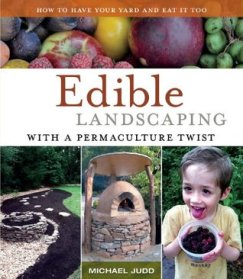
Book Review: Edible Landscaping with a Permaculture Twist

edible landscapingEdible Landscaping with a Permaculture Twist: How to have your yard and eat it too
by Michael Judd
Nonfiction/Gardening/Homesteading
143 pages
Published 2013

I’ve been making a habit of checking out gardening books from the library before buying them, so I know what I actually want to have around as a permanent resource. This book has definitely made that list. Other books talk about some of these same principles – swales, herb spirals, rain gardens, tree guilds – but this book actually goes into detail with step-by-step instructions and pictures on how to MAKE many of those things. I also appreciate that the author lives in Maryland, about an hour west of me. So our climate is the same.

I really enjoyed his chapter on uncommon fruits – I’d been reading that pawpaws are one of the fruits that do well with black walnuts, and his description of pawpaw fruit REALLY makes me want to grow one! They’re an uncommon fruit largely because they’re too delicate to ship, but they apparently taste delicious! And they’re native, which is always a plus. I’d love to stick with native plants as much as possible.

His chapter on mushroom growing was also interesting and VERY detailed. (I quite enjoyed that he included “a good beer” in his list of supplies at one point.)

It’s a short book, and it only covers a few topics, but it is EXCELLENT for those few topics he touches on. Definitely want a copy of this in my personal library!

From the cover of Edible Landscaping with a Permaculture Twist:

Edible Landscaping with a Permaculture Twist is a fun-filled how-to manual for the budding gardener and experienced green thumb alike. Full of creative and easy-to-follow designs that guide you to having your yard and eating it too!

The ABC’s of Creating an Edible Landscape
– Herb Spirals
– Food Forests
– Raised Bed Gardens
– Earthen Ovens
– Uncommon Fruits
– Outdoor Mushrooms and much more . . . 

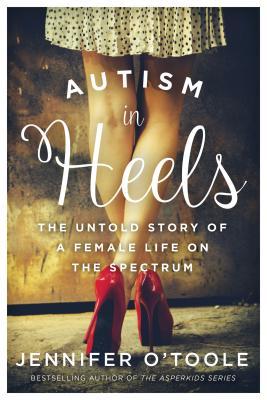
Book Review: Autism in Heels

autism in heelsAutism in Heels: The Untold Story of a Female Life on the Spectrum
by Jennifer Cook O’Toole
Nonfiction/Memoir
247 pages
Published December 2018

I try to be very mindful when reviewing books on autism, or other #ownvoices books that I’m not part of the demographic. They’re very important books for people who are not of that demographic to read – that’s how we learn about each other – but we get into iffy territory when reviewing them. It can be problematic to say “I didn’t like this book” when you’re not the target audience. That’s why for Black Enough, I linked to some #ownvoices reviewers when I didn’t care for the book. For Autism in Heels I don’t have that problem, because this is a really good book! I’m sure autistic people will still get more out of it that I did, and female autistics even more. But there were paragraphs that definitely reminded me of my husband, and we had several good conversations inspired by this book. (“What makes a good friend?” being one of the more interesting ones.)

Jenny tells an engrossing story of her life; interwoven with facts and anecdotes about female autistics in general were specific examples from her life, and both problems she’d faced because she was autistic, and problems everyone faces that were particularly problematic for her as an autistic. Much like my husband, she comes at stories sideways, giving several details and tangents before getting to the point that ties them all together. That’s much easier to deal with in print; I often have to stop my husband, specifically ask him where he’s going with his story, and then let him get back to all the surrounding details. Knowing that he DOES THAT lets us deal with it in a manner that is less frustrating for both of us. (I get frustrated because I can’t hold all the loose ends in my head without knowing how they connect, so once he gets to his point, I often have to make him repeat some of the earlier parts, and he gets frustrated because I can’t follow his train of thought.) In text form, I can skim forward when I need to and come back to the earlier tangents. I suspect she also had an excellent editor, because that only gets confusing a few times. (Or she did it herself in revisions. Either way, it’s far less confusing than a lot of conversations I’ve had with my husband!)

She does talk about some pretty intense domestic abuse from her college boyfriend near the end of the book, and then segues into eating disorders, so be aware of that. Those are both things that autistic women are particularly vulnerable to, and they definitely deserve a place in the book, but they can be difficult to read about, and my heart broke for college-Jennifer.

This is a great memoir of an amazing woman. I might need to look up her other books, even if they are targeted towards teens.

From the cover of Autism in Heels:

THE FACE OF AUTISM IS CHANGING. AND MORE OFTEN THAN WE REALIZE, THAT FACE IS WEARING LIPSTICK.

Autism in Heels, an intimate memoir, reveals the woman inside one of autism’s most prominent figures, Jennifer Cook O’Toole. At the age of thirty-five, Jennifer was diagnosed with Asperger’s Syndrome, and for the first time in her life, things made sense. Now, Jennifer exposes the constant struggle between carefully crafted persona and authentic existence, editing the autism script with wit, candor, passion, and power. Her journey is one of reverse self-discovery not only as an Aspie but – more importantly – as a thoroughly modern woman.

Beyond being a memoir, Autism in Heels is a love letter to all women. It’s a conversation starter. A game changer. And a firsthand account of what it is to walk in Jennifer’s shoes (especially those iconic red stilettos). 

Whether it’s bad perms or body image, sexuality or self-esteem, Jennifer’s is as much a human journey as one on the spectrum. Because autism “looks a bit different in pink,” most girls and women who fit the profile are not identified, facing years of avoidable anxiety, eating disorders, volatile relationships, self-harm, and stunted independence. Jennifer has been there, too. Autism in Heels takes that message to the mainstream.

Book Review: The Suburban Micro-Farm

suburban micro farmThe Suburban Micro-Farm: Modern Solutions for Busy People
by Amy Stross
Nonfiction/Gardening/ Homesteading
347 pages
Published 2018

I’m going to buy my own copy of this book. It is stuffed full of useful information! It focuses on growing food in your yard when you don’t have much time to spend on the yard, so there’s a lot of permaculture techniques and gardens that are largely hands-off once you get them set up, which is exactly what I want. With the chronic fatigue, I often don’t have the energy to get outside and work on a garden, and Maryland summers exhaust me simply by stepping outside. I really want to garden and grow food, but I need easy ways to do that.

The Suburban Micro-Farm delved into planting hedgerows, which is something we’ve been thinking of, rain gardens (which we probably should do, we have a couple places in the yard that do not drain well), and tree guilds, which are plantings that go under trees to work together in little micro-environments. One of the tree guilds Stross specifically talks about is a Black Walnut tree guild, which I was excited to see because we have a huge, beautiful mature Black Walnut that I’ve been trying to figure out how to plant around. Black Walnuts produce juglone, a chemical that kills a lot of plants, so you have to be very mindful of what you plant near them.

This is an excellent reference book for suburban gardens, and she has lots of extra resources on her site, The Tenth Acre Farm. I will be exploring those as well, but I’m definitely going to buy my own copy of this book!

From the cover of The Suburban Micro-Farm:

Yield abundant harvests from your own yard with only 15 minutes a day!

Do you long to find the secrets of gardening with the time you have?
Are you ready to feel more connected to your home?
Would you like the satisfaction of growing healthy food for your table?

Author Amy Stross talks straight about why the suburbs might be the ideal place for a homesteading lifestyle. If you’re ready to create a beautiful, edible yard, this book is for you.

In these pages you’ll learn how to:
-Stop letting your garden overwhelm you
-Develop and nurture healthy soil
-Use easy permaculture techniques for stress-free, abundant harvests