So I’ve mentioned it on Twitter, but I have been remiss in mentioning it here – April is Autism Acceptance Month! This is another cause close to my heart, because my husband is on the spectrum. We didn’t actually realize this until a year ago, but having realized it, it has given us SO MANY tools to use to manage daily life. The improvement has been amazing. So in the last year I’ve been doing a lot of self-education about autism, and I recently learned that there is a publishing house specifically for autistic authors, because so many mainstream publishers were turning them away! It’s called Autonomous Press, and their slogan is Weird Books for Weird People. Goodreads also has a list of books by autistic authors; some are explicitly about autism, some are fiction with autistic characters, and some aren’t about autism at all. But reading books by autistic authors is a great way to support the community and neurodivergence. This list is more of a to-be-read list for me; these are books I want to read. My library only has a few of them, though, and a few of them are working their way through the system to me.
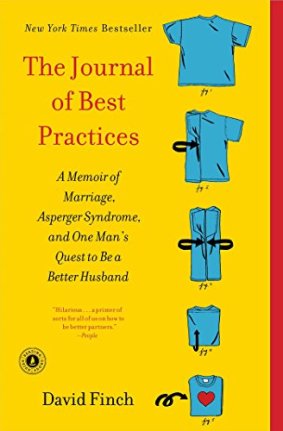
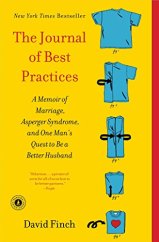 The first book on my list is one I HAVE read – The Journal of Best Practices: A Memoir of Marriage, Aperger Syndrome, and One Man’s Quest to be a Better Husband. I really enjoyed this one, as a chronicle of a marriage almost torn apart but ultimately saved by their new understanding of how his brain works. So many of the author’s behaviors are things I also see in my husband – I often stopped to read passages to him, only to have him stare at me in surprised recognition. It was also surprising to me – I’d have to stop and say “wait, is that really the way you think about that subject?” To which he’d reply “what, that isn’t normal?” So it was a journey of discovery for us both.
 Currently out from the library I have Queens of Geek, which I didn’t realize was by an autistic author and only makes me more eager to read it. (Also, look at that cover! Bright hair FTW!) Nerdy, Shy, and Socially Inappropriate – A User Guide to an Asperger Life is by a blogger whose blog I pored through, reading
  entries to my husband and following links to quizzes and other resources. (Taking the diagnostic quizzes together was also enlightening – I really did not fully realize how differently his brain worked from mine – and we’ve been together over twelve years!)
 Making their way to me through my extended library system (they’ll ship books to my county from any system in the state, it’s amazing!) are Pretending to be Normal – Living with Asperger’s Syndrome and Loud Hands – Autistic People Speaking. I really prefer
  reading about autistic experiences through the eyes of actually autistic people. I know there’s several books out there by family members or doctors, but really. Who knows them better than themselves? I’m trying to be aware of the #ownvoices movement when reading about marginalized groups, and this is part of that.
So those are the five books I have read or am going to read. The next five are ones I either don’t have requested yet, or my library doesn’t have them at all. But they look interesting.
 The ABCs of Autism Acceptance is one I should DEFINITELY read. I might be making an order from Autonomous Press soon! This is a collection of 26 short essays about autistic culture, systemic barriers that face autistics, and some of the history of autism. I really want to pick this one up.
 The Real Experts: Readings for Parents of Autistic Children doesn’t apply to me specifically, but I still thought it should receive a place in this top ten list. It’s another collection of essays, this time by a variety
  of autistic adults.
The Shaping Clay series of novels looks interesting; they’re about the life of an autistic man named Clay Dillon. They begin with Nothing is Right, set in first grade. The books continue through Imaginary Friends to Defiant, taking place when Clay is 30. The books are written by Michael Scott Monje Jr, who is transgender as well as autistic.
 The Spoon Knife Anthology: thoughts on Compliance, Defiance, and Resistance looks like a fascinating book, edited by Michael Scott Monje Jr. and N.I. Nicholson. This appears to be an annually published book, with Spoon Knife 2 being called “Test Chamber.” They’re published by NeuroQueer, an imprint from Autonomous books that focuses on gender, sexuality, and race, and they’re billed as an “annual open-call collection to find new talent.”
 Also under the NeuroQueer imprint is the first anthology of Barking Sycamores, a quarterly magazine of neurodivergent literature and art. The magazine publishes “poetry, artwork, short fiction, creative nonfiction, and hybrid genre work by emerging and established neurodivergent writers as well as book reviews.” They’re only available online at the website, though past issues can be bought as ebooks. They publish one piece per day on their blog until the issue is complete. I’ll definitely be following this blog!
So those are my Top Ten books to read this month for Autism Acceptance Month. (Technically I suppose that’s thirteen books, but I grouped the series together.) I think an order from Autonomous Press is in my near future!
So I had finished this post and had it ready to publish when a friend of mine gave me a few more titles! The Autism Women’s Network has published a few books like All The Weight of Our Dreams, which is a collection of essays by autistic people of color, and What Every Autistic Girl Wishes Her Parents Knew, a collection of essays by autistic women. So those are also worth checking out!
As I continue to find and read books by autistic authors, I’m just going to list them at the bottom of this post so they’re all in one place to refer back to!
All Cats Have Asperger Syndrome
 Goddess In The Stacks