Book Review: The Golem and the Jinni

golemThe Golem and the Jinni
by Helene Wecker
484 pages
Published 2013
Urban Fantasy (of a sort)

Update: The sequel, The Iron Season, is due out sometime in 2018!

Yet another fantastic debut novel! My husband picked this up at the library; the dark blue edging on the pages had caught his attention, as well as the gorgeous blue and gold cover with its enigmatic title. I am very glad he brought it to my attention, as it was a beautiful, touching read.

The Golem and the Jinni is the tale of two immigrants in early 19th century New York. These aren’t your typical immigrants, however. The Golem, created by a mystic in Poland, was made-to-order by a man wanting a wife. He died on the voyage over, hours after awakening her. With her original master-bond broken, the Golem is learning her way around New York and human society, with the help of an old Jewish rabbi who recognized her for what she is.

The Jinni, on the other hand, has been bound in a bottle for close to a thousand years, and is released accidentally by an Arab tinsmith. He is also learning about New York and human society, but where the Golem is coming at it from a place of innocence, he is jaded and old. The two eventually meet, recognizing each other for non-human, and begin a wary friendship built on their mutual lack of needing to sleep and hatred of boredom.

As the novel progresses, their lives begin to intertwine in unexpected ways, and we learn more about their histories from flashbacks; in the Golem’s case, the flashbacks are of her creator’s life, since we see the beginning of her own at the start of the novel.

As the novel progresses, it builds up momentum until it seems an unstoppable force heading to its surprising conclusion. I thoroughly enjoyed this novel, and find myself surprised it was the author’s first. It brushed on philosophical questions, moral questions, societal norms – and all of it so naturally. The book delved into human nature and the nature of free will, with both main characters unsure of their own capability for free will for different reasons, and fighting those very limitations on their individuality.

I discovered in a Q&A on Wecker’s website that she is Jewish and her husband is Arab-American, which explains partly why she was able to blend the two cultures’ mythologies so easily (and to wonderful effect!) in this book.

I’ve been having wonderful luck with debut novels lately, I wonder how long that can hold out?

From the inner cover of The Golem and the Jinni:

“Helene Wecker’s dazzling debut novel tells the story of two supernatural creatures who appear mysteriously in 1899 New York. Chava is a golem, a creature made of clay, brought to life by a strange man who dabbles in dark Kabbalistic magic. When her master dies at sea on the voyage from Poland, she is unmoored and adrift as the ship arrives in New York Harbor. Ahmad is a jinni, a being of fire, born in the ancient Syrian Desert. Trapped in an old copper flask by a Bedouin wizard centuries ago, he is released accidentally by a tinsmith in a Lower Manhattan shop. 

Struggling to make their way in this strange new place, the Golem and the Jinni try to fit in with their neighbors while masking their true names. Surrounding them is a community of immigrants: the coffeehouse owner Maryam Faddoul, a pillar of wisdom and support for her Syrian neighbors; the solitary ice cream maker Saleh, a damaged man cursed by tragedy; the kind and caring Rabbi Meyer and his beleaguered nephew, Michael, whose Sheltering House receives newly arrived Jewish men; the adventurous young socialite Sophia Winston; and the enigmatic Joseph Schall, a dangerous man driven by ferocious ambition and esoteric wisdom.

Meeting by chance, the two creatures become unlikely friends who tenuous attachment challenges their opposing natures, until the night a terrifying incident drives them back into their separate worlds. But a powerful menace will soon bring the Golem and the Jinni together again, threatening their existence and forcing them to make a fateful choice.”

Book Review: Chronicle of a Death Foretold

deathforetoldChronicle of a Death Foretold
by Gabriel Garcia Márquez
120 pages
Published 1982
Fiction

I’m honestly not sure what I just read. I’m used to fiction plots having twists, or making you wonder what’s going to happen, or having a moral lesson. This – didn’t really do any of those things. You’re told what’s going to happen in the first sentence of this novella. There’s only one question, and it’s never answered. I’m not really sure what the lesson is, if there is one. I’m just baffled at the entire thing.

Chronicle of a Death Foretold, by Nobel prize winner Gabriel Garcia Marquez, is a novella about a man’s death. A woman gets married, her bridegroom discovers she’s not a virgin, returns her to her family, and her brothers kill the man who stole her virginity. That’s really all there is to the story. The brothers are completely open about what they plan to do – the narrator thinks they didn’t really want to carry out the murder and were hoping the townspeople would prevent them from doing so. The narrator is one of the townspeople, a friend of the victim, who is investigating the entire incident some twenty years later, trying to figure out why it happened and why exactly no one was able to prevent it.

Garcia Marquez writes well; his descriptions flow beautifully, his characters are interesting. Chronicle of a Death Foretold was not very linear, starting on the morning of the man’s death and hopping between the events of that day and twenty years later. I don’t mind slightly non-linear books, but this one annoyed me a bit. (Strangely, I loved The Time-Traveler’s Wife, which is not linear in the least.)

I’ll be reading another Garcia Marquez book soon – Love in the Time of Cholera – and plan to watch the movie, too, before I review it here. So I’ll give him another shot. But Chronicle of a Death Foretold just…confuses me.

From the back of Chronicle of a Death Foretold:

A man returns to the town where a baffling murder took place 27 years earlier, determined to get to the bottom of the story. Just hours after marrying the beautiful Angela Vicario, everyone agrees, Bayardo San Román returned his bride in disgrace to her parents. Her distraught family forced her to name her first lover; and her twin brothers announced their intention to murder Santiago Nasar for dishonoring their sister. 

Yet if everyone knew the murder was going to happen, why did no one intervene to stop it? The more that is learned, the less is understood, and as the story races to its inexplicable conclusion, an entire society – not just a pair of murderers – is put on trial.

Book Review: My Ideal Bookshelf

bookshelfMy Ideal Bookshelf
Edited by Thessaly La Force
Art by Jane Mount
225 pages
Published 2012
Books/Libraries

So this is a bit of an odd, but fascinating, little book. In My Ideal Bookshelf, just over a hundred people were asked what was on their ideal bookshelf. I didn’t recognize a lot of the people interviewed, but I did see a few. James Patterson, David Sedaris, Alice Waters, Tony Hawk, James Franco, these were all people that I knew. Even the people that I didn’t know had interesting books and interesting things to say about them, though. Each person has a two page spread – one page is an illustration of their ideal bookshelf, and one page is an excerpt from their interview talking about why those books. There’s almost a voyeuristic pleasure in reading this book. (I can’t be the only one that always peruses my friends’ bookshelves when I go their houses, right?)

I find myself getting both inspired and depressed by books like this – books about good books. Depressed in that there’s so many things I haven’t read! I haven’t read Nobokov, or Lolita, or Austen’s Emma. The only Steinbeck I’ve read was The Grapes of Wrath in high school. I’ve never read Hemingway or Frankenstein (though the latter will be getting rectified shortly). I haven’t read Dickens, or Tolstoy, or Pride and Prejudice (I read Pride and Prejudice and Zombies, does that count?) or To Kill a Mockingbird (another one that I’ll be reading soon). But inspired, at the same time, for the same reason. There are books that appear again and again in this book, like A Supposedly Fun Thing I’ll Never Do Again, or Lolita, or Nobokov. Books that make me think I should find them at the library to see what everyone is so excited about. I consider myself fairly well read – I love Shakespeare, Jane Eyre, Dracula, The Comte de Monte Cristo. I’ve read The Lord of the Rings trilogy, and Laura Ingalls Wilder, and Anne of Green Gables; Heinlein, Neil Gaiman, George R. R. Martin. There’s still so much to read, but I wouldn’t have it any other way.

The very last page of the book is bookshelf with ten blank books on it. The book asks you to create your own ideal bookshelf and submit it to them via their website or Twitter with the hashtag #myidealbookshelf. They have an online template which I think I’ll be filling out, talking about here, and then submitting. So stay tuned for my Ideal Bookshelf!

From the inner cover of My Ideal Bookshelf:

The books that we choose to keep and display – let alone read – can say a lot about who we are and how we see ourselves. In My Ideal Bookshelf, more than one hundred leading cultural figures, including writers Chuck Klosterman, Mary Karr, Junot Dias, and Jonathan Lethem, musicians Patti Smith and Thurston Moore, chefs and food writers Alice Waters and Mark Bittman, Hollywood figures Judd Apatow and James Franco, and fashion designers Kate and Laura Mulleavy of Rodarte, share the books that matter to them most – books that define their dreams and ambitions and in many cases helped them find their way in the world. 

Jane Mount’s original paintings of the colorful and delightful book spines and occasional objets d’art from the contributors’ personal bookshelves showcase the selections. Each painting is accompanied by a short first-person essay drawn from interviews with Thessaly La Force that touch on everything from the choice of books to becoming a writer to surprising sources of inspiration.

Book Review: The Dark Monk, The Beggar King, and The Poisoned Pilgrim

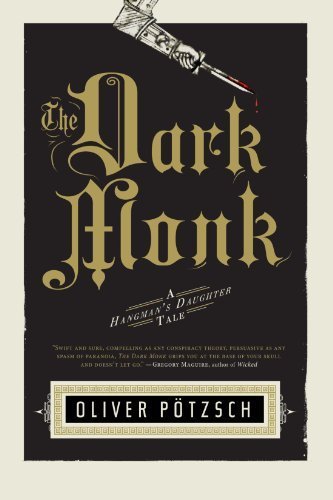
dark monkThe Dark Monk
by Oliver Pötzsch
463 pages
Published 2009
Historical Fiction/Mystery

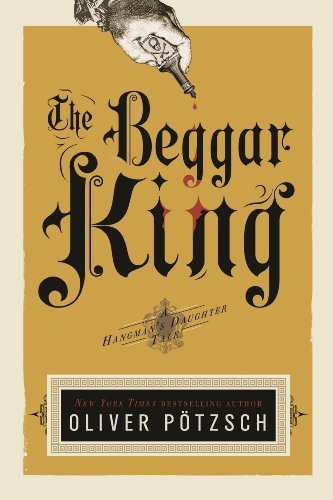
The Beggar King
by Oliver Pötzsch
466 pages
Published 2010
Historical Fiction/Mystery

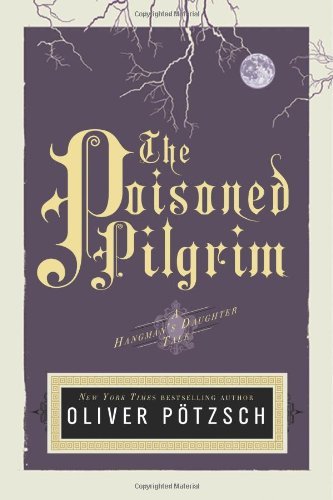
The Poisoned Pilgrim
by Oliver Pötzsch
496 pages
Published 2012
Historical Fiction/Mystery

I cracked open the pages of The Dark Monk with a certain amount of satisfaction and glee – to be rejoining a world I lost myself in with The Hangman’s Daughter – to catch up with characters I’d fallen in love with some months ago – is always a heady feeling. I reviewed The Hangman’s Daughter on this blog already, and mentioned I’d be looking for the sequels. On my last trip to the library, I happened to see all three of them, so I snagged them with a grin that made my husband laugh. Pötzsch has continued his amazing storytelling in these three books, and I’m still amazed that books originally written in German can flow so well – lyrically, even – in English. I’m sure that’s in large part due to the excellent translation work of Lee Chadeayne.

beggar kingJakob Kuisl (the hangman of Schongau), his daughter Magdalena, and her beau Simon Fronweiser are again up to their old tricks in these three books, letting their curiosity lead them into mysteries they perhaps should have stayed clear of. In The Dark Monk, the three find themselves embroiled in the hunt for lost Templar treasure. In The Beggar King, Jakob is framed for the murder of his sister, and must prove his innocence with the help of Magdalena and Simon. The Poisoned Pilgrim takes place a few years after The Beggar King, and involves the three attempting to prove the innocence of one of Jakob’s oldest friends. Woven throughout the mysteries are portrayals of everyday (and not so everyday!) life in 17th century Bavaria, from taking care of the sick to child-rearing to executions.

One thing that continues to impress me about the books is how they treat torture. Torture to achieve a confession is a regular duty of a Hangman, but it’s not treated lightly in these books. It’s described, and it’s treated as a horrible thing, but it’s also not so descriptive that it crosses the line into gore. It’s a mark of Pötzsch’s skill that he can take a man that does this regularly – tortures and executes people, even people he knows are innocent, if he can’t get out of it – and makes him likable. He makes us sympathize with him.

I enjoyed these three books just as much as I did the first. The action is well-paced, the plots are well-thought out and complex, and the characters are rich and enjoyable. It’s easy to see the amount of research Pötzsch has put into his setting, and the books are richer for it. I love this series.

pilgrimFrom the back of The Dark Monk:

1660: Winter has settled thick over a sleeping village in the Bavarian Alps, ensuring that every farmer and servant is indoors the night a parish priest discovers he’s been poisoned. As numbness creeps up his body, he summons the last of his strength to scratch a cryptic sign in the frost.

Following a trail of riddles, hangman Jakob Kuisl, his headstrong daughter Magdalena, and the town physician’s son team up with the priest’s aristocratic sister to investigate. What they uncover will lead them back the Crusades, unlocking a troubled history of internal church politics and sending them on a chase for a treasure of the Knights Templar.

But they’re not the only ones after the legendary fortune. A team of dangerous and mysterious monks is always close behind, tracking their every move, speaking Latin in the shadows, giving off a strange, intoxicating scent. And to throw the hangman off their trail, they have made sure he is tasked with capturing a band of thieves roving the countryside, attacking solitary travelers and spreading panic.

From the back of The Beggar King:

1662: Jakob Kuisl, the hangman of a village in the Alps, receives a letter from his sister calling him to the imperial city of Regensburg, where a gruesome sight awaits him: her throat has been slit. When the city constable discovers Kuisl alongside the corpse, he locks him in a dungeon, where Kuisl will experience firsthand the torture he’s administered himself for years. As nightmares assail him, Kuisl can only hope to prevail on the Regensburg executioner to show mercy to a fellow hangman. 

Kuisl’s steely daughter, Magdalena, and her young doctor paramour, Simon, rush to Regensburg to try to save Jakob, enlisting an underground network of beggars, a beer-brewing monk, and an Italian playboy for help. Navigating the labyrinthine city, they learn there is much more behind the false accusation than a personal vendetta: a plan that will endanger the entire German Empire. 

From the back of The Poisoned Pilgrim:

1666: The monastery at Andechs has long been a pilgrimage destination, but when the hangman’s daughter, Magdalena, her doctor husband, Simon, and their two small children arrive there, they learn that the monks have far larger concerns than saying Mass and receiving alms. It seems that once again the hangman’s family has fallen into a mysterious and dangerous adventure.

Two monks at the monastery experiment with cutting-edge technology, including a method of deflecting the lightning that has previously set the monastery ablaze. When one of the monks disappears and his lab is destroyed, foul play is suspected. Who better to investigate than the famed hangman Jakob Kuisl? But as the hangman and his family attempt to solve the mystery of the missing monk, they must deal with the eccentric denizens of the monastery and villagers who view the monks’ inventions as witchcraft that must be destroyed at all costs.

Book Review: Quiet, Please: Dispatches from a Public Librarian

dispatchesQuiet, Please: Dispatches from a Public Librarian
by Scott Douglas
330 pages
Published 2008
Memoir

“You catch a guy on a computer jacking off, just get a librarian – don’t try and handle it yourself.” That was the first thing Faren, the library manager, said to me on my first day of work.
I was a library page.

The opening lines of this book caught my attention immediately. I’ve always loved libraries, and have recently applied for a library page position at my local library. Until reading this book, I (perhaps naively) thought that would only mean shelving books. Quiet, Please is a look inside a public library – a peek at the quirky patrons, from the seniors having trouble with computerized book catalogs to the homeless who spend all day every day inside those walls to the teenagers hacking the library computers to look at porn. Douglas points out the eccentricities of librarians – people he thought knew everything about books until he actually began to WORK with them and found that many of them rarely even read. He tells us all of this in the engrossing style of your favorite uncle’s college stories – exaggerated, full of digressions, and sometimes only barely based on a kernel of truth.

One thing I found a little jarring – the opening lines of the book mention a patron using a computer on his first day of work. Yet, a chapter later, he’s describing the day the computers arrived at the library. So did he start before the computers were in the library or after? I don’t know, and that contradiction is one black mark on an otherwise remarkable book.

I had one other disagreement with Douglas; in the closing of the book, he states that libraries need to adjust to the way people are using libraries now, which I do agree with. But in his list of ways to adjust, he mentions organizing books by subject, like book stores do. When I was a child, I always thought this would be a good idea. If I was looking for Sci-fi/Fantasy books, why can’t I just go to the Sci-fi/Fantasy section and browse? As an adult, I see that this is a TERRIBLE idea. My local library arranges its fiction this way, and it’s incredibly hard to find anything I’m looking for. I know the author’s name – but whether it’s shelved in Science Fiction or Romance or Mystery or General Fiction….(they don’t have a Fantasy section, so they always get shelved elsewhere!) It wouldn’t be so bad if the catalog said “Fiction – Mystery” but instead the catalog always says Adult Fiction Stacks. Which could mean ANY of their categories. What baffles me a little bit about Douglas’ idea is that he also mentions non-fiction categories, and non-fiction is already categorized that way through the Dewey Decimal System. They might not be labeled, but they’re definitely arranged by subject. (Which brings up another beef I have with my library – if I want the catalog to display everything they have from Call Numbers 020 to 029, to find everything in library science and library studies, WHY CAN’T I?) /end rant

The book has not helped me decide whether I ultimately want to be a public librarian or a research/university librarian, which I am disappointed by. I thought it would help! His tales repel me a little bit – I want to be a librarian to work with books, not homeless people. But they also attract me – up until now, I’ve worked in retail and food service – heavily customer service oriented jobs. Public libraries seem to be an interesting mix of my past experiences plus what I hope to do. Ah, well. I have years of school ahead of me before I have to make that decision.

From the back of Quiet, Please:

“For most of us, librarians occupy a quiet, inconspicuous role as the occasional shushers behind the desk. But in QUIET, PLEASE, McSWEENEY’S contributor Scott Douglas takes these quirky caretakers of literature out from the safety of the stacks and places them front and center. With a keen eye for the absurd, and a Keseyesque cast of characters, Douglas delivers a revealing and often hilarious look into a familiar, innocuous setting that’s surprisingly anything but.

Witness the librarian who thinks Thomas Pynchon is Julia Roberts’s latest flame, the technician with a penchant for French pop, the patron who believes the government is canceling her print jobs, and the countless teenagers who know exactly where to shelve suggestions for further reading.

Punctuated by his own highly subjective research into library history – from Andrew Carnegie’s Gilded Age to today’s Afghanistan  – Douglas’s account offers insight into the past, present, and future of a social institution entering the digital age. And as his own library attempts to adapt and to redefine its place in the community at large, Douglas also finds himself searching for a place among the odd, exasperating, and desperately human lives around him. The result is a humorous and surprising take on the world of our literary public servants.”

Book Review: The Thinking Woman’s Guide to Real Magic

real magicThe Thinking Woman’s Guide to Real Magic
by Emily Croy Barker
563 pages
Published 2013
Fantasy

This book is FANTASTIC. I was enthralled from start to finish, and frantically looked up the author to make sure she is writing a sequel. (She is, thank goodness!) I absolutely loved the main character, Nora, and the acerbic magician Aruendiel. Even while cheering for the opposite side, I even enjoyed reading about Raclin and Ilissa, the villains of the novel.

In Nora Fischer, we have a modern, independent, feminist woman transported to a place and time where women are inferior (by nature, most think.) There are even linguistic influences that make them inferior; women speak with a lot of “um” and “well” type words in their speech, while men don’t. When Nora protests that this makes women’s speech sound weaker, she’s told that that’s “just how women speak.” Seeing her confronted with the sexism ingrained within the medieval style culture, and seeing her confront Aruendiel with how sexist it actually is, was a wonderful sub-plot of the book.

The main plot was well-paced and interesting – after being kidnapped by Ilissa at the beginning of the book, and enchanted into being a beautiful, love-struck little ninny, Nora recovers herself with the help of Aruendiel, and spends the rest of the book evading re-capture and finding her place in this new world. The descriptions are colorful, the characters are deep and fascinating, and the land and culture itself shows just how much thought went into creating this world. This is an absolutely spectacular debut novel, in my opinion, and I cannot WAIT for the sequel, since Barker did leave a few questions unanswered at the end of the book. I really can’t rave about this book enough. If you like fantasy, (or Pride and Prejudice, since this book, while not attempting to be a retelling or anything, had a lot of the same feel) you should really pick this one up.

From the inside cover of The Thinking Woman’s Guide to Real Magic:

Nora Fischer’s dissertation is stalled and her boyfriend is about to marry another woman. During a miserable weekend at a friend’s wedding, Nora gets lost and somehow walks through a portal into a different world, with only her copy of Pride and Prejudice in her back pocket. There, she meets glamorous, charming Ilissa, who introduces her to a new world of decadence and riches. Nora herself feels different: more attractive; more popular. Soon, her romance with the gorgeous, masterful Raclin is heating up. It’s almost too good to be true.

Then the elegant veneer shatters. Nora’s new fantasy world turns darker, a fairy tale gone incredibly wrong. Making it here will take skills Nora never learned in graduate school. Her only real ally – and a reluctant one at that – is the magician Aruendiel, a grim, reclusive figure with a biting tongue and a shrouded past. And it will take her becoming Aruendiel’s student – and learning real magic herself – to survive. When a passage home finally opens, Nora must weigh her “real life” against the dangerous power of love and magic.