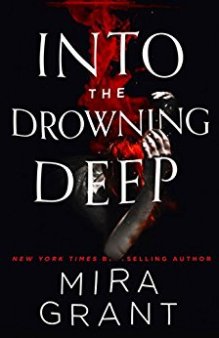
Book Review: Into the Drowning Deep

drowning deepInto the Drowning Deep
by Mira Grant (aka Seanan McGuire)
Fantasy Horror
450 pages
Published November 2017

WOW. I don’t typically read horror, but this was fantasy horror, and WOW. I picked up the novella precursor to this sometime last year – I never reviewed it here, probably because it was barely over 100 pages, but it was fascinating and haunting all the same. Rolling in the Deep told the story of the Atargatis, a ship sent out to the Mariana Trench to stage a mockumentary – supposedly looking for mermaids, but equipped with actors who could swim with mermaid tails. They never planned to find anything. Except they did. And they all died. One by one at first, a few people picked off, then the entire ship swarmed and eaten. The reader sees this happen, but to anyone not on the ship, the only thing they find is some footage on an abandoned ship.

Into the Drowning Deep fast forwards a few years; the production company, Imagine Network, is not doing so well, and they want to prove that the footage wasn’t a hoax. So they assemble a new mission, this one with a lot more security. (Though they still picked security with an eye for what would look good on TV, rather than what would be effective, which was a poor choice.) The reader, of course, knows that the mermaids are real, and that they are dangerous, so you spend much of the first part of the book in a state of suspense waiting for them to show up. (I actually thought it took a little too long for them to finally show up, but the time was used for character-building.)

The book is very Lovecraftian, actually – from the strong, building sense of foreboding doom to the creatures that should not exist, to the kind of gibbering insanity near the end. It’s probably why I liked the book so much; Lovecraft is about the only kind of horror writing I like, and I get the same feeling from Grant’s writing.

So yes, the book is about mermaids. But these aren’t mermaids as you’ve seen them before. They’re not cute, they’re not seductive, they don’t want to live on land, and they’re definitely not friendly. These mermaids are predators. Intelligent predators, but predators. And humans, apparently, are delicious.

Most of the characters in the book are scientists trying to prove mermaids exist, so there’s a lot of science happening aboard the ship, and Grant doesn’t shy away from it happening on the page as well. She also includes a pair of deaf scientist twins, and their interpreter sibling, which is important because the mermaids use a form of sign language as well. Most of the main characters are women, which is also great to see in such a large concentration of fictional scientists.

If you like fantasy horror, i.e. Lovecraft, you should definitely pick this up. Rolling in the Deep is also worth reading first – I think it definitely adds another layer to the sense of foreboding doom.

Technically this is billed as #1 in the series, which gives me hope for more. I’m counting it for PopSugar’s “next book in a series you started” because Rolling in the Deep came out two years prior and is a prequel. (It’s listed as #.5)

From the cover of Into the Drowning Deep:

The ocean is home to many myths,
But some are deadly…
Seven years ago the Atargatis set off on a voyage to the Mariana Trench to film a mockumentary bringing to life ancient sea creatures of legend. It was lost at sea with all hands. Some have called it a hoax; others have called it a tragedy.
Now a new crew has been assembled. But this time they’re not out to entertain. Some seek to validate their life’s work. Some seek the greatest hunt of all. Some seek the truth. But for the ambitious young scientist Victoria Stewart this is a voyage to uncover the fate of the sister she lost.
Whatever the truth may be, it will only be found below the waves.
But the secrets of the deep come with a price.

rolling in the deepFrom the cover of Rolling in the Deep:

When the Imagine Network commissioned a documentary on mermaids, to be filmed from the cruise ship Atargatis, they expected what they had always received before: an assortment of eyewitness reports that proved nothing, some footage that proved even less, and the kind of ratings that only came from peddling imaginary creatures to the masses.

They didn’t expect actual mermaids.  They certainly didn’t expect those mermaids to have teeth.

This is the story of the Atargatis, lost at sea with all hands.  Some have called it a hoax; others have called it a maritime tragedy.  Whatever the truth may be, it will only be found below the bathypelagic zone in the Mariana Trench…and the depths are very good at keeping secrets.

Top Ten Tuesday: Books That Take Place in Another Country

Hey! I’m trying something new this week, and participating in That Artsy Reader Girl’s Top Ten Tuesday. If I like it, I may continue with these on Tuesdays instead of my typical book reviews. (Those might get bumped to Monday, or I might actually start reading a little slower and only do Thursday and Saturday – we’ll see!)

This week’s topic is “Books That Take Place in Another Country” – and while I could probably cheat and list a bunch of fantasy, I’m going to try to stick with actual real-world countries!

Top of my list is definitely The Astonishing Color of After. It was my Book of the Month this month and it was outstanding. A small part of it is set in the US, but the majority of the book takes place in Taiwan.IMG_20180323_234037_500.jpg

bornacrime#2 is Trevor Noah’s Born A Crime – It’s set in South Africa. I’ve really enjoyed Trevor as the host of The Daily Show, and his book was laugh-out-loud funny.


hangman's daughter#3 I’m going with Oliver Pötzsch’s The Hangman’s Daughter. Really the entire series. These are set in 17th century Germany, and they follow the Executioner, his daughter, and her man as they solve mysteries. They are translated from their original German, and they’re excellent.


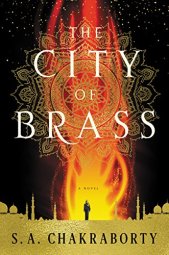
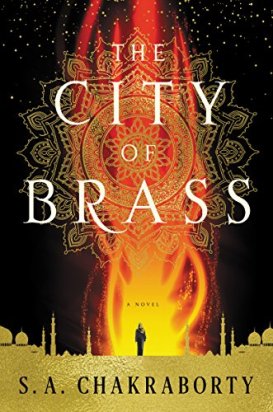
city of brass#4 – I feel like The City of Brass only barely counts, as it began in Egypt and then moved to a fantasy realm, but it was amazing so I’m listing it anyway! I love non-Western inspired fantasy, and this has djinns, ifrits, court intrigue, a little bit of romance, hidden magic – everything, basically!


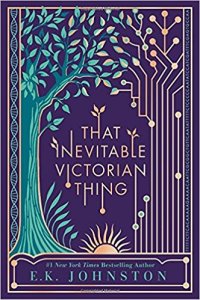
victorian#5 – I’ve read a lot of Canadian books in the past year for my Read Canadian Challenge, but surprisingly several of those were still actually set in the US! (Well, let’s be real, it’s unsurprising that most of their dystopia has its roots in the US, who’s more likely to be the cause of the end of civilization?) That Inevitable Victorian Thing was YA alternate future. I don’t want to call it dystopia because it was surprisingly positive. Though I really want to see the darker side of the world it’s set in, because that technology could be twisted to nefarious purposes SO EASILY. And as I was writing this, I realized THIS is what I know this author from – I was just looking at my bookshelf at the Star Wars Ahsoka book (which I haven’t read yet, I need to fix that!) and thinking the author looked familiar.

kissofsteel#6The London Steampunk series! Bec McMaster’s brand of steampunk romance and political intrigue is exactly my kind of escapist fluff. Vampires, werewolves, robots and London court politics and underground crime bosses – this series was great.

places in between#7The Places in Between by Rory Stewart is a book I read MANY years ago before I started this blog – Stewart chronicles his travels as he walks(!!) across Afghanistan. It’s REALLY good, and I really liked his style of writing. He also wrote The Prince of the Marshes and Other Occupational Hazards of a Year in Iraq.


handmaid#8 – You know, it might be cheating a little bit, but I’m going to throw in Margaret Atwood’s The Handmaid’s Tale. It’s a harrowing book, and it’s technically set in Gilead, even if it is supposed to be what’s left of the US. But it’s definitely one of my all-time favorite books, and it somewhat fits the theme! (It’s also free via Kindle Unlimited right now!)

crown's fate#9The Crown’s Game and The Crown’s Fate are Russian fantasy, and they’re beautiful. I cried like a baby at the end of the first, and the second was wonderfully bittersweet. Game was Evelyn Skye’s debut novel, and I WEPT at the end. It didn’t actually end on a cliffhanger; I didn’t know there was a sequel until much later.


his majesty's dragon#10The Temeraire Series covers the Napoleanic Wars, if there were dragons involved! It ranges from Britain, to France, to China. I’ve only read the first six books and there are apparently nine now. I got a little bored with the series and moved on to other things, but the world building, like all of Naomi Novik‘s work, was really good. (Uprooted, another book of hers not in this series, is an absolute favorite of mine!)


So those are my top ten picks for books not set in my country (The United States). It was actually a little difficult, because I didn’t want to use books set in entirely fictional countries, and I read a LOT of fantasy! I also didn’t want to use a ton of books set in the United Kingdom, and that’s where a lot of romance and urban fantasy are based. Honorable Mention probably goes to Bram Stoker’s Dracula, which I almost included. Also anything by Philippa Gregory. I’ve reviewed several books that I didn’t include here that would fit, but I didn’t think they were good enough to warrant a spot in a Top Ten list.

This was kind of fun. What do you think, should I continue doing these on Tuesdays? Next week’s theme is “Characters I liked that were in Non-Favorite/Disliked Books.” That’s gonna be a tough one!

Book Review: City of Brass

city of brassCity of Brass
S. A. Chakraborty
Fantasy
400 pages
Published November 2017

So much to say about this outstanding debut novel! First I’d like to address the issues around the author, then I’ll delve into the book itself. (It’s fantastic, though!)

So the book has been touted as an “own voices” novel, seemingly much to the author’s chagrin. She is Muslim, but she’s a white convert (Chakraborty is her married name). She has striven to correct the misconception about her ethnicity when she finds it, tweeting about it and talking about it in interviews. (This interview is a good example.) Because the book is pure fantasy, in a fantasy realm after the first few chapters, I’m not too worried about it not actually being written by a middle-eastern author. She does note in the interview I linked that she’s not qualified to write some stories because of her ethnicity, and I appreciate that recognition of privilege. As far as I can tell, (as a white person myself) she did justice to the bits of mythology that she included. (Given the reception by people who were so excited about it being an Own Voices book, I think I’m probably right.) Her twitter (@SChakrabs) is FULL of links to minority authors and retweets about their books. I am very impressed by the level of her advocacy for minority authors.

So that aside, I LOVED THIS BOOK. I almost always enjoy fantasy inspired by non-western mythology: Children of Blood and Bone was fantastic, and though Forest of a Thousand Lanterns had a western fairytale at its heart, being reimagined through an Asian lense was really neat to read. The Bear and The Nightingale and The Girl in the Tower were Russian inspired, as were The Crown’s Game/The Crown’s Fate. I really do try to pick up non-western inspired fantasy when I can. City of Brass scratched that itch perfectly.

City of Brass opens in Cairo, where our heroine, Nahri, is a con-woman with small healing magics. When a ritual goes awry, she’s thrust into the world of the djinn. It’s when Nahri and her accidental bodyguard, Dara, arrive at the Djinns’ city of Daevabad that the story really gets started.

I’m still a little confused about the difference between djinn and Daeva; Daeva seem to be one of the tribes but also the name for the entire race, and some of them get offended at being called djinn but some of them don’t? I’m not really sure about that distinction. There is a clear line between djinn and Ifrit, though – Ifrit are immensely powerful, immortal beings who refused to subject themselves to punishment many centuries ago. I’m not sure I actually see a downside to being Ifrit, other than the djinn all think they’re evil. The Ifrit, however, are out to get Nahri, and Dara’s not having any of THAT.

I love Dara – he’s a fascinating character, with a violent, mysterious backstory. I’m very eager to read more about him and figure out exactly what’s up with his background. Nahri is also awesome – a little arrogant, but by the end of the book she’s starting to learn she might need help from those around her. Unfortunately, also by the end of the book she doesn’t know who to trust. The naive djinn prince, Ali, is the third main character of the book, and while I can see him having an interesting story, his personality is still a little flat. Hopefully the second book will see advancement in all three of these characters’ personalities.

And I can’t WAIT for the second book! City of Brass didn’t exactly end on a cliffhanger, but it did leave many questions unanswered and our main characters’ fates uncertain. Unfortunately, I can’t find any information on the sequel, just that it’s being edited. No release date or title yet.

Read this book. It’s fantastic.

From the cover of City of Brass:

Nahri has never believed in magic. Certainly, she has power; on the streets of eighteenth-century Cairo, she’s a con woman of unsurpassed talent. But she knows better than anyone that the trades she uses to get by—palm readings, zars, and a mysterious gift for healing—are all tricks, both the means to the delightful end of swindling Ottoman nobles and a reliable way to survive. 

But when Nahri accidentally summons Dara, an equally sly, darkly mysterious djinn warrior, to her side during one of her cons, she’s forced to reconsider her beliefs. For Dara tells Nahri an extraordinary tale: across hot, windswept sands teeming with creatures of fire and rivers where the mythical marid sleep, past ruins of once-magnificent human metropolises and mountains where the circling birds of prey are more than what they seem, lies Daevabad, the legendary city of brass—a city to which Nahri is irrevocably bound.

In Daevabad, within gilded brass walls laced with enchantments and behind the six gates of the six djinn tribes, old resentments run deep. And when Nahri decides to enter this world, her arrival threatens to ignite a war that has been simmering for centuries. 

Spurning Dara’s warning of the treachery surrounding her, she embarks on a hesitant friendship with Alizayd, an idealistic prince who dreams of revolutionizing his father’s corrupt regime. All too soon, Nahri learns that true power is fierce and brutal. That magic cannot shield her from the dangerous web of court politics. That even the cleverest of schemes can have deadly consequences. 

After all, there is a reason they say to be careful what you wish for . . .

Book Review: The Girl in the Tower

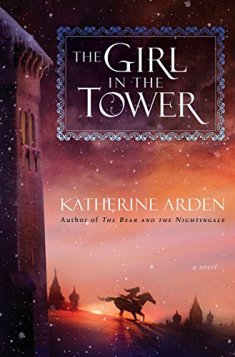
girlinthetowerThe Girl in the Tower
Katherine Arden
Fantasy
384 pages
December 2017

The Girl in the Tower is the second in the Winternight Trilogy, after the acclaimed debut novel, The Bear and the Nightingale. It’s always hard to talk about sequels without giving too much away about the preceding books, so forgive me if I’m vague. One advantage to waiting so long to read The Bear and the Nightingale was that I got to jump straight into the sequel! Now I have to wait several months for the third.

The Girl in the Tower revisits our heroine, Vasya, from the first book. Now she has left home to begin her adventures – though her travels are curtailed pretty quickly, and she’s roped into going to Moscow with her brother and the Grand Prince, while disguised as a boy. While in Moscow she learns a little bit more about her family history, and I’m hoping the rest will be revealed in the third book this summer. (The Winter of the Witch is scheduled to release in August 2018.)

In this second book, Vasya has done some growing, and has learned to make use of the spirits she sees – she knows the hearth spirits can always find their families, and uses that trait to track a kidnapped girl when no one else can. So long as no one realizes what she’s doing, she’s fine. But Rus is in the crossover period between the old ways and the new, and if she’s found talking to spirits, she’ll be branded a witch all over again. She keeps her masquerade going through the first two-thirds of the book, but it’s obvious it’s going to fail eventually. The way in which it does is sudden and unexpected, and the repercussions are harsh.

And then there’s Morozko, the Frost Demon, the god of death. I love Morozko. He’s by necessity enigmatic – and in a rough position. I want he and Vasya to fall in love and have a happy ending – the attraction between them is impossible to miss – but immortal beings, in this world, can’t love. If they love they lose their immortality. And, possibly, their lives entirely. I hope the author has a solution in mind for these two, because I currently don’t see one.

I actually liked this one more than the first book, which is unusual. I liked the first one, but I wasn’t blown away. This one pulled me in and didn’t let me go. Amazing sequel, and I hope the third one lives up to this standard!

From the cover of The Girl in the Tower:

Katherine Arden’s enchanting first novel introduced readers to an irresistible heroine. Vasilisa has grown up at the edge of a Russian wilderness, where snowdrifts reach the eaves of her family’s wooden house and there is truth in the fairy tales told around the fire. Vasilisa’s gift for seeing what others do not won her the attention of Morozko—Frost, the winter demon from the stories—and together they saved her people from destruction. But Frost’s aid comes at a cost, and her people have condemned her as a witch.

Now Vasilisa faces an impossible choice. Driven from her home by frightened villagers, the only options left for her are marriage or the convent. She cannot bring herself to accept either fate and instead chooses adventure, dressing herself as a boy and setting off astride her magnificent stallion Solovey.

But after Vasilisa prevails in a skirmish with bandits, everything changes. The Grand Prince of Moscow anoints her a hero for her exploits, and she is reunited with her beloved sister and brother, who are now part of the Grand Prince’s inner circle. She dares not reveal to the court that she is a girl, for if her deception were discovered it would have terrible consequences for herself and her family. Before she can untangle herself from Moscow’s intrigues—and as Frost provides counsel that may or may not be trustworthy—she will also confront an even graver threat lying in wait for all of Moscow itself.

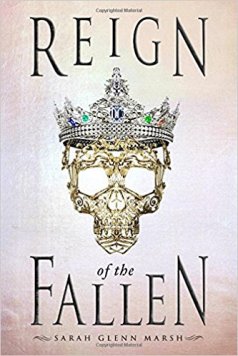
Book Review: Reign of the Fallen

fallenReign of the Fallen
by Sarah Glenn Marsh
YA Fantasy
379 pages
Published January 2018

One of my book-centered social networks, Litsy, does an occasional “24 in 48” where the goal is to spend 24 hours out of 48 hours reading. I’m almost never able to participate in these because my weekends are pretty busy – and I don’t want to ignore my husband for an entire weekend! However, he went out of town for one of the last weekends in February, and I was able to spend it doing my own personal 24 in 48. Reign of the Fallen is the first of many books I read that weekend!

Reign of the Fallen has a pretty interesting premise – there are a few different school of magic in this world, and our main character is a necromancer. (One of the side characters is a Beast Master, and another is a Healer. We also see Weather Mages.) Necromancers, far from being the mysterious evil mages we see in most fantasy, are revered and noble in this world; they bring souls back from the Deadlands, when they can, so they can continue “living” in the real world. “Living” is a loose term – they must make sure they are completely covered at all times – if a living person sees any of their flesh, they turn – immediately – into terrifying monsters that hunt and kill both the living and the Dead. And the more they kill, the more powerful they become. Thankfully, people are very, very careful, and so Shades are very rare! …..or they were. Now that someone has started to purposefully make them, shit’s hitting the fan.

Odessa and her friends – three other Necromancers, a Healer, a Beast Master, and a Princess – set out to solve this mystery and take out the shades wreaking havoc on the kingdom. Entwined in that plot is the near-breaking of Odessa’s spirit when one of her friends dies, and the recovery from that, as well as romances with people of both genders. Yay for bisexual representation! (One of her Necromancer friends is also in a homosexual relationship with the Healer, and it’s all perfectly normal. I love seeing so many fantasy YA books these days not treating that as something special or other. Yay for culture changing! Maybe someday it won’t even be so out-of-the-ordinary that I’ll feel the need to point it out!)

The book had a few technical problems – a few scenes where I was confused how a character had gotten someplace when I thought they were somewhere else, some confusion in how a scene was described – but those could be overlooked with how wonderful the rest of the book was.

The plot was wrapped up very nicely by the end of the book, so I don’t know if there will be a sequel or not, but I really enjoyed the world and would definitely read one if she writes it!

As a bonus, the author lives in Richmond, Virginia, so I’m counting this as a book by a local author for the PopSugar 2018 Challenge!

From the cover of Reign of the Fallen:

Without the dead, she’d be no one.

Odessa is one of Karthia’s master necromancers, catering to the kingdom’s ruling Dead. Whenever a noble dies, it’s Odessa’s job to raise them by retrieving their soul from a dreamy and dangerous shadow world called the Deadlands. But there is a cost to being raised: the Dead must remain shrouded. If even a hint of flesh is exposed, a grotesque transformation begins, turning the Dead into terrifying, bloodthirsty Shades.

A dramatic uptick in Shade attacks raises suspicions and fears around the kingdom. Soon, a crushing loss of one of her closest companions leaves Odessa shattered, and reveals a disturbing conspiracy in Karthia: Someone is intentionally creating Shades by tearing shrouds from the Dead–and training them to attack. Odessa is forced to contemplate a terrifying question: What if her magic is the weapon that brings the kingdom to its knees? 

Fighting alongside her fellow mages–and a powerful girl as enthralling as she is infuriating–Odessa must untangle the gruesome plot to destroy Karthia before the Shades take everything she loves.

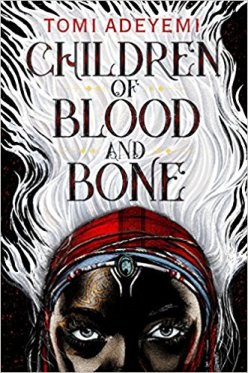
Book Review: Children of Blood and Bone

childrenChildren of Blood and Bone
Tomi Adeyemi
Fantasy
600 pages
Release date March 6, 2018

Have you ever reached the end of a book and yelled “NOOOOO!!!”? Because I just did. Children of Blood and Bone ends on a HUGE cliffhanger, and I’m even more upset about that than I would be normally – I got this book as an advanced reader’s copy through Goodreads. So not only do I have to wait for the sequel to come out, THIS BOOK ISN’T EVEN OUT YET. *screams internally*

That massive frustration aside, I LOVED THIS BOOK. African-inspired fantasy novels are starting to crop up, along with other non-European based fantasy, and I’m loving it. (You can find Russian inspired fantasy that I’ve read previously here and here, and Jewish/Arab fantasy here.) Adeyemi is a Nigerian-American author, and this is her debut novel. It definitely shows some hallmarks of a debut novel – the dialogue is a bit stilted in places, and it’s a little bit formulaic – but the world building is excellent.

Children of Blood and Bone is a story of oppression, and the sparks of a rebellion. I assume the rest of the trilogy will deal with the actual rebellion, but given the cliffhanger it ends on, I’m not actually sure of that. When Zélie, the main character, was very young, magic failed, and the king, who was afraid of maji, took the opportunity to kill every maji in his kingdom before they could find a way to regain their powers. Since then, every person who could have become a maji as they grew (they’re marked by their white hair) has been treated as a second-class citizen. They’re forced into slums, used as slave labor, kicked around by nobility and guards, made to pay higher taxes, and forbidden to breed with the other classes. They don’t have magic – and they have no way to get it – but they’re treated as trash by the king that hates them, and accordingly by the rest of his subjects.

At the beginning of the book, a magical artifact resurfaces that restores magic to any diviner (potential maji) that touches it. This, of course, is not okay with the king, and most of the book is about the race to use the magical artifact while being chased by the king’s son and his guards who are trying to destroy it. The conflicted prince has secrets of his own, though, and as the book weaves through jungles, mountains, and seas, he wavers in his mission.

It’s always difficult to review books without giving too much away about the plot, so I won’t say much more about the events. I really enjoyed that they rode giant cats – leopanaires. Zélie and her allies ride a lion leopanaire, which is apparently somewhat unusual. Most of the guards ride leopards or cheetahs, while the royal family rides snow leopanaires. The magic is unique, the gods and religion are beautifully fleshed out, and overall I just really loved this world, and I’m very sad it will be so long before I can dive back into it.

This is also my “Book published in 2018” for the Popsugar Reading Challenge.

From the cover of Children of Blood and Bone:

Zélie Adebola remembers when the soil of Orïsha hummed with magic. Burners ignited flames, Tiders beckoned waves, and Zélie’s Reaper mother summoned forth souls.

But everything changed the night magic disappeared. Under the orders of a ruthless king, maji were targeted and killed, leaving Zélie without a mother and her people without hope.

Now Zélie has one chance to bring back magic and strike against the monarchy. With the help of a rogue princess, Zélie must outwit and outrun the crown prince, who is hell-bent on eradicating magic for good.

Danger lurks in Orïsha, where snow leopanaires prowl and vengeful spirits wait in the waters. yet the greatest danger may be Zélie herself as she struggles to control her powers – and her growing feelings for an enemy.