Book Review: Love Saves the Day

love saves the dayLove Saves the Day
by Gwen Cooper
Fiction
314 pages
Published 2013

This book was heartbreaking and lovely. I definitely cried at several points in the book; Prudence’s confusion at her owner never coming home and having to live with her owner’s daughter is poignant and tearjerking. I am owned by a rather strong-willed cat, myself, and  many of Prudence’s behaviors reminded me of my own Boudicca. (Sleeping beside me and reaching out one paw so we’re touching in our sleep is something I thought was peculiar to her until reading this book!)

The strained relationship between mother and daughter is also something I can identify with.

I had planned to spend next year reading books told from the viewpoints of animals – I’m not sure why this one snuck in this year, but I’m glad it did, because I absolutely adore this book. Some people might think it unrealistic that Prudence understands human speech, but at times I’m pretty sure Boudicca understands every word I’m saying, so I don’t think it’s out of the realm of possibility!

Boudicca

Boudicca, asleep on my pillow

I love how Prudence and Laura learn to live together, and eventually to mourn their mother and begin to heal. The book is a lovely example of what a pet can bring to a home. I know my cat has kept me sane through some very trying times; when my husband was in the Marines, he was away for many months at a time. The separations after we got Boudicca were far easier than the ones before. I felt a lot more sane carrying on conversations with a cat than with empty air!

Love Saves the Day, despite the sappy name, is a beautiful book. Just keep a pile of tissues handy!

(This book is my pick for PopSugar’s prompt “favorite prompt from the last three years of challenges” – my favorite prompt is “book with a cat on the cover!”)

From the cover of Love Saves the Day:

Humans best understand the truth of things if they come at it indirectly. Like how sometimes the best way to catch a mouse that’s right in front of you is to back up before you pounce.”

So notes Prudence, the irresistible brown tabby at the center of Gwen Cooper’s tender, joyful, utterly unforgettable novel, which is mostly told through the eyes of this curious (and occasionally cranky) feline.

When five-week-old Prudence meets a woman named Sarah in a deserted construction site on Manhattan’s Lower East Side, she knows she’s found the human she was meant to adopt. For three years their lives are filled with laughter, tuna, catnaps, music, and the unchanging routines Prudence craves. Then one day Sarah doesn’t come home. From Prudence’s perch on the windowsill she sees Laura, the daughter who hardly ever comes to visit Sarah, arrive with her new husband. They’re carrying boxes. Before they even get to the front door, Prudence realizes that her life has changed forever.

Suddenly Prudence finds herself living in a strange apartment with humans she barely knows. It could take years to train them in the feline courtesies and customs (for example, a cat should always be fed before the humans, and at the same exact time every day) that Sarah understood so well. Prudence clings to the hope that Sarah will come back for her while Laura, a rising young corporate attorney, tries to push away memories of her mother and the tumultuous childhood spent in her mother’s dusty downtown record store. But the secret joys, past hurts, and life-changing moments that make every mother-daughter relationship special will come to the surface. With Prudence’s help Laura will learn that the past, like a mother’s love, never dies.

Poignant, insightful, and laugh-out-loud funny, Love Saves the Day is a story of hope, healing, and how the love of an animal can make all of us better humans. It’s the story of a mother and daughter divided by the turmoil of bohemian New York, and the opinionated, irrepressible feline who will become the bridge between them. It’s a novel for anyone who’s ever lost a loved one, wondered what their cat was really thinking, or fallen asleep with a purring feline nestled in their arms. Prudence, a cat like no other, is sure to steal your heart.
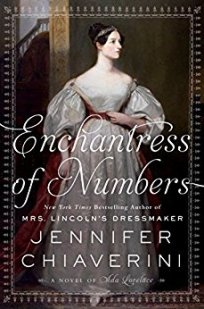
Book Review: Enchantress of Numbers

enchantress of numbersEnchantress of Numbers
by Jennifer Chiaverini
Historical Fiction
426 pages
Published December 2017

Enchantress of Numbers has been making the rounds lately – it seems there’s been an interest in books about women in STEM, which is a good thing. Ada Lovelace is considered to be the first computer programmer, though “computers” as we know them didn’t really exist at the time. What she wrote was an algorithm for making a machine spit out a specific result – a machine that was never actually built. Still, her contributions to the very early science of computing were invaluable and she is (rightly) revered for them. Sadly, she died in her 30s from ovarian cancer – a loss that undoubtedly slowed down the advancement of early computing.

The early parts of the book are told in third person, about her mother’s marriage to Lord Byron, and Ada’s own birth. From there, Ada tells the story in first person, as she grows up with her strict mother in English Aristocratic Society.

It is historical fiction, so the author has taken some liberties, though I was a bit confused that in the book she meets Mr. Babbage some time before meeting Mrs. Somerville; Wikipedia says Lady Lovelace was introduced to Mr. Babbage by her mentor, Mrs. Somerville. Odd that the author chose to change that up.

I’ve definitely read better historical fiction – Philippa Gregory is a personal favorite – but this wasn’t bad. It was a little slow, and a little dry in spots, but it was overall good. If you weren’t interested in Ada Lovelace or early computing and mathematics I don’t think the book would be very enjoyable at all. But if you do like those things, and are willing to put up with a little bit of boredom, it’s a decent book.

This is also my PopSugar 2018 Challenge pick for “novel based on a real person.”

From the cover of Enchantress of Numbers:

The only legitimate child of Lord Byron, the most brilliant, revered, and scandalous of the Romantic poets, Ada was destined for fame long before her birth. But her mathematician mother, estranged from Ada’s infamous and destructively passionate father, is determined to save her only child from her perilous Byron heritage. Banishing fairy tales and make-believe from the nursery, Ada’s mother provides her daughter with a rigorous education grounded in mathematics and science. Any troubling spark of imagination—or worse yet, passion or poetry—is promptly extinguished. Or so her mother believes.
 
When Ada is introduced into London society as a highly eligible young heiress, she at last discovers the intellectual and social circles she has craved all her life. Little does she realize how her exciting new friendship with Charles Babbage—the brilliant, charming, and occasionally curmudgeonly inventor of an extraordinary machine, the Difference Engine—will define her destiny.

Enchantress of Numbers unveils the passions, dreams, and insatiable thirst for knowledge of a largely unheralded pioneer in computing—a young woman who stepped out of her father’s shadow to achieve her own laurels and champion the new technology that would shape the future.

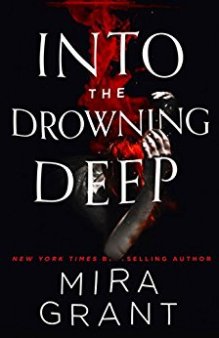
Book Review: Into the Drowning Deep

drowning deepInto the Drowning Deep
by Mira Grant (aka Seanan McGuire)
Fantasy Horror
450 pages
Published November 2017

WOW. I don’t typically read horror, but this was fantasy horror, and WOW. I picked up the novella precursor to this sometime last year – I never reviewed it here, probably because it was barely over 100 pages, but it was fascinating and haunting all the same. Rolling in the Deep told the story of the Atargatis, a ship sent out to the Mariana Trench to stage a mockumentary – supposedly looking for mermaids, but equipped with actors who could swim with mermaid tails. They never planned to find anything. Except they did. And they all died. One by one at first, a few people picked off, then the entire ship swarmed and eaten. The reader sees this happen, but to anyone not on the ship, the only thing they find is some footage on an abandoned ship.

Into the Drowning Deep fast forwards a few years; the production company, Imagine Network, is not doing so well, and they want to prove that the footage wasn’t a hoax. So they assemble a new mission, this one with a lot more security. (Though they still picked security with an eye for what would look good on TV, rather than what would be effective, which was a poor choice.) The reader, of course, knows that the mermaids are real, and that they are dangerous, so you spend much of the first part of the book in a state of suspense waiting for them to show up. (I actually thought it took a little too long for them to finally show up, but the time was used for character-building.)

The book is very Lovecraftian, actually – from the strong, building sense of foreboding doom to the creatures that should not exist, to the kind of gibbering insanity near the end. It’s probably why I liked the book so much; Lovecraft is about the only kind of horror writing I like, and I get the same feeling from Grant’s writing.

So yes, the book is about mermaids. But these aren’t mermaids as you’ve seen them before. They’re not cute, they’re not seductive, they don’t want to live on land, and they’re definitely not friendly. These mermaids are predators. Intelligent predators, but predators. And humans, apparently, are delicious.

Most of the characters in the book are scientists trying to prove mermaids exist, so there’s a lot of science happening aboard the ship, and Grant doesn’t shy away from it happening on the page as well. She also includes a pair of deaf scientist twins, and their interpreter sibling, which is important because the mermaids use a form of sign language as well. Most of the main characters are women, which is also great to see in such a large concentration of fictional scientists.

If you like fantasy horror, i.e. Lovecraft, you should definitely pick this up. Rolling in the Deep is also worth reading first – I think it definitely adds another layer to the sense of foreboding doom.

Technically this is billed as #1 in the series, which gives me hope for more. I’m counting it for PopSugar’s “next book in a series you started” because Rolling in the Deep came out two years prior and is a prequel. (It’s listed as #.5)

From the cover of Into the Drowning Deep:

The ocean is home to many myths,
But some are deadly…
Seven years ago the Atargatis set off on a voyage to the Mariana Trench to film a mockumentary bringing to life ancient sea creatures of legend. It was lost at sea with all hands. Some have called it a hoax; others have called it a tragedy.
Now a new crew has been assembled. But this time they’re not out to entertain. Some seek to validate their life’s work. Some seek the greatest hunt of all. Some seek the truth. But for the ambitious young scientist Victoria Stewart this is a voyage to uncover the fate of the sister she lost.
Whatever the truth may be, it will only be found below the waves.
But the secrets of the deep come with a price.

rolling in the deepFrom the cover of Rolling in the Deep:

When the Imagine Network commissioned a documentary on mermaids, to be filmed from the cruise ship Atargatis, they expected what they had always received before: an assortment of eyewitness reports that proved nothing, some footage that proved even less, and the kind of ratings that only came from peddling imaginary creatures to the masses.

They didn’t expect actual mermaids.  They certainly didn’t expect those mermaids to have teeth.

This is the story of the Atargatis, lost at sea with all hands.  Some have called it a hoax; others have called it a maritime tragedy.  Whatever the truth may be, it will only be found below the bathypelagic zone in the Mariana Trench…and the depths are very good at keeping secrets.

Book Review: The Astonishing Color of After

astonishingcolorThe Astonishing Color of After
by Emily X. R. Pan
Fiction – Magical Realism
470 pages
Published March 2018

So I finally subscribed to the Book of the Month club. Every month they select several books, and you get to pick one or more. (It’s an extra $10 for each one past the first, but they are GORGEOUS hardcovers, it’s worth it!) So for my first box I chose The Astonishing Color of After and Eleanor Oliphant is completely fine, both books I’ve heard a lot of great things about. They’re also both debut novels, which is something I’ve had a lot of really good luck with. And that held true for this one, certainly!

Just WOW. The Astonishing Color of After is about a teenage girl, an artist, dealing with her mother’s depression and ensuing suicide. Part of what makes the book so fascinating is Leigh’s constant description of colors. She uses color as shorthand for emotions – her grandmother might have a vermilion expression on her face, or she might be feeling very orange while staring at her mother’s coffin at the funeral. Between colors-as-feelings and her insomnia-induced hallucinations (or magic – the book is deliberately, I think, noncommittal on whether some things only happen in her head or not) the entire book feels a little surrealistic. But grief and mourning DO feel surrealistic. The book is amazingly evocative and emotional and I absolutely adore it. This, along with City of Brass and Children of Blood and Bone, are definitely on my Best of 2018 list.

As an added bonus, the author is the American child of Taiwanese immigrants herself. So all the ghost traditions and folklore from Leigh’s journey to Taiwan are from her ancestry as well.

This book was gorgeous. It may need a trigger warning for depression and suicide. If you can handle those themes, read it.

From the cover of The Astonishing Color of After:

“I didn’t cry. That was not my mother. My mother is free in the sky. My mother is a bird.”

Leigh Chen Sanders is absolutely certain about one thing: When her mother died by suicide, she turned into a bird.

Leigh, who is half Asian and half white, travels to Taiwan to meet her maternal grandparents for the first time. There, she is determined to find her mother, the bird. In her search, she winds up chasing after ghosts, uncovering family secrets, and forging a new relationship with her grandparents. And as she grieves, she must try to reconcile the fact that on the same day she kissed her best friend and longtime secret crush, Axel, her mother was taking her own life.

Alternating between reality and magic, past and present, hope and despair, The Astonishing Color of After is a stunning and heartbreaking novel about finding oneself through family history, art, bravery, and love.

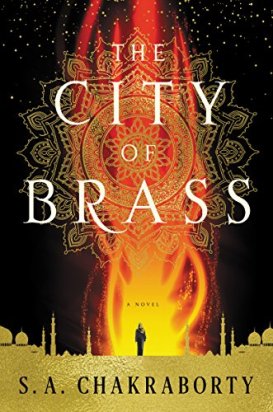
Book Review: City of Brass

city of brassCity of Brass
S. A. Chakraborty
Fantasy
400 pages
Published November 2017

So much to say about this outstanding debut novel! First I’d like to address the issues around the author, then I’ll delve into the book itself. (It’s fantastic, though!)

So the book has been touted as an “own voices” novel, seemingly much to the author’s chagrin. She is Muslim, but she’s a white convert (Chakraborty is her married name). She has striven to correct the misconception about her ethnicity when she finds it, tweeting about it and talking about it in interviews. (This interview is a good example.) Because the book is pure fantasy, in a fantasy realm after the first few chapters, I’m not too worried about it not actually being written by a middle-eastern author. She does note in the interview I linked that she’s not qualified to write some stories because of her ethnicity, and I appreciate that recognition of privilege. As far as I can tell, (as a white person myself) she did justice to the bits of mythology that she included. (Given the reception by people who were so excited about it being an Own Voices book, I think I’m probably right.) Her twitter (@SChakrabs) is FULL of links to minority authors and retweets about their books. I am very impressed by the level of her advocacy for minority authors.

So that aside, I LOVED THIS BOOK. I almost always enjoy fantasy inspired by non-western mythology: Children of Blood and Bone was fantastic, and though Forest of a Thousand Lanterns had a western fairytale at its heart, being reimagined through an Asian lense was really neat to read. The Bear and The Nightingale and The Girl in the Tower were Russian inspired, as were The Crown’s Game/The Crown’s Fate. I really do try to pick up non-western inspired fantasy when I can. City of Brass scratched that itch perfectly.

City of Brass opens in Cairo, where our heroine, Nahri, is a con-woman with small healing magics. When a ritual goes awry, she’s thrust into the world of the djinn. It’s when Nahri and her accidental bodyguard, Dara, arrive at the Djinns’ city of Daevabad that the story really gets started.

I’m still a little confused about the difference between djinn and Daeva; Daeva seem to be one of the tribes but also the name for the entire race, and some of them get offended at being called djinn but some of them don’t? I’m not really sure about that distinction. There is a clear line between djinn and Ifrit, though – Ifrit are immensely powerful, immortal beings who refused to subject themselves to punishment many centuries ago. I’m not sure I actually see a downside to being Ifrit, other than the djinn all think they’re evil. The Ifrit, however, are out to get Nahri, and Dara’s not having any of THAT.

I love Dara – he’s a fascinating character, with a violent, mysterious backstory. I’m very eager to read more about him and figure out exactly what’s up with his background. Nahri is also awesome – a little arrogant, but by the end of the book she’s starting to learn she might need help from those around her. Unfortunately, also by the end of the book she doesn’t know who to trust. The naive djinn prince, Ali, is the third main character of the book, and while I can see him having an interesting story, his personality is still a little flat. Hopefully the second book will see advancement in all three of these characters’ personalities.

And I can’t WAIT for the second book! City of Brass didn’t exactly end on a cliffhanger, but it did leave many questions unanswered and our main characters’ fates uncertain. Unfortunately, I can’t find any information on the sequel, just that it’s being edited. No release date or title yet.

Read this book. It’s fantastic.

From the cover of City of Brass:

Nahri has never believed in magic. Certainly, she has power; on the streets of eighteenth-century Cairo, she’s a con woman of unsurpassed talent. But she knows better than anyone that the trades she uses to get by—palm readings, zars, and a mysterious gift for healing—are all tricks, both the means to the delightful end of swindling Ottoman nobles and a reliable way to survive. 

But when Nahri accidentally summons Dara, an equally sly, darkly mysterious djinn warrior, to her side during one of her cons, she’s forced to reconsider her beliefs. For Dara tells Nahri an extraordinary tale: across hot, windswept sands teeming with creatures of fire and rivers where the mythical marid sleep, past ruins of once-magnificent human metropolises and mountains where the circling birds of prey are more than what they seem, lies Daevabad, the legendary city of brass—a city to which Nahri is irrevocably bound.

In Daevabad, within gilded brass walls laced with enchantments and behind the six gates of the six djinn tribes, old resentments run deep. And when Nahri decides to enter this world, her arrival threatens to ignite a war that has been simmering for centuries. 

Spurning Dara’s warning of the treachery surrounding her, she embarks on a hesitant friendship with Alizayd, an idealistic prince who dreams of revolutionizing his father’s corrupt regime. All too soon, Nahri learns that true power is fierce and brutal. That magic cannot shield her from the dangerous web of court politics. That even the cleverest of schemes can have deadly consequences. 

After all, there is a reason they say to be careful what you wish for . . .

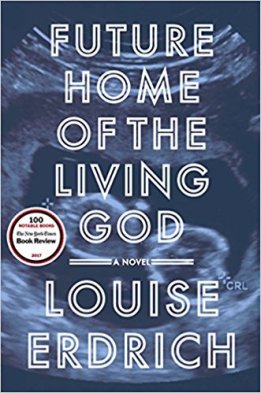
Book Review: Future Home of the Living God

futurehomeFuture Home of the Living God
Louise Erdrich
Dystopia
288 pages
November 2017

Well that was a waste of time. This book spends its entire length asking one real question. Will the main character’s baby survive? There are a number of smaller questions – Will the baby be born normal? Why is evolution turning backwards, or sideways? What happened to the main character’s father? What happened to her friend from the hospital? What happened to her husband? Does she ever find freedom?

THE BOOK ANSWERS NONE OF THESE QUESTIONS.

I am really frustrated with this book. Why did I bother reading it if it refuses to resolve any of its plotlines?

We’re going to get a little bit into writing theory here. It has been a classic recommendation to have the climax of your book 2/3 of the way through the book, and have the last third be denouement. Wrap-up. Show us how the climax affected the characters and the world. John Green does this well – all his books follow a standard plot line. Character A is introduced. A meets B. B changes A’s life. B leaves A’s life. (Those last two are usually incorporated in the climax of the book.) A has to learn how to live without B in a world changed by B’s existence in it. It’s a little formulaic, but it works for Green, and his books are great. Some books do not do this so well. Wheel of Time had 5-6 pages of denouement after the series climax, and nothing was really revealed about how the events changed the world for the better. Future Home of the Living God had TWO. TWO PAGES AFTER THE CLIMAX. AND THEY ANSWER NOTHING. The main character talks about missing winter.

I finished the book and almost threw it across the room. I probably would have, except for two things: I was at a friend’s house, and it was a library book. That’s all that saved it from that fate. I have stacks of books I want to read, and I feel like I just wasted a few hours on this piece of crap.

The writing was actually pretty good, and the main character is an Ojibwe Indian, so there’s minority representation, but the book as a whole was just CRAP. Wrap up your plotlines. Answer the questions you ask. (At least the ones having to do with your plot – you can leave unanswered philosophical questions, that’s fine.)

Hard pass on this book.

From the cover of Future Home of the Living God:

Louise Erdrich, the New York Times bestselling, National Book Award-winning author of LaRose and The Round House, paints a startling portrait of a young woman fighting for her life and her unborn child against oppressive forces that manifest in the wake of a cataclysmic event.

The world as we know it is ending. Evolution has reversed itself, affecting every living creature on earth. Science cannot stop the world from running backwards, as woman after woman gives birth to infants that appear to be primitive species of humans. Twenty-six-year-old Cedar Hawk Songmaker, adopted daughter of a pair of big-hearted, open-minded Minneapolis liberals, is as disturbed and uncertain as the rest of America around her. But for Cedar, this change is profound and deeply personal. She is four months pregnant.

Though she wants to tell the adoptive parents who raised her from infancy, Cedar first feels compelled to find her birth mother, Mary Potts, an Ojibwe living on the reservation, to understand both her and her baby’s origins. As Cedar goes back to her own biological beginnings, society around her begins to disintegrate, fueled by a swelling panic about the end of humanity.

There are rumors of martial law, of Congress confining pregnant women. Of a registry, and rewards for those who turn these wanted women in. Flickering through the chaos are signs of increasing repression: a shaken Cedar witnesses a family wrenched apart when police violently drag a mother from her husband and child in a parking lot. The streets of her neighborhood have been renamed with Bible verses. A stranger answers the phone when she calls her adoptive parents, who have vanished without a trace. It will take all Cedar has to avoid the prying eyes of potential informants and keep her baby safe.

A chilling dystopian novel both provocative and prescient, Future Home of the Living God is a startlingly original work from one of our most acclaimed writers: a moving meditation on female agency, self-determination, biology, and natural rights that speaks to the troubling changes of our time.