Book Review: Goodbye, Paris

goodbye parisGoodbye, Paris
by Anstey Harris
Contemporary Fiction
277 pages
Published August 7, 2018

Regular readers of this blog know that I’m not a big fan of Contemporary Fiction. This, however, blew me away. Goodbye, Paris, is one of August’s Books of the Month, and as usual, it is outstanding. I don’t know how they consistently pick amazing books, but month after month they bring a bit of magic.

I started this book thinking “oh, she’s a musician, I can get into that,” but I didn’t know how much the author was going to explore that facet of her life. But right away, on page 14, our main character did something that made me gasp aloud and stop and actually write in my book. Which is a thing I don’t do. Grace plays cello the way I play piano. She’s far more skilled than I am, but – well just read:

My knees poke out, bony and white, cushioning the pointed lower bouts of the cello, and the scroll rests, where it belongs, against my ear. The cello takes up its rightful place and I become nothing more than a mechanical part of it.

This is what I have always done, how I have always found myself when I’ve been lost. When I first went to music college, eighteen years old and paralyzingly shy, when ringing my parents from the pay phone in the corridor just made me miss them even more, I would feel the strength in the neck of my cello, flatten the prints of my fingers into the strings, and forget.

I play and play; through thirst, past hunger, making tiredness just a dent in my soul. I play beyond David’s marriage, his holiday, even how frightened I was when he disappeared below the platform.

I play on until the world is flat again and the spaces between my heartbeats are as even as the rhythm on the stave in front of me.

This is how and why I play piano! To see it so gorgeously described on the page was breathtaking. I am not a concert-level pianist by any means, but I’m decent, and playing piano brings me back to myself. When I’m angry or frustrated or hurt or simply feeling down, the music centers me and makes me focus until everything else falls away. From this point on, I was enthralled with this book and with Grace.

Grace’s partner, however, I was not so enthralled with. Grace and David have been together for eight years when the book opens. David has been married for all of those years, which Grace knew the night they met. (Though after they fell in love – it was one of those lightning-bolt-from-above things) He had two children with his wife, though, and a third on the way, and because of the crappy way he grew up, he was absolutely unwilling to divorce and mess up his children’s lives. Which, okay. Noble. (Though honestly, most children know when their parents are unhappy and wish they’d just divorce already, as Nadia, one of Grace’s friends, illustrates.) He and his wife both know their marriage is only for the children at this point, and are totally okay with relationships outside the marriage. Grace, however, is unaware of this arrangement, and THAT’S where my irritation at David comes in.

I don’t talk about it much on this blog, (though I have mentioned it) but my husband and I are polyamorous. He’s had another partner for almost five years now, plus other occasional dalliances. But everyone knows this. His other partner and occasional flirtations all know about each other and about me. David, on the other hand – his wife appears to know about everything, but Grace only knows about his wife. We’re never told what his other girlfriends know about. This isn’t ethical non-monogamy. He lies to everyone about his intentions and relationships. I think he’s probably incapable of monogamy – some people are – but he needs to be truthful about it. There are ways to make that work without ruining peoples’ lives and breaking hearts!

So David is not a character I like.

Mr. Williams and Nadia, however, are amazing. So besides playing the cello, Grace also makes cellos. And violins, and double-basses. Nadia is her shopgirl, and Mr. Williams is an old man who brings her a violin to repair. These three become such an incredible little trio! Nadia and Mr. Williams are the ones who put Grace back together when her life gets turned upside down, and are saved themselves in turn. Nadia is a little prickly, but I think it was her way of protecting herself. Mr. Williams is too old for games – at eighty-six, he doesn’t fool around anymore.

I loved this book. Book of the Month has once more made an outstanding pick. The characters and emotions are beautiful and heart-rending and magical. I think this is one of my favorites of the year!

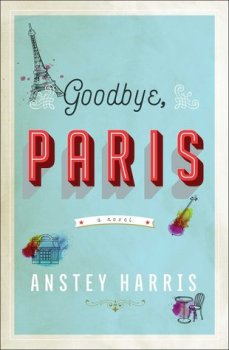
From the cover of Goodbye, Paris:

Will Grace Atherton fall out of love . . . and into life?

From the simple melody of running her violin shop to the full-blown orchestra of her romantic interludes in Paris with David, her devoted partner of eight years, Grace Atherton has always set her life to music.

Her world revolves entirely around David, for Grace’s own secrets have kept everyone else at bay. Until suddenly and shockingly one act tips Grace’s life upside down, and the music seems to stop.

It takes a vivacious old man and a straight-talking teenager to kick-start a new song for Grace. In the process, she learns that she is not as alone in the world as she had once thought, that no mistake is insurmountable, and that the quiet moments in life can be something to shout about . . . 

For fans of Eleanor Oliphant is Completely Fine and Jojo Moyes, Goodbye, Paris is the story of a woman who has her heart broken but then puts it back together again in the most uplifting and exquisite way.

Book Review: The Summer of Jordi Perez

summer of jordi perez best burger los angelesThe Summer of Jordi Perez (and the Best Burger in Los Angeles)
by Amy Spalding
Young Adult GLBT Romance
274 pages
Published April 2018

This was a great little read. It only took me a couple of hours to read, and I identified with the main character SO HARD. Abby is also a plus size blogger, and while she blogs about fashion instead of books, and her hair is pink instead of purple, a lot of her insecurities about the way people see her (both online and off) are things I share. I even share her trepidation about learning to drive!

It’s a clean romance; no one ever does more than make out. The book focuses far more on friendships than it does on sexual matters. The friendship between Abby and her female friends, between Abby and Jax, and between Abby and her girlfriend. I like that Abby had supportive female friends who didn’t pull the “So are you attracted to me? You’re not?! But why not?!” that so many people try to pull on their queer friends. I also loved how the author flipped the trope of “gay best friend” on its head, and gave us Jax, the straight boy/close friend.

The book is apparently pretty indicative of Amy Spalding’s work, so I might have to look into more of her books. This was an absolute delight to read!

And I have to say how much I love this cover! From the stripey rainbow title font to the rainbow back cover, it’s just gorgeous and summery and positive.

From the cover of The Summer of Jordi Perez:

A summer of first love, fashion, friendship, and cheeseburgers

Seventeen, fashion-obsessed, and gay, Abby Ives has always been content playing the sidekick in other people’s lives. While her friends and sister have plunged headfirst into the world of dating and romances, Abby’s been happy to focus on her plus-size style blog and her dreams of taking the fashion industry by storm. When she lands a great internship at her favorite boutique, she’s thrilled to take the first step toward her dream career. Then she falls for her fellow intern, Jordi Perez. Hard. And now she’s competing against the girl she’s kissing to win the coveted paid job at the end of the internship.

But really, nothing this summer is going as planned. She also unwittingly  becomes friends with Jax, a lacrosse-playing bro-type who wants her help finding the best burger in Los Angeles, and she’s struggling to prove to her mother – the city’s celebrity health nut – that she’s perfectly content with who she is.

Just as Abby starts to feel like she’s no longer the sidekick in her own life, Jordi’s photography surprisingly puts her in the spotlight. Instead of feeling like she’s landed a starring role, Abby feels betrayed. Can Abby find a way to reconcile her positive yet private sense of self with the image others have of her?

Book Review: Red Clocks

red clocks dystopiaRed Clocks
by Leni Zumas
Feminist Dystopia
350 pages
Published January 2018

Red Clocks first caught my attention because it’s set in a small fishing town in Oregon, my home state. After that, learning that it’s a dystopia where abortion and in vitro fertilization have both been banned outright meant I HAD to read it. Of course, I got it from the library some weeks ago and had so many other books to read that I didn’t get to it until the day it was due back to the library! Luckily, I read fast!

I think the cover description oversells the book a little. I wouldn’t call Gin’s trial “frenzied” nor the drama exactly “riveting” but it did keep my attention throughout the book. I really enjoyed the relationships between the characters, and the point that none of them really know what is going on in each other’s personal lives. One moment I particularly liked is slightly spoilery, but I loved how Ro was able to put her personal feelings aside to help Mattie, her student. That was really, really hard for her, but she recognized how much damage it would do to Mattie to not help her.

I think I found Gin the most interesting – given all the reading I’ve been doing lately about autism, her entire personality screams autism to me, but she was never labeled as autistic. So I’m marking her as a possibly autistic character. (I’d love if any of my autistic readers could weigh in on that, if you’ve read the book!) Between preferring to live in the woods with animals and NOT around people, specifically, and the way she reacts to the textures and smells in the jail when she’s arrested (shoving the bleach-scented blankets as far away in the cell as possible, and refusing to eat the food), and how she stumbles over her answers in the courtroom when she’s interrogated – it seems likely.

My only actual complaint about this book had nothing to do with the writing or plot! But it refers to the ghost pepper as “the hottest pepper known to man” which the Carolina Reaper growing in my backyard would have an issue with!

Other than that very minor quibble, I thought this dystopia was pretty good. I’m always interested in Reproductive Rights-related dystopias. This isn’t as good as The Handmaid’s Tale, but it’s MILES better than Future Home of the Living God. It’s good at showing the lengths women will go to, to ensure their own reproductive freedom. Outlawing abortion doesn’t eliminate abortion. It just makes it less safe.

From the cover of Red Clocks:

In this ferociously imaginative novel, abortion is once again illegal in America, in vitro fertilization is banned, and the Personhood Amendment grants rights of life, liberty, and property to every embryo. In a small Oregon fishing town, five very different women navigate these new barriers alongside age-old questions surrounding motherhood, identity, and freedom. 

Ro, a single high school teacher, is trying to have a baby on her own while also writing a biography of Eivor, a little-known nineteenth-century female polar explorer. Susan is a frustrated mother of two, trapped in a crumbling marriage. Mattie is the adopted daughter of doting parents and one of Ro’s best students, who finds herself pregnant with nowhere to turn. And Gin is the gifted forest-dwelling herbalist, or “mender,” who brings all their fates together when she’s arrested and put on trial in a frenzied modern-day witch hunt. 

Red Clocks is at once a riveting drama whose mysteries unfold with magnetic energy, and a shattering novel of ideas. In the vein of Margaret Atwood and Eileen Myles, Leni Zumas fearlessly explores the contours of female experience, evoking The Handmaid’s Tale for a new millennium. This is a story of resilience, transformation, and hope in tumultuous – even frightening – times. 

Book Review: Furyborn

FurybornFuryborn
by Claire Legrand
Fantasy
516 pages
Published May 2018

I’d seen several glowing reviews of this book, but I was always put off by descriptions of events that happened millennia apart from each other “intersecting” and affecting each other. Like, no. The past can affect the future, but the future can’t change the past. That appears, however, to just be a problem in the synopsis of the book and not the book itself. At least in this, the opening volume of the trilogy, the future does not change the past. The book alternates between the two women, Rielle in the past and Eliana in the future. Each chapter flips back and forth. I was much more intrigued by Rielle’s chapters, but that could be because there was a lot more magic in Rielle’s time.

The magic system is really interesting! I love that through Rielle’s trials we learn so much about the magic system, each school and guiding saint and prayers. It’s really fleshed out and I enjoyed that.

The “shocking connections” aren’t shocking, they’re predictable. But the book was no less fantastic for it. I really think the synopsis is where the problems lie. The first couple chapters pretty much reveal all the surprises the description hints at, and the book details how we got to that point. (Mostly, anyway!) It was great, don’t get me wrong, but the description of the book feels a little misleading.

The GLBT content in the book is only about two sentences, but it was a surprise and made me grin.

I really enjoyed this book. I’m looking forward to the rest of the trilogy to discover the rest of Rielle’s story and what Eliana is going to do about it.

From the cover of Furyborn:

When assassins ambush her best friend, Rielle Dardenne risks everything to save him, exposing herself as one of a pair of prophesied queens: a queen of light, and a queen of blood. To prove she is the Sun Queen, Rielle must endure seven elemental magic trials. If she fails, she will be executed…unless the trials kill her first.

One thousand years later, the legend of Queen Rielle is a fairy tale to Eliana Ferracora. A bounty hunter for the Undying Empire, Eliana believes herself untouchable―until her mother vanishes. To find her, Eliana joins a rebel captain and discovers that the evil at the empire’s heart is more terrible than she ever imagined.

As Rielle and Eliana fight in a cosmic war that spans millennia, their stories intersect, and the shocking connections between them ultimately determine the fate of their world―and of each other.

Book Review: Less

LessLess
by Andrew Sean Greer
Contemporary Fiction
261 pages
Published 2017

Less is a good name for this book, because that’s how I found it. Less than the love story it is purported to be. Less interesting than people say it is. Less funny than reviews would have me believe. Less than I was expecting. It’s a Pulitzer Prize winner, apparently? Maybe I just don’t “get” contemporary fiction. Because unless it’s YA, I very, VERY rarely like it. I didn’t like Arthur Less. None of his misadventures were that funny.

The book was a little meta; Arthur is told that the book he’s writing isn’t that interesting because his protagonist, a middle aged gay white man, isn’t interesting and no one cares about him. Which is exactly how I feel about Arthur Less. He’s a middle aged gay white man with the means to travel the world, and a boyfriend who would have married him if he’d only, I don’t know, asked. But he just floats through his life a little melancholy and woe is me. And not in the like actually depressed kind of way. Just – meh.

Arthur is BORING. Arthur is privileged, and boring, and annoying as all hell. This book just makes me want to avoid Pulitzer Prize winners. Who awards these prizes, and WHY? Also why does everybody rave about books like this?

Blargh. Don’t bother with this book. People who say it made them laugh out loud don’t know what they’re talking about, or perhaps haven’t read actually funny books. They should read something by Ellen, or Trevor Noah, or Tiffany Haddish. THEY’RE ACTUALLY FUNNY.

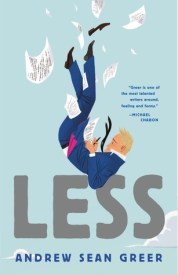
From the cover of Less:

Who says you can’t run away from your problems?

You are a failed novelist about to turn fifty. A wedding invitation arrives in the mail: your boyfriend of the past nine years is engaged to someone else. You can’t say yes – it would be too awkward; and you can’t say no – it would look like defeat. On your desk are a series of invitations to half-baked literary events around the world.

Question: How do you arrange to skip town?

Answer: You accept them all.

What could possibly go wrong? Arthur Less will almost fall in love in Paris, almost fall to his death in Berlin, barely escape to a Moroccan ski chalet from a Saharan sandstorm, accidentally book himself as the (only) writer in residence at a Christian retreat center in southern India, and encounter, on a desert island in the Arabian Sea, the last person on earth he wants to face. Somewhere in there: he will turn fifty. Through it all, there is his first love. And there is his last.

Because, despite these mishaps, missteps, misunderstandings, and mistakes, Less is, above all, a love story.

A scintillating satire of the American abroad, a rumination on time and the human heart, and a bittersweet romance of chances lost by an author the New York Times has hailed as “lyrical,” “elegiac,” and “ingenious,” as well as “too sappy by half,” Less shows a writer at the peak of his talents raising the curtain on our shared human comedy.

Series Review: The Memoirs of Lady Trent

a natural history of dragons lady trentA Natural History of Dragons / The Tropic of Serpents / Voyage of the Basilisk / In The Labyrinth of Drakes / Within the Sanctuary of Wings
by Marie Brennan
Fictional Memoirs
300-350 pages each
Published 2013 / 2014 / 2015 / 2016 / 2017

I had been drooling over this series for quite some time. Every time I went to my local game store, I’d paw through their small fiction bookshelf, and these were always on it. I finally found the first four all at once at the library, and seized the chance. (I had to request the fifth.) I did not regret it. These are fantastic.

tropic of serpents lady trentThe Memoirs of Lady Trent, as one can expect, are told from the viewpoint of Isabella Camherst, who becomes Lady Trent partway through the books. (But since they are written as her memoirs, she is “remembering” back to her adventures before she became part of the peerage.) Lady Trent’s world is analogous to our own Victorian age, except they have dragons, and she is fascinated by them. In the first book, she maneuvers her husband, also an amateur scholar of dragons, into joining an expedition to go study mountain drakes, and manages to get herself brought along. That begins her career.

The representation in these books is excellent for the time period they are based on! In the second book we get an asexual character, who turns into a side character for much of the rest of the series. (In figuring herself out, she mentions she had also tried the affections of women before realizing she didn’t want that, either.) In the third we get a culture with a third gender, and mention from Lady Trent of men who love men back home.

lady trent voyage of the basiliskI actually quite enjoyed how these books treated other cultures. We see a lot of effects from Scirling (British) colonialism, but Lady Trent herself sees other cultures as interesting things to study and become part of temporarily, not as “savages” that need to be “civilized” (or just used) as so many Victorian-age naturalists did. (And, indeed, how the Scirling military sees them.) Her ultimate goal is always the dragons, but if that means becoming part of a jungle or island tribe, and tending camp and hunting and traveling as the villagers do, then that is what she does. I could see the argument for painting Lady Trent as a white savior figure, but if she wasn’t part of one of the dominant cultures in this world, she wouldn’t have the means or access for all the different adventures described in the books. I suppose she could have been Akhian or Yengalese. (Arabian or Chinese, respectively, the other two dominant cultures.) She also forms genuine friendships with the people she lives among, and tries to do her best by them.

I enjoyed the introduction of the Akhian archeologist, and how that helped pull the focus of the books a little bit more onto the ancient culture of Draconeans, who Lady Trent had been largely uninterested in before. He soon became one of my favorite characters, so I was quite happy to see the events of the fourth book take Lady Trent to Akhia.

The fifth book unveiled quite a few surprises. We get to learn a lot more about the Draconeans, which was really cool. They also presented a culture with allowance for group marriage; at one point a villager asks Lady Trent if all four men she’s travelling with are her husbands!

The five books altogether were a really interesting progression in the history of the study of dragons, and I quite enjoyed them. They were definitely unique.

From the cover of A Natural History of Dragons:

Marie Brennan begins a thrilling new fantasy series in A Natural History of Dragons, combining adventure with the inquisitive spirit of the Victorian Age.

“You, dear reader, continue at your own risk. It is not for the faint of heart—no more so than the study of dragons itself. But such study offers rewards beyond compare: to stand in a dragon’s presence, even for the briefest of moments—even at the risk of one’s life—is a delight that, once experienced, can never be forgotten. . . .”

All the world, from Scirland to the farthest reaches of Eriga, know Isabella, Lady Trent, to be the world’s preeminent dragon naturalist. She is the remarkable woman who brought the study of dragons out of the misty shadows of myth and misunderstanding into the clear light of modern science. But before she became the illustrious figure we know today, there was a bookish young woman whose passion for learning, natural history, and, yes, dragons defied the stifling conventions of her day.

Here at last, in her own words, is the true story of a pioneering spirit who risked her reputation, her prospects, and her fragile flesh and bone to satisfy her scientific curiosity; of how she sought true love and happiness despite her lamentable eccentricities; and of her thrilling expedition to the perilous mountains of Vystrana, where she made the first of many historic discoveries that would change the world forever.