Book Review: Bright Smoke, Cold Fire

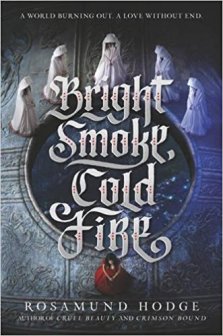
bright smokeBright Smoke, Cold Fire
by Rosamund Hodge
YA Fantasy
437 pages
Published 2016

I read the description of this book somewhere and immediately requested it from the library – a re-imagining of Romeo and Juliet in a dying world with necromancers? SIGN ME UP. And it did not disappoint!

Hodge has written a few other books – Cruel Beauty, a retelling of Beauty and the Beast, and Crimson Bound, a retelling of Little Red Riding Hood. (She also has a novella that spins Cinderella.) You all know how much I like my redone Fairy Tales! Bright Smoke, Cold Fire, is a little different in that it’s a Shakespeare play, instead of a fairy tale. I recently read and reviewed Miranda and Caliban, another Shakespeare reskin, but this, I think, is much better.

The Capulets have become the Catresou, and the Montagues the Mahyanai in this dark fantasy. The Ruining has killed every human outside the city of Viyara/Verona – only stopped by the mystical walls put up by a long-dead priestess and maintained by a mysterious cult of nuns.

My favorite characters in this book – and arguably the main characters – are Runajo (Rosaline) and Paris, rather than Romeo and the Juliet. (It’s a title, not a name – her name was stripped from her as an infant when the magic was worked to make her “the Juliet.”) The original play doesn’t give either of them much time, and they are both fascinating characters in this novel – Runajo a little more than Paris, in my opinion. Runajo is a member of the Sisters of Thorns – the cult of nuns keeping the walls of Viyara up against The Ruining. When she accidentally brings the Juliet back from death, she becomes – or at least thinks she becomes – that which she and the city fear the most. A necromancer. Runajo and the Juliet both believe they will (and should) die for this crime, but still use the time they have left to try and save the city from the necromancers operating within.

Meanwhile, Paris and Romeo have found themselves bound by the magic that should have bound Romeo and Juliet, had it not gone terribly wrong. They can feel each other’s emotions, see each other’s memories, hear each other’s thoughts. This is understandably awkward for Paris as he feels Romeo’s grief for the Juliet’s supposed death, and occasionally catches flashes of more intimate moments between the two. They decide to take on the city’s necromancers in memory of the Juliet.

I liked how, similar to the play, Romeo and Juliet both operate for the entirety of the book under the assumption that the other one is dead. They both take risks and agree to things they would not have done if they didn’t each welcome death in their own way.

I also very much enjoyed a side, non-binary character who I really want to see more of!

The book ended on an upsetting cliffhanger, which is really my only problem with it. The sequel is due out this summer (Endless Water, Starless Sky) and I will definitely be picking it up.

Great book, but you may want to wait a few months so you can immediately follow it with the sequel!

From the cover of Bright Smoke, Cold Fire:

When the mysterious fog of the Ruining crept over the world, the living died and the dead rose. Only the city of Viyara was left untouched. 

As the heirs of Viyara’s most powerful – and warring – families, Mahyanai Romeo and Juliet Catresou share a love deeper than duty, honor, even life. But the magic laid on the Juliet at birth compels her to punish her clan’s enemies, and Romeo has just killed her cousin Tybalt. Which means he must die. 

Paris Catresou has always wanted to serve his family by guarding the Juliet. But when his ward tries to escape her fate, magic goes terribly wrong, killing her and leaving Paris bound to Romeo. If he wants to discover the truth of what happened, Paris must delve deep into the city, ally with his worst enemy . . . and perhaps turn against his clan.

Mahyanai Runajo just wants to protect her city – but she’s the only one who believes it’s in peril. In her desperate hunt for information, she accidentally pulls the Juliet from the mouth of death and finds herself bound to the bitter, angry girl, only to learn she might be the one person who can help her recover the secret to saving Viyara. 

Both pairs will find friendship where they least expect it. Both will find that Viyara holds more secrets and dangers than anyone ever expected. And outside the city’s walls, death is waiting.

Book Review: The Black Rose

black roseThe Black Rose
by Tananarive Due
Biography/Fiction
373 pages
Published 2001

The Black Rose is the lightly fictionalized story of the life of Madame C. J. Walker, America’s first black female millionaire. Tananarive Due seems to have taken over the project from Alex Haley, the acclaimed late co-author of Malcolm X’s autobiography. Due is a wonderful storyteller; many biographies I’ve read have been dry and uninteresting, but The Black Rose is technically a novel, and kept my attention through the entire book. Madame Walker, born Sarah Breedlove, is an incredibly charismatic figure. She was born to former slaves just after the Civil War – the only member of her family born free – and the book chronicles her entire life. From her parents’ deaths, to her early years working in a cotton field, to being a washerwoman, cook, then finally an entrepreneur. According to Wiki she had four brothers; the book only mentions one. Wiki also mentions a marriage in between her daughter’s father and CJ Walker; that one wasn’t mentioned in the book at all. So there are some differences.

The Black Rose is an engrossing look at an influential woman whose name seems to be largely forgotten. Or perhaps it’s only forgotten because we’re not taught nearly as much African-American history as we should be in this country. Madame Walker’s company was a path to economic freedom for thousands of black women in the early 20th century. Besides the jobs she created, she also made many charitable donations and was active in politics and civil rights, participating in marches and, once, visiting the White House to speak with the president. (According to the book, the president declined to speak with her group, though.)

This is a good example of why I’m trying to diversify my reading. I didn’t know the name C. J. Walker. I had no idea where she came from, or the scope of the company she built and the people she helped.

Excellent, educational book.

I actually really don’t like the cover, though, so this is my pick for “ugly cover” for the 2018 PopSugar Reading Challenge!

From the cover of The Black Rose:

Born to former slaves on a Louisiana plantation in 1867, Madam C.J. Walker rose from poverty and indignity to become America’s first black female millionaire, the head of a hugely successful beauty company, and a leading philanthropist in African American causes. Renowned author Alex Haley became fascinated by the story of this extraordinary heroine, and before his death in 1992, he embarked on the research and outline of a major novel based on her life. Now with The Black Rose, critically acclaimed writer Tananarive Due brings Haley’s work to an inspiring completion. 

Blending documented history, vivid dialogue, and a sweeping fictionalized narrative, Tananarive Due paints a vivid portrait of this passionate and tenacious pioneer and the unforgettable era in which she lived.

Book Review: Tempests and Slaughter

tempests and slaughterTempests and Slaughter
Tamora Pierce
Fantasy
455 pages
Published February 2018

(No Top Ten List today. I could only find one example of a character I liked in a book that I didn’t!)

A new Tamora Pierce book! About the origins of Numair! YES! I waited SO ANXIOUSLY for this book to make its way through the line of holds at my library and get in my grabby hands, and I was rewarded. Tempests is classic Tamora Pierce. It’s set in Carthak, not Tortall, but the themes and feel are exactly what I was expecting. I love diving back into my favorite fantasy worlds, and Tortall ranks right near the top. (It might be the top, I haven’t sat down and attempted to rank them – that would probably be a futile effort!)

My only issue with the book, really, is that it feels like an introduction. I know it’s the first part of a trilogy, but the rest isn’t OUT YET! So I feel like I’ve read the first third of a story and now I have to wait. Tempests introduces a LOT of story threads, and resolves exactly none of them. It managed to do so without leaving us on a cliffhanger, though, so there’s that, at least. I’m probably going to go re-read the books around Numair’s adult life to tide me over until the rest of this trilogy comes out!

I think my favorite character overall was Enzi – he was hilarious and obstinate and I’m looking forward to the rest of his storyline.

I was surprised but pleased to see a gay couple as side characters – and that it wasn’t mentioned the character was gay until his husband arrived on the scene. It wasn’t a defining point of his character, his spouse just happened to be male. I’ve said it before, but I love seeing the change in fantasy – it’s gone from “that’s strange or scandalous” to “absolutely no big deal, people have differently-gendered partners.” It will be even lovelier once real society reaches that point!

I was also surprised to see I have missed a Tortall book! Tortall: A Spy’s Guide came out in October of 2017, so that’s now waiting at the library for me. I can’t wait to read more about George Cooper, even if it isn’t really a novel as such. I’ve previously reviewed Pierce’s Beka Cooper trilogy, the Lioness quartet, and her short story collection – like I said, one of my favorite worlds!

Final verdict: Tempests and Slaughter was an excellent addition to Tortall, but if you like books that resolve their storylines, you might want to wait until the rest of the trilogy is published. If you can’t wait, just expect that you won’t get many answers from this first book!

Tempests and Slaughter is my pick for “weather element in the title” for the 2018 PopSugar Reading Challenge.

From the cover of Tempests and Slaughter:

Arram Draper is on the path to becoming one of the realm’s most powerful mages. The youngest student in his class at the Imperial University of Carthak, he has a Gift with unlimited potential for greatness–and for attracting trouble. At his side are his two best friends: Varice, a clever girl with an often-overlooked talent, and Ozorne, the “leftover prince” with secret ambitions. Together, these three friends forge a bond that will one day shape kingdoms. And as Ozorne gets closer to the throne and Varice gets closer to Arram’s heart, Arram realizes that one day–soon–he will have to decide where his loyalties truly lie. 

In the Numair Chronicles, readers will be rewarded with the never-before-told story of how Numair Salmalín came to Tortall. Newcomers will discover an unforgettable fantasy adventure where a kingdom’s future rests on the shoulders of a talented young man with a knack for making vicious enemies.

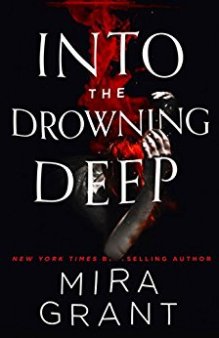
Book Review: Into the Drowning Deep

drowning deepInto the Drowning Deep
by Mira Grant (aka Seanan McGuire)
Fantasy Horror
450 pages
Published November 2017

WOW. I don’t typically read horror, but this was fantasy horror, and WOW. I picked up the novella precursor to this sometime last year – I never reviewed it here, probably because it was barely over 100 pages, but it was fascinating and haunting all the same. Rolling in the Deep told the story of the Atargatis, a ship sent out to the Mariana Trench to stage a mockumentary – supposedly looking for mermaids, but equipped with actors who could swim with mermaid tails. They never planned to find anything. Except they did. And they all died. One by one at first, a few people picked off, then the entire ship swarmed and eaten. The reader sees this happen, but to anyone not on the ship, the only thing they find is some footage on an abandoned ship.

Into the Drowning Deep fast forwards a few years; the production company, Imagine Network, is not doing so well, and they want to prove that the footage wasn’t a hoax. So they assemble a new mission, this one with a lot more security. (Though they still picked security with an eye for what would look good on TV, rather than what would be effective, which was a poor choice.) The reader, of course, knows that the mermaids are real, and that they are dangerous, so you spend much of the first part of the book in a state of suspense waiting for them to show up. (I actually thought it took a little too long for them to finally show up, but the time was used for character-building.)

The book is very Lovecraftian, actually – from the strong, building sense of foreboding doom to the creatures that should not exist, to the kind of gibbering insanity near the end. It’s probably why I liked the book so much; Lovecraft is about the only kind of horror writing I like, and I get the same feeling from Grant’s writing.

So yes, the book is about mermaids. But these aren’t mermaids as you’ve seen them before. They’re not cute, they’re not seductive, they don’t want to live on land, and they’re definitely not friendly. These mermaids are predators. Intelligent predators, but predators. And humans, apparently, are delicious.

Most of the characters in the book are scientists trying to prove mermaids exist, so there’s a lot of science happening aboard the ship, and Grant doesn’t shy away from it happening on the page as well. She also includes a pair of deaf scientist twins, and their interpreter sibling, which is important because the mermaids use a form of sign language as well. Most of the main characters are women, which is also great to see in such a large concentration of fictional scientists.

If you like fantasy horror, i.e. Lovecraft, you should definitely pick this up. Rolling in the Deep is also worth reading first – I think it definitely adds another layer to the sense of foreboding doom.

Technically this is billed as #1 in the series, which gives me hope for more. I’m counting it for PopSugar’s “next book in a series you started” because Rolling in the Deep came out two years prior and is a prequel. (It’s listed as #.5)

From the cover of Into the Drowning Deep:

The ocean is home to many myths,
But some are deadly…
Seven years ago the Atargatis set off on a voyage to the Mariana Trench to film a mockumentary bringing to life ancient sea creatures of legend. It was lost at sea with all hands. Some have called it a hoax; others have called it a tragedy.
Now a new crew has been assembled. But this time they’re not out to entertain. Some seek to validate their life’s work. Some seek the greatest hunt of all. Some seek the truth. But for the ambitious young scientist Victoria Stewart this is a voyage to uncover the fate of the sister she lost.
Whatever the truth may be, it will only be found below the waves.
But the secrets of the deep come with a price.

rolling in the deepFrom the cover of Rolling in the Deep:

When the Imagine Network commissioned a documentary on mermaids, to be filmed from the cruise ship Atargatis, they expected what they had always received before: an assortment of eyewitness reports that proved nothing, some footage that proved even less, and the kind of ratings that only came from peddling imaginary creatures to the masses.

They didn’t expect actual mermaids.  They certainly didn’t expect those mermaids to have teeth.

This is the story of the Atargatis, lost at sea with all hands.  Some have called it a hoax; others have called it a maritime tragedy.  Whatever the truth may be, it will only be found below the bathypelagic zone in the Mariana Trench…and the depths are very good at keeping secrets.

Book Review: The Astonishing Color of After

astonishingcolorThe Astonishing Color of After
by Emily X. R. Pan
Fiction – Magical Realism
470 pages
Published March 2018

So I finally subscribed to the Book of the Month club. Every month they select several books, and you get to pick one or more. (It’s an extra $10 for each one past the first, but they are GORGEOUS hardcovers, it’s worth it!) So for my first box I chose The Astonishing Color of After and Eleanor Oliphant is completely fine, both books I’ve heard a lot of great things about. They’re also both debut novels, which is something I’ve had a lot of really good luck with. And that held true for this one, certainly!

Just WOW. The Astonishing Color of After is about a teenage girl, an artist, dealing with her mother’s depression and ensuing suicide. Part of what makes the book so fascinating is Leigh’s constant description of colors. She uses color as shorthand for emotions – her grandmother might have a vermilion expression on her face, or she might be feeling very orange while staring at her mother’s coffin at the funeral. Between colors-as-feelings and her insomnia-induced hallucinations (or magic – the book is deliberately, I think, noncommittal on whether some things only happen in her head or not) the entire book feels a little surrealistic. But grief and mourning DO feel surrealistic. The book is amazingly evocative and emotional and I absolutely adore it. This, along with City of Brass and Children of Blood and Bone, are definitely on my Best of 2018 list.

As an added bonus, the author is the American child of Taiwanese immigrants herself. So all the ghost traditions and folklore from Leigh’s journey to Taiwan are from her ancestry as well.

This book was gorgeous. It may need a trigger warning for depression and suicide. If you can handle those themes, read it.

From the cover of The Astonishing Color of After:

“I didn’t cry. That was not my mother. My mother is free in the sky. My mother is a bird.”

Leigh Chen Sanders is absolutely certain about one thing: When her mother died by suicide, she turned into a bird.

Leigh, who is half Asian and half white, travels to Taiwan to meet her maternal grandparents for the first time. There, she is determined to find her mother, the bird. In her search, she winds up chasing after ghosts, uncovering family secrets, and forging a new relationship with her grandparents. And as she grieves, she must try to reconcile the fact that on the same day she kissed her best friend and longtime secret crush, Axel, her mother was taking her own life.

Alternating between reality and magic, past and present, hope and despair, The Astonishing Color of After is a stunning and heartbreaking novel about finding oneself through family history, art, bravery, and love.

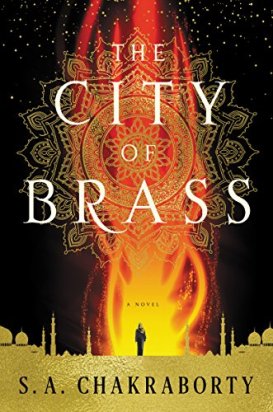
Book Review: City of Brass

city of brassCity of Brass
S. A. Chakraborty
Fantasy
400 pages
Published November 2017

So much to say about this outstanding debut novel! First I’d like to address the issues around the author, then I’ll delve into the book itself. (It’s fantastic, though!)

So the book has been touted as an “own voices” novel, seemingly much to the author’s chagrin. She is Muslim, but she’s a white convert (Chakraborty is her married name). She has striven to correct the misconception about her ethnicity when she finds it, tweeting about it and talking about it in interviews. (This interview is a good example.) Because the book is pure fantasy, in a fantasy realm after the first few chapters, I’m not too worried about it not actually being written by a middle-eastern author. She does note in the interview I linked that she’s not qualified to write some stories because of her ethnicity, and I appreciate that recognition of privilege. As far as I can tell, (as a white person myself) she did justice to the bits of mythology that she included. (Given the reception by people who were so excited about it being an Own Voices book, I think I’m probably right.) Her twitter (@SChakrabs) is FULL of links to minority authors and retweets about their books. I am very impressed by the level of her advocacy for minority authors.

So that aside, I LOVED THIS BOOK. I almost always enjoy fantasy inspired by non-western mythology: Children of Blood and Bone was fantastic, and though Forest of a Thousand Lanterns had a western fairytale at its heart, being reimagined through an Asian lense was really neat to read. The Bear and The Nightingale and The Girl in the Tower were Russian inspired, as were The Crown’s Game/The Crown’s Fate. I really do try to pick up non-western inspired fantasy when I can. City of Brass scratched that itch perfectly.

City of Brass opens in Cairo, where our heroine, Nahri, is a con-woman with small healing magics. When a ritual goes awry, she’s thrust into the world of the djinn. It’s when Nahri and her accidental bodyguard, Dara, arrive at the Djinns’ city of Daevabad that the story really gets started.

I’m still a little confused about the difference between djinn and Daeva; Daeva seem to be one of the tribes but also the name for the entire race, and some of them get offended at being called djinn but some of them don’t? I’m not really sure about that distinction. There is a clear line between djinn and Ifrit, though – Ifrit are immensely powerful, immortal beings who refused to subject themselves to punishment many centuries ago. I’m not sure I actually see a downside to being Ifrit, other than the djinn all think they’re evil. The Ifrit, however, are out to get Nahri, and Dara’s not having any of THAT.

I love Dara – he’s a fascinating character, with a violent, mysterious backstory. I’m very eager to read more about him and figure out exactly what’s up with his background. Nahri is also awesome – a little arrogant, but by the end of the book she’s starting to learn she might need help from those around her. Unfortunately, also by the end of the book she doesn’t know who to trust. The naive djinn prince, Ali, is the third main character of the book, and while I can see him having an interesting story, his personality is still a little flat. Hopefully the second book will see advancement in all three of these characters’ personalities.

And I can’t WAIT for the second book! City of Brass didn’t exactly end on a cliffhanger, but it did leave many questions unanswered and our main characters’ fates uncertain. Unfortunately, I can’t find any information on the sequel, just that it’s being edited. No release date or title yet.

Read this book. It’s fantastic.

From the cover of City of Brass:

Nahri has never believed in magic. Certainly, she has power; on the streets of eighteenth-century Cairo, she’s a con woman of unsurpassed talent. But she knows better than anyone that the trades she uses to get by—palm readings, zars, and a mysterious gift for healing—are all tricks, both the means to the delightful end of swindling Ottoman nobles and a reliable way to survive. 

But when Nahri accidentally summons Dara, an equally sly, darkly mysterious djinn warrior, to her side during one of her cons, she’s forced to reconsider her beliefs. For Dara tells Nahri an extraordinary tale: across hot, windswept sands teeming with creatures of fire and rivers where the mythical marid sleep, past ruins of once-magnificent human metropolises and mountains where the circling birds of prey are more than what they seem, lies Daevabad, the legendary city of brass—a city to which Nahri is irrevocably bound.

In Daevabad, within gilded brass walls laced with enchantments and behind the six gates of the six djinn tribes, old resentments run deep. And when Nahri decides to enter this world, her arrival threatens to ignite a war that has been simmering for centuries. 

Spurning Dara’s warning of the treachery surrounding her, she embarks on a hesitant friendship with Alizayd, an idealistic prince who dreams of revolutionizing his father’s corrupt regime. All too soon, Nahri learns that true power is fierce and brutal. That magic cannot shield her from the dangerous web of court politics. That even the cleverest of schemes can have deadly consequences. 

After all, there is a reason they say to be careful what you wish for . . .