Book Review: An Astronaut’s Guide to Life on Earth

astroAn Astronaut’s Guide to Life on Earth
Colonel Chris Hadfield
Memoir
284 pages
Published 2013

Wow. Just wow. I woke up far earlier than I wanted to this morning, so I picked up one of the nonfiction books I had from the library, expecting it to put me back to sleep. Three hours later I was still awake, nearly done with the book, and absolutely enthralled. I’m not sure why I thought it would be otherwise – I’d been one of the millions fascinated with Hadfield’s videos and tweets when he was Commander of the ISS. His particular voice is very clear throughout this book. In 284 pages he takes us from his childhood, through his career path to becoming an astronaut, to his 5 months in the International Space Station, and back home. Nothing felt rushed, nothing felt like it didn’t get the attention it deserved. I’m pretty sure this is going to be one of my favorite books of 2017 – I have several months to read more things, but this book just absolutely blew me away.

It does appeal to how I like to read about science, though. I love reading about scientists. How they worked, how they made their discoveries, the paths they took. Who they were. I’m less interested in the actual science. (As opposed to my husband, who cares only about the science, and isn’t interested in hearing much about the scientists.) This is part of why I loved A Short History of Nearly Everything, by Bill Bryson, so much. I borrowed that book from the library and read it cover to cover, fascinated. Finally had to buy my own copy.

Hadfield took space exploration and made it accessible to everyone. According to the book, he didn’t even quite realize how big of an impact he was making at first. But between tweeting pictures from the ISS, making videos of how different life was in space, and making music videos, he really did become the most well-known astronaut of our generation. I remember putting his video of I.S.S. (Is Somebody Singing) on repeat when it came out – and it STILL gives me chills today.

He only briefly talked about this video in the book, which I found surprising, given it was the one that hit me the hardest. He spent more time talking about filming and recording Space Oddity – which does have 36 million views, to I.S.S.’s 2 million. So I suppose that makes sense!

One thing he keeps coming back to in his book is his philosophy of trying to be a zero. That doesn’t sound very ambitious on the surface – but what he means is you can be one of three things in a group. You can be a negative impact (a -1) a neutral impact (a zero) or a positive impact (a +1). If you try to be a +1, it’s far likelier that you’ll try too hard, fuck up, and instead become a negative impact. So aim to be a zero. And most of the time you’ll wind up as a positive impact. I thought that was a very unique philosophy.

He’s also written a children’s book, The Darkest Dark, about a kid who wants to be an astronaut but is afraid of the dark.

This is the second book I’ve read for the Canadian Book Challenge, and I’m so glad I finally got around to it. (It’s the first one I’m reviewing, though, the first book I read I’ll be reviewing in August.)

My other Canadian reviews:
1. this book!
2. The Red Winter Trilogy
3. Station Eleven
4. The Courier
5. The Last Neanderthal
6. American War
7. Next Year, For Sure
8. That Inevitable Victorian Thing
9. All The Rage
10. The Clothesline Swing
11. Saints and Misfits
12. Tomboy Survival Guide
13. The Wolves of Winter

From the cover of An Astronaut’s Guide to Life on Earth:

Col. Chris Hadfield has spend decades training as an astronaut and has logged nearly four thousand hours in space. During this time he has broken into a space station with a Swiss Army knife, disposed of a live snake while piloting a plane, and been temporarily blinded while clinging to the exterior of an orbiting spacecraft. The secret to Col. Hadfield’s success – and survival – is an unconventional philosophy he learned at NASA: Prepare for the worst – and enjoy every moment of it.

In An Astronaut’s Guide to Life on Earth, Col. Hadfield takes readers deep into his years of training and space exploration to show how to make the impossible possible. Through eye-opening, entertaining stories that convey the adrenaline of launch, the mesmerizing wonder of space walks, and the measured, calm responses mandated by crises, he explains how conventional wisdom can get in the way of achievement – and happiness. His own extraordinary education in space has taught him some counterintuitive lessons: Don’t visualize success, do care what others think, and always sweat the small stuff. 

You may never be able to build a robot, pilot a spacecraft, make a music video, or perform basic surgery in zero gravity like Col. Hadfield. But his vivid and refreshing insights will teach you how to think like an astronaut and will change, completely, the way you view life on earth – especially your own.
#90sinJuly – July 4 – No Rain

“And I don’t understand why I sleep all day
And I start to complain that there’s no rain
And all I can do is read a book to stay awake
And it rips my life away but it’s a great escape
Escape, escape, escape”

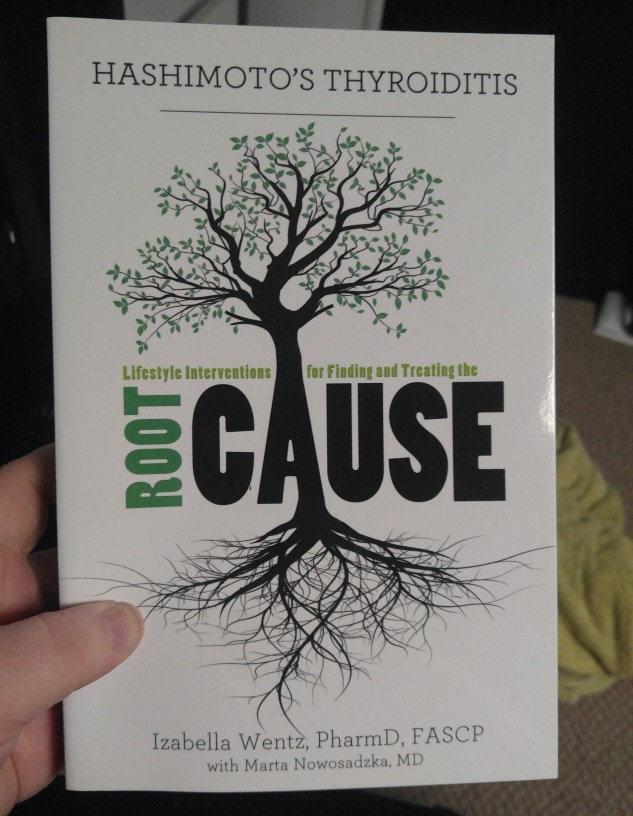
Oooo I identify with this. I’m hypothyroid, and despite being medicated, I still have bad fatigue days sometimes. Sometimes that means I can’t pull myself out of bed to go do things I’d planned to do. I tend to write and schedule a bunch of blog posts on my good days, so even if I have a bad fatigue day, something still posts on the blog here. So this is my book today – it’s taught me a lot about my condition and what I can do to mitigate it.20170626_134908

#90sinJuly – July 3 – Whatta Man

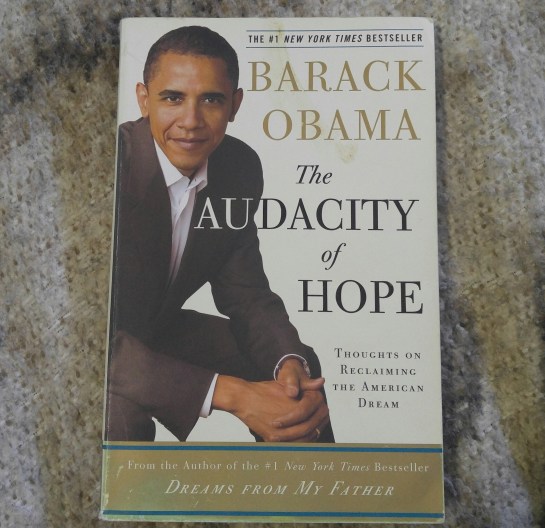
“What a man, what a man, what a man, what a mighty good maaaann….” Yeah, Obama immediately popped into my head. I miss him. He’s not completely without problems – drone strikes, privacy issues – but damn he was one of our best presidents in years. I read The Audacity of Hope during his first campaign for President. It was part of what won my vote.

20170625_162441

Book Review: Walking Baltimore


WalkingBaltimoreWalking Baltimore
by Evan Balkan
280 pages
Published 2013
Nonfiction – Guidebook

So the first book I want to talk about is a series of walking tours of Baltimore. I’ve only been on two of these walks so far, but I plan to take many more of them. It’s just been SO. HOT. And I’m not a person who likes walking much to begin with! But there’s a new game out that’s made walking so much more fun – yes, I’m talking about Pokemon Go. (Go Team Mystic!) That little bit of motivation of “well, I’ll walk to that Pokestop. Alright, there’s another Pokestop two blocks away, I can make it to that one. Maybe a little further to that next Pokestop. OOoo there’s a Tangela nearby!” It makes it just enough fun that I walk a lot more before I’ve even realized it.

Walking Baltimore gives me general guides for walks so I’m not just wandering Pokestop to Pokestop until I get lost! It has very detailed instructions – turn left at this corner, cross the street here so you can see this monument, then look up at the architecture in front of you – it’s really well done. My only wish is that there was an appendix that rated the walks in order of difficulty – each walk has a rating, from easy to moderate to strenuous – but there’s no way to see all of the difficulties side by side. With 33 walks all over Baltimore, with all levels of difficulty and lengths, there’s definitely something here for everyone, and the history and points of interest covered by the walks are fascinating.

The two that I’ve actually walked are half of #4, Inner Harbor Promenade, and #11, The Civil War Trail: Path of the War’s First Bloodshed. Both are mostly on the Inner Harbor, where my husband works, so I hitched a ride down with him, walked, and caught Pokemon until he got off work and we came home. (We live outside Baltimore City limits.) I’d been down in the area many times, but had no idea the Civil War’s first bloodshed occurred when a mob waylaid Union troops travelling through Baltimore! There are medallions laid in the sidewalks commemorating some of the events of the Civil War march, and most of those are Pokestops too.

Currently I have this book out from the library, but I think this is one I’ll be adding to my personal library soon. I want the walking guides! The author has also written 60 Hikes Within 60 Miles of Baltimore and Best in Tent Camping: Maryland. So he knows his stuff.

From the back of Walking Baltimore:

BALTIMORE – famous for spectacular harbor views, myriad historical monuments and landmarks, and important cultural institutions. But it’s also much more – a patchwork of small, unique neighborhoods with terrific bars and restaurants, and more recreation and green space than most people realize. All of this combines to make Baltimore one of America’s most fascinating and walkable cities. 

In Walking Baltimore, longtime insider Evan Balkan leads you on 33 self-guided tours from Fells Point to the Inner Harbor, Mount Vernon to Mount Washington, and all the diverse neighborhoods in between. This book will show locals and visitors alike how and why Baltimore was an essential player in the country’s early history and continues to be influential today. You’ll soak up Charm City’s incredible history, culture, architectural trivia, and quirky vibe. Plus, you’ll find tips on where to dine or have a drink. Clear neighborhood maps and vital public transportation and parking details make exploring easy. Whether you’re looking for an afternoon stroll or full-day’s entertainment, grab this book, step outside, and walk Baltimore!

Book Review: Free For All: Oddballs, Geeks, and Gangstas in the Public Library

freeforallFree For All: Oddballs, Geeks, and Gangstas in the Public Library
by Don Borchert
210 pages
Published 2007
Memoir

Like Quiet, Please, Free For All is a memoir from a public librarian. It was interesting, but I didn’t find it as engaging as Quiet, Please. So if you’re only going to read one, I’d recommend Quiet. If you’ve got time, though, this was an interesting second view on public libraries. It felt a little more detached than Quiet did; and there was a lot less biting sarcasm. I find it interesting that both books are written by male librarians, in what has been a female-dominated field for some time. I’ll have to go looking for a woman’s memoir about being a librarian, and see how it differs!

Free For All goes a little bit more in depth on the hiring process, and talks more about library pages, both topics I found interesting. To be honest, though, I found the entire book just kind of…blah. It’s not a bad book, and it’s a quick read at just over two hundred pages, but it’s just…blah.

From the inside cover of Free For All: Oddballs, Geeks, and Gangstas in the Public Library:

“Mild-mannered librarian tells all!

Not long ago, the public library was a place for the bookish, the eggheaded, and the studious – often seeking refuge from a loud, irrational, and crude outside world. Today libraries have become free-for-all entertainment complexes, filled with deviants, drugs, and even sex toys.

What happened?

Don Borchert was a short-order cook, door-to-door salesman, telemarketer, and Christmas-tree-chopper before landing work at a California library. He never could have predicted his encounters with the colorful kooks, bullies, and tricksters who fill the pages of this hilarious memoir. 

In Free For All, Borchert offers readers a ringside seat to the unlikely spectacle of mayhem and absurdity that is business as usual at the public library. You’ll see cops bust drug dealers who’ve set up shop in the men’s restrooms, witness a burka-wearing employee suffer a curse-ridden nervous breakdown, and meet a lonely, neglected kid who grew up in the library and still sends postcards to his surrogate parents – the librarians. 

You’ll finally find answers to all those often-asked questions: What’s up with that Dewey Decimal System – do librarians actually understand it? (Yes, but they don’t all like it.) Do the library computers have access to everything, even porn? (Yes.) What happens if you never pay those overdue fines? Do they just keep adding up? (Sort of. It depends on what kind of day the librarian is having and how polite you are.) And what’s the strangest thing to land in the book return bin? (You won’t believe it, and it’s got absolutely nothing to do with great literature.)”

Book Review: The Library – An Illustrated History

libraryThe Library – An Illustrated History
by Stuart A. P. Murray
308 pages
Published 2009
Nonfiction

This is one of those books that I could only read a chapter, sometimes two, at a time. It was really interesting, with lots of GORGEOUS pictures of libraries, but it’s still a history and sometimes boring. It was very in-depth, though, starting with “The Ancient Libraries” and moving through the middle ages, to the Renaissance, to the early modern period, to the 21st century. Murray talked about all the books lost to religions, primarily Christianity, suppressing other religions’ ideas and burning their books and records, and also mentioned in many places the casualties of war – bombed, burned-out libraries, priceless ancient books being lost to fire and looters. The latter was preferable, as that usually meant the book would resurface somewhere!

I was a little disappointed that he didn’t talk more about the development of cataloguing systems, and barely mentioned the Dewey Decimal System at all. I thought that was really odd, considering it’s the most-used cataloguing system today! He talked about the difficulty of maintaining a catalogue, but didn’t discuss a lot about how that changed in the modern age.

If you’re interested in libraries, I would definitely recommend this book. As histories go, it wasn’t nearly as dry as some I’ve read, and the pictures were fabulous. I’d definitely like to own this book someday, but for now it will have to go back to the library.

From the inner cover of The Library: An Illustrated History:

“The first libraries appeared five thousand years ago in Southwest Asia’s ‘Fertile Crescent’…the birthplace of writing, some time before 3000 BCE,” writes Stuart A. P. Murray, introducing his fascinating exploration into the history of the library. With the dawning of advanced civilization, the written word flourished and the need for libraries became paramount in many societies.

Throughout the history of the world, libraries have been constructed, burned, discovered, raided, and cherished – while the treasures they housed evolved from early stone tablets, to beautifully illumined vellum, and to the mass-produced, bound paper books and the digital formats of our present day. The Library opens doors to the libraries of ancient Greece, early China, Renaissance England, and modern-day America. This volume speaks to the book lover in all of us while offering a panoramic view of the history of libraries across the centuries.