Book Review: We Set the Dark on Fire

we set the dark on fireWe Set the Dark on Fire
by Tehlor Kay Mejia
Young Adult / Dystopia / LGBT / Romance
364 pages
Published February 2019

We Set the Dark on Fire is an excellent example of how government-mandated relationship structures are oppressive. The core of the story revolves around an island society’s marriage structure; because of an old myth, each man – or at least each upper-class man – has two wives. One wife, the Primera, is expected to be his intellectual equal; she runs his affairs and household and manages his social engagements – the business side of the marriage, if you will – and a second wife who is his heart. The second wife, the Segunda, is expected to be emotional, passionate, and beautiful; she bears and raises his children. The wives are expected to get along and love each other like family.

This is really only the framework for the plot, though. The plot itself revolves around the idea of who belongs in society and who doesn’t. I’ve seen some people call it illegal immigration, and there IS a wall that it is illegal to come over; the unfortunates living outside the wall are uncared for by society and government alike. But I didn’t get the impression that they weren’t actually part of the same country. So I’m not 100% certain I agree that it counts as immigration in the story, though it does have a lot of the same principles, so it may as well be. There’s a lot of othering and dehumanizing, and deciding who deserves what based on their wealth, and government checkpoints to check residence papers, so even if it isn’t technically immigration – well. It’s still a major theme.

This sounds like it could be a book on polyamory; it is not. This is government-mandated female oppression. The government, and our main character’s new husband, specifically, are intent on crushing the resistance coming from the poor who live on the edges of the island. The resistance is called La Voz, or The Voice, and they help Daniela, our main character, out of a tight spot in the beginning of the book. In return, they expect her to spy for them on her new husband, a highly-placed government official. Not knowing who to trust, and afraid of her lies being discovered, she agrees.

What follows is the early stages of rebellion: protests, government cover-ups, undercover meetings, and military checkpoints. In the middle of it all, Daniela begins to fall in love with her Segunda, Carman, who seems to have secrets of her own.

I really really enjoyed this book, and I am very much looking forward to the second! It’s listed as a duology, so it should just be the two. I can’t wait!

From the cover of We Set the Dark on Fire:

At the Medio School for Girls, distinguished young women are trained for one of two roles in their polarized society. Depending on her specialization, a graduate will one day run her husband’s household or raise his children, but both wives are promised a life of comfort and luxury, far from the frequent political uprisings of the lower class.

Daniela Vargas is the school’s top student, but her bright future depends upon no one discovering her darkest secret – that her pedigree is a lie. Her parents sacrificed everything to obtain forged identification papers so Dani could rise above her station. Now that her marriage to an important politico’s son is fast approaching, she must keep the truth hidden or be sent back to the fringes of society, where famine and poverty rule supreme. 

On her graduation night, Dani seems to be in the clear, despite the surprises that unfold. But nothing prepares her for all the difficult choices she must make, especially when she is asked to spy for a resistance group desperately fighting to bring equality to Medio. Will Dani give up everything she’s strived for in pursuit of a free Medio – and a chance at a forbidden love?

The first in a sizzling fantasy duology from debut author Tehlor Kay Mejia, We Set the Dark on Fire is a boldly feminist look at freedom, family, and fighting the power.
Sunday Stuff.

I had friends at Capital Pride yesterday in DC. I’m so glad the shooting was ultimately a false alarm, but the panic and fear and grief I saw from the LGBTQIAA+ community yesterday is heartbreaking. This was Pride. This is supposed to be our community.

I have no words.

Book Review: House of Nutter

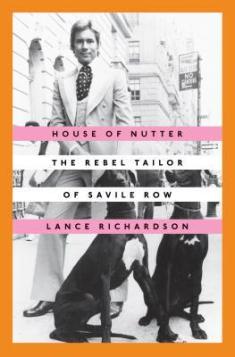
house of nutterHouse of Nutter: The Rebel Tailor of Savile Row
by Lance Richardson
Nonfiction / Biography / LGBT
375 pages
Published 2018

This biography is titled for Tommy Nutter, the tailor, but it’s really a dual biography of Tommy and his older brother, David. Both gay, both influential in their own celebrity circles, both intimately affected by the AIDS crisis.

Lance Richardson is himself gay, and I think his personal connection brings a depth to the biography that a straight author wouldn’t have. He writes about the persecution of gay men in Britain in the 70s, and the underground gay clubs, with a kind of underlying passion that illustrates the pressure these men were under to hide the very cores of themselves while still finding a sense of community and revelry with each other. (And later, when he talks about the AIDS crisis in the 90s, you can feel the emotions and grief behind the fairly objective words.)

The story itself is gripping; Tommy the tailor and David the photographer, and the high-profile celebrities they orbited around – The Beatles, Yoko Ono, Elton John, Mick Jagger, Michael Jackson. Tommy made clothes for them all, including the suits three of the Beatles wore on the cover of Abbey Road, and the outfits worn by Jack Nicholson’s Joker in Tim Burton’s Batman. David took photographs of John Lennon and Yoko Ono’s wedding, and was Elton John’s personal photographer, publishing a book of photos of the star in 1977.

The biography is part social history, giving an incredible view of the underground gay club scene in the 70s and 80s in London and New York, which the two brothers bounced between.

One thing I was struck by is how casually everyone used drugs at the time! Tailor’s assistants mention doing speed to get work done; everyone drunk themselves into a stupor as often as they could; David unexpectedly blacks out after combining alcohol and some kind of drug while partying one night. David ferries cocaine for a friend/employer at one point – and not a little bit of cocaine, either. A lot. It was definitely a different era for drug use!

The book is also an amazing example of how much people can influence culture and still be forgotten. I’d never heard of David or Tommy Nutter, but the celebrities they clothed and photographed almost everyone has heard of! They didn’t just clothe and photograph them, but influence them. David was a close friend of Elton John’s, cheering him up when he fell into the depths of depression. Tommy was a major pillar of support for the manager of The Beatles, and created a lot of Elton John’s off-stage wear. These two were huge in the cultural change of the 70s and 80s. How do we not know their names?

I really enjoyed this book, and it’s a great piece of gay history for Pride Month. I highly recommend it.

From the cover of House of Nutter: The Rebel Tailor of Savile Row:

From an early age, there was something different about Tommy and David Nutter. Growing up in an austere apartment above a cafe catering to truck drivers, both boys seemed destined to lead rather humble lives in post-war London – Tommy as a civil servant, David as a darkroom technician. Yet the strength of their imagination (plus a little help from their friends) transformed them instead into unlikely protagonists of a swinging cultural revolution.

In 1969, at the age of twenty-six, Tommy opened an unusual new boutique on the “golden mile” of bespoke tailoring, Savile Row. While shocking a haughty establishment resistant to change, “Nutters of Savile Row” became an immediate sensation among the young, rich, and beautiful, beguiling everyone from Bianca Jagger to the Beatles – who immortalized Tommy’s designs on the album cover of Abbey Road. Meanwhile, David’s innate talent with a camera vaulted him across the Atlantic to New York City, where he found himself in a parallel constellation of stars (Yoko Ono, Elton John), who enjoyed his dry wit almost as much as his photography. 

House of Nutter tells the stunning true story of two gay men who influenced some of the most iconic styles and pop images of the twentieth century. Drawing on interviews with more than seventy people – and taking advantage of unparalleled access to never-before-seen pictures, letters, sketches, and diaries – journalist Lance Richardson presents a dual portrait of brothers improvising their way through five decades of extraordinary events, their personal struggles playing out against vivid backdrops of the Blitz, an obscenity trial, the birth of disco, and the devastation of the AIDS crisis. 

A propulsive, deftly plotted narrative filled with surprising details and near-operatic twists, House of Nutter takes readers on a wild ride into the minds and times of two brilliant dreamers.

Friday 56 – We Set the Dark on Fire

we set the dark on fireThe Friday 56 is hosted by Freda’s Voice. The rules are simple – turn to page 56 in your current read (or 56% in your e-reader) and post a few non-spoilery sentences.

This week’s quote is from We Set the Dark on Fire by Tehlor Kay Mejia, a dystopia-on-the-verge-of-revolt in which upper-class girls are sorted into rigid household roles, and lower-class people are severely oppressed. It stars an F/F romance.

Dani nodded deferentially, but inside she glowed. This might not be her dream, but she had learned the satisfaction of being exemplary. Because of the nature of their roles, Dani and the elder señora would spend little time alone together after this first week, but she would be the last of Dani’s official teachers, and she found herself still eager to make a good impression.

Maybe it was a whisper of her own mama still stirring in her heart, Dani thought, that made her want to make this woman proud. But when she glanced up again, it was only to notice that Señora Agosta Garcia, with her stern face and her fastidious appearance, was as unlike Dani’s mama as one woman could be from another.

Book Review: Georgia Peaches and Other Forbidden Fruit

georgia peaches and other forbidden fruitGeorgia Peaches and Other Forbidden Fruit
by Jaye Robin Brown
Young Adult/Romance/LGBT
432 pages
Published 2016

This is a sweet, southern f/f romance. Set in Georgia, it deals with a lot of things young lesbians might have to deal with in the south – religion, bigotry, the stress of coming out or not coming out (or being forced back in the closet by a move to a small town)! It doesn’t deal with any outright violence against our lesbian protagonists, and it just barely touches on drug use, eating disorders, and abusive relationships. Joanna has a mostly supportive family, even if they do ask her to hide her sexuality for her senior year in the new town. Jo reluctantly agrees to do so, but doesn’t count on falling in love with a girl at her new school.

The book deals a LOT with religion and sexuality; Jo’s father is a radio preacher, and she attends a baptist church in town with her stepmother and new grandparents. At one point – one of my favorite scenes in the book – she snaps, and calls out her classmates for thinking homosexuality is a sin, while they eat shellfish and have premarital sex.

I liked the book, but I’m not sure I’d recommend it. I grew up Christian; I’m familiar with all the concepts in the book, but rather than progress to a kinder, more loving version of Christianity, I left it behind altogether. I’m glad that some people can reconcile religion with progressive values, but I can’t. So it might be a good book for some, but not for me.

From the cover of Georgia Peaches and Other Forbidden Fruit:

It’s going to take a miracle for Joanna Gordon to get through senior year. 

Despite being the daughter of a well-known radio evangelist, Jo has never hidden the fact that she’s gay, and her dad has always supported her. But that was back in Atlanta. Now her dad the reverend has married wife number three, and they’ve all moved to small-town Rome, Georgia. When Jo’s dad asks her to lie low for the rest of the year in the hopes that it will help him and his new wife settle in, Jo reluctantly agrees. 

Although when God closes a closet door, he opens a window. Everything becomes so easy for Jo once she rebrands herself as a straight girl. No one gives her odd looks. Her new stepfamily likes her. She even gets in with the popular crowd.

And that’s how she meets Mary Carlson, the ultimate temptation. Even though Jo knows this girl is completely off-limits, she just can’t get her out of her mind. But Jo couldn’t possibly think of breaking her promise to her dad. Even if Jo’s starting to fall for Mary Carlson. Even if there’s a chance Mary Carlson might be interested in her, too. Right?

Lord, have mercy.

Jo’s in for one hell of a year.

Library Loot Wednesday

I have a whole stack of books for Pride this week! Most of them are F/F, I’ve realized, so I need to work on getting other representation into the mix. Bingo Love is an F/F graphic novel, but one of the women is bisexual. Let’s Talk About Love is asexual, and the main character in The Rules and Regulations for Mediating Myths & Magic is gay. The other three are all F/F – Her Royal Highness (the sequel to Royals), Juliet Takes a Breath, and Ship It.