Friday 56 – Snow Like Ashes

snow like ashesThe Friday 56 is hosted by Freda’s Voice. The rules are simple – turn to page 56 in your current read (or 56% in your e-reader) and post a few non-spoilery sentences.

Today’s quote is from Snow Like Ashes by Sara Raasch, a story about four countries locked in permanent seasons – Winter, Spring, Summer, and Autumn. Spring has gone on the warpath, and Winter was the first to fall under their boots.

Spring has their own mines in their section of the Klaryns, but theirs produce deadly powders that fuel their cannons, the only mines in the world that harbor it. That’s what we thought the war was about – Spring wanted to expand their mine holdings. But when they won, they didn’t tear into our mines. They just boarded them all up, like their goal was simply to destroy Winter piece by piece, spirit by spirit, by making us sit back and watch Winter’s most valued possession fall into decay.

Once Angra kills us all, he’ll probably reopen the mines. But as long as we live, it’s more valuable to dangle our useless mines in our faces, taunt us and distract us into making mistakes, getting caught, falling into his open hands. Or at least, that’s what we tell each other, to make it feel less like the war was all for nothing.

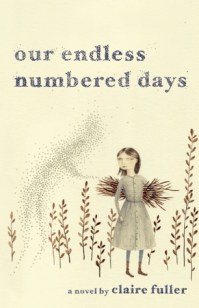
Book Review: our endless numbered days

our endless numbered daysour endless numbered days
by Claire Fuller
Contemporary Fiction
386 pages
Published 2015

I don’t like unreliable narrators. I didn’t realize, at first, that Peggy was one. Even though she mentions at the start of the book that a doctor said she had Korsakoff’s syndrome – meaning malnutrition has messed with her memories – I assumed that it was just because her experiences were so unbelievable that the doctor thought she’d made things up. I also don’t like unreliable narrators because the author obviously knows what truly happened. Leaving the reader in the dark about it seems rude.

Peggy’s narration does seem childlike, often. While at the beginning of the book, that can be excused because she is eight years old, by the end she is seventeen, yet still talking about things with a child’s understanding. I thought that was the effect of Korsakoff’s syndrome, not that she was entirely making some things up.

In our endless numbered days, Peggy is effectively kidnapped by her father when she is eight, and taken to some place deep in the German forest. She spends the next nine years alone in the forest with him, trapping squirrels, gathering roots and berries, and growing simple crops in a small vegetable patch. He tells her, repeatedly, making her repeat it back to him, that the rest of the world was destroyed in a massive storm. They are the last two people alive in their small, sheltered valley. She doesn’t question it until she sees a man in their forest, and that eventually leads her to find civilization again. The book is told in two timelines, flashing back and forth from her memories of her time in the forest, and the present where she’s attempting to re-acclimate to London.

I’m not really sure what to believe; Peggy’s memory or what her mother thinks happened. There are just enough oddities to make either story plausible. I think I prefer Peggy’s version. But that’s the trouble with unreliable narrators; there’s no way to actually know. I don’t like ending a book frustrated. Books should make you feel things, yes, but frustration is an odd emotion to aim for.

This book is odd.

From the cover of our endless numbered days:

Peggy Hillcoat is eight years old when her survivalist father, James, takes her from their home in London to a remote hut in the woods and tells her that the rest of the world has been destroyed. Deep in the wilderness, Peggy and James make a life for themselves. They repair the hut, bathe in water from the river, hunt and gather food in the summers, and almost starve in the harsh winters. They mark their days only by the sun and the seasons.

When Peggy finds a pair of boots in the forest and begins a search for their owner, she unwittingly unravels the series of events that brought her to the woods and, in doing so, discovers the strength she needs to go back to the home and mother she thought she’d lost.

After Peggy’s return to civilization, her mother begins to learn the truth of her escape, of what happened to James on the last night out in the woods, and of the secret that Peggy has carried with her ever since.


Library Loot Wednesday

I’ve only picked up 4 books this week, two of which I talked about in yesterday’s Fall TBR list.

Swastika Night – a dystopia where the Nazis won and women are relegated to breeding stock
Finding Yvonne – a young adult novel
Educated – Tara Westover’s memoir about being homeschooled
Call Me American – a Nigerian refugee’s memoir

I’m trying really hard to dedicate time to reading in the next couple of weeks, I currently have nineteen books checked out! Gotta whittle that pile down a bit!

Top Ten Tuesday – My Fall TBR

Top Ten Tuesday is hosted by That Artsy Reader Girl, and this week’s topic is my fall TBR list! Sadly, I haven’t yet finished my Summer TBR list, because half of the books haven’t made it through the library system to me yet! So, having learned my lesson, for fall I’m going to go mostly with books I already have in my possession, whether that’s books checked out, books I actually own, or books I have borrowed from elsewhere.

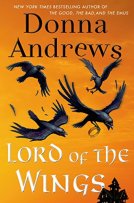
lord of the wingsFirst off is Lord of the Wings – it’s #19 in an avian-themed murder mystery series, which I didn’t know when I picked it up. (I love birds, though, so that sounds right up my alley.) I picked it up because it’s a murder mystery set on Halloween, and I need a Halloween-themed book for PopSugar’s Reading Challenge, AND Litsy’s Booked Challenge! The cover even looks Halloween-themed!

In my current library books I have Educated, Tara Westover’s memoir, which I talked about in my Education-themed Top Ten. Another library book is Swastika Night, which hits Popsugar’s “Woman writing under a male pseudonym” prompt. I’m getting down to the wire on PopSugar’s challenge, I need to buckle down and get the rest of those prompts read! In that vein, I also need to read No is Not Enough, which was gifted to me last Christmas by my awesome mother-in-law.


I have a September Book of the Month to read, The Silence of the Girls. I’m reading Headscarves and Hymens along with Book Riot’s Persist book club, and I need to read Summer Bird Blue before the 27th, so I can join in YA_Pride’s book discussion on Twitter. (That requires getting my hands on the book first, though!)


I should be receiving my Barnes & Noble Book Club copy of An Absolutely Remarkable Thing, Hank Green’s debut novel, sometime after the 25th, and I also preordered Girls of Paper and Fire from Barnes & Noble, because it looks amazing.


For my tenth book on my Fall TBR, I’ll go with Look Me In The Eye, a memoir of a man with Asperger’s. I’ll have to add it to my Autism Reading List.

I’m sure I’ll read more than these 10 this fall – I need to read 46 more books to make my goal by the end of the year! What are you planning to read? Are you going to Barnes & Noble’s book club meeting in October to discuss An Absolutely Remarkable Thing?

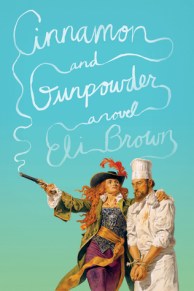
Book Review: Cinnamon and Gunpowder

cinnamon and gunpowderCinnamon and Gunpowder
by Eli Brown
Pirate Adventure
318 pages
Published 2013

Cinnamon and Gunpowder reminds me a lot of Treasure Island. Or at least of my childhood memories of reading Treasure Island, as it’s been decades since I read it. The book is told from the viewpoint of Owen Wedgwood, a chef who finds himself kidnapped by a famous pirate and forced to cook gourmet meals for her in exchange for his life. As a home cook who’s had a small amount of actual training, I really enjoyed his descriptions of making do with only the cooking tools the ship has on hand and whatever rations he could lay his hands on. The creativity he displays in making amazing meals out of almost nothing is one of the best parts of the book. (And the descriptions of those meals – YUM.)

The formatting is set up as a kind of personal ship’s log, each part dated and written down after the events happen. Wedgwood (or “Spoons,” as the crew calls him) even mentions how he hides it and leaves out a decoy log, since he also writes down his dreams (and plans!) of escaping the pirates.

Some of the events in the book are incredibly predictable, but there are still a few surprises. I was a little disappointed when one thing in particular happened; I saw it coming but hoped that wasn’t where the author was going with it. I know that’s vague, but I don’t want to spoil anything!

I enjoyed learning about Mad Hannah’s background and why she’s a pirate; she’s fighting against the opium trade, and she actually gives Wedgwood a pretty accurate summary of the terrible things the opium trade was responsible for.

Any book that can combine sumptuous description of exotic meals with action and cannonballs will have my attention. And Brown does not shy away from proper action scenes. These are pirates, and fights get brutal. Men lose limbs if not their lives to storms and Navy bombardments. Keeping order on a pirate ship involves lashings and brute force. The book doesn’t shrink from those, but it also gets philosophical with Wedgwood’s description of flavors, and almost comedic with the images of using cannonballs as pestles for grinding herbs. It’s that contrast and variety that makes this book so much fun to read.

From the cover of Cinnamon and Gunpowder:

In Cinnamon and Gunpowder, the prizewinning author Eli Brown serves up the audacious tale of a fiery pirate captain, her reluctant chef, and their adventures aboard a battered vessel, the Flying Rose. As these unlikely shipmates traverse the oceans, intrigue, betrayal, and bloodshed churn the waters.

The year is 1819, and Owen Wedgwood, famed as the Caesar of Sauces, has been kidnapped by the ruthless captain Mad Hannah Mabbot. After using her jade-handled pistols on his employwer, lord of the booming tea trade, Mabbot announces to the terrified cook that he will be spared only as long as he puts an exquisite meal in front of her every Sunday without fail.

To appease the red-haired tyrant, Wedgwood works wonders with the meager supplies he finds on board, including weevil-infested cornmeal and salted meat he suspects was once a horse. His first triumph is that rarest of luxuries on a pirate ship: real bread, made from a sourdough starter that he keeps safe in a tin under his shirt. Soon he’s making tea-smoked eel and brewing pineapple-banana cider.

Even as she holds him hostage, Mabbot exerts a curious draw on the chef; he senses a softness behind the swagger and the roar. Stalked by a deadly privateer, plagued by a hidden saboteur, and outnumbered in epic clashes with England’s greatest ships of the line, Captain Mabbot pushes her crew past exhaustion in her hunt for the notorious King of Thieves. As Wedgwood begins to understand the method to Mabbot’s madness, he must rely on the bizarre crew members he once feared: Mr. Apples, the fearsome giant who loves to knit; Feng and Bai, martial arts masters sworn to defend their captain; and Joshua, the strangely mute cabin boy.

A giddy, anarchic tale of love and appetite, Cinnamon and Gunpowder is a wildly original feat of the imagination, deep and startling as the sea itself.

Sunday Link Roundup

Between all the Book Riot newsletters I get, there’s been a lot of good links coming my way this week. (In addition to things I found elsewhere.)

Pages Unbound is doing a survey on Book Blogger stats – if you’re a blogger, go fill out the questionnaire! More data just makes things more accurate! They also have the results from the last time they did it, in 2016, if you want to see how you stack up currently!

An article on the responsibility of romance writers to portray domestic violence and recovery accurately.

A excerpt and revew of Watch Us Rise, a new YA book about two teens who start a Women’s Rights club at their high school. It looks excellent.

How Children’s Book authors are protesting injustice. (Like kids in cages and gun violence.)

How people are using Young Adult novels to address the #MeToo movement.

Racism in the Nancy Drew novels. I haven’t actually read Nancy Drew. This was an interesting read.

Americans of Conscience – a weekly checklist of actions you can easily take to enact change. Things like calling your representatives about current issues, writing letters, tweeting, adding the mid term elections to your calendar. It includes scripts for calls and easy ways to look up the phone numbers you need.

Scythe by Neal Shusterman is free to read on Riveted until September 30th!