Book Review: The Poppy War

poppy warThe Poppy War
by R. F. Kuang
Asian Military Fantasy
530 pages
Published May 2018

Have you ever read a book that is so good you don’t know what to say about it? It’s taken me almost two weeks to even attempt this review because I just don’t know what to write. The Poppy War is your typical story of downtrodden, disadvantaged girl testing into the highest school in the land and gaining the opportunities and privileges that come with that, but then the book takes a sharp twist into war. Rin doesn’t exactly get the most typical of educations, even before war breaks out. And when war breaks out, the school is disbanded, the students getting flung all over the land to where the government thinks they will help the most. For Rin, that’s joining The Cike. The Bizarre Children. The division of people who can do….things. Things the rest of the military isn’t comfortable with. The Cike can call on the powers of gods, and doing so makes them not-quite-untouchables. Rin, who was never short on resentment before this, grows ever more resentful.

Rin is an interesting character; she’s been hard done by, yes, but she makes decisions that only make things harder on herself. So I feel for her a little, but at the same time, girl. Check yourself. What’s been done to you doesn’t justify what you plan to do to others. I am hoping she comes to see that in the next book, because her rage and need for vengeance definitely gets the best of her in this one.

The Poppy War is an excellently written blend of military fantasy, epic fantasy, and coming-of-age novel. Unlike some books, where the military aspect far overshadows the characters, leaving them flat, Poppy War doesn’t ignore the characters to focus on the bigger picture. It’s a very good mix of both close-up focus on characters, fights, battles, and zoomed-out strategy and war. It’s probably the best military fantasy I’ve read, and the Asian aspect of it makes it even better. So much military fantasy is western European, or Steampunk, or both. I’ve been finding more and more Asian and African fantasy, and I am SO HERE FOR IT. I need to try to find more South American fantasy. I know it’s out there.

I will definitely be watching for the next book in this series, because it’s awesome.

From the cover of The Poppy War:

She is a peasant.
She is a student.
She is a soldier.
She is a goddess.

When Rin aced the Keju – the Empire-wide test to find the most talented youth to study at the academies – it was a shock to everyone: to the test officials, who couldn’t believe a war orphan from Rooster Province could pass without cheating; to Rin’s guardians, who always thought they’d be able to marry Rin off to further their criminal enterprise; and to Rin herself, who realized she was now finally free of the servitude and despair that had made up her daily existence. That she got into Sinegard – the most elite military school in the Nikara Empire – was even more surprising.

But surprises aren’t always good.

Being a dark-skinned peasant girl from the south is not an easy thing at Sinegard. Rin is targeted from the outset by rival classmates because of her color, poverty, and gender. Driven to desperation, she discovers she possesses a lethal, unearthly power – an aptitude for the nearly mythical art of shamanism. Exploring the depths of her gift with the help of a seemingly insane teacher and psychoactive substances, Rin learns that gods long thought dead are very much alive – and that mastering control over her powers could mean more than just surviving school.

For even though the Nikara Empire is at peace, the Federation of Mugen still lurks across a narrow sea. The militarily advanced Federation occupied the Nikara Empire for decades after the First Poppy War, and only barely lost the continent in the Second. And while most of the people in the Empire would rather forget their painful history, a few are aware that a Third Poppy War is just a spark away.

Rin’s shamanic powers may be the only way to save her people. But as she finds out more about the god who has chosen her, the vengeful Phoenix, she fears that winning the war may cost her her humanity.

And it may already be too late.

Book Review: Snow Like Ashes

snow like ashesSnow Like Ashes
by Sara Raasch
YA Fantasy
422 pages
Published 2014

The world-building in this book is fascinating. At first, it seems like yet another YA novel about displaced royals trying to win back their kingdom, but this royal is in much more dire straits than most. Meira is a refugee living on the run with seven others, one of them her rightful King. All the rest of their people have been enslaved by the conquering country, and their kingdom’s link to the magic inherent in the land has been broken.

A little backdrop is needed. In Meira’s land, there are eight countries. The Rhythm countries, where seasons proceed as normal, and the Seasons – 4 countries locked in one season each. The rulers of each country have a magic conduit that lets them feed magic to their people – but the conduits are gender-locked. In four of the countries, only women can use the conduit; in the other four, only men. Meira and her little band are all that’s left of the free people of Winter. Spring invaded sixteen years ago, killed Winter’s queen, broke the locket that was their magic conduit (each ruler has one) and enslaved their people. Because the queen only had a son, he can’t wield Winter’s magic anyway. They’re still trying to find the two pieces of the locket so when he has a daughter, she can wield it. You’d think at this point, since he’s of age, he should be trying to get as many women pregnant as possible to up the odds of getting a royal heir who can wield the magic, but that…doesn’t come up.

The book does delve into the country’s people being oppressed, used as slaves, and being incredibly abused by the conquering country, and this is where I ran into a quandary. The Season’s people reflect their countries: Autumn’s people have copper skin, Spring’s citizens are blond-haired and green-eyed – and Winter’s people are white. Pale skin, snow-white hair, blue eyes. Writing white people as the oppressed people just rubs me the wrong way. (In that false “help I’m being oppressed because other people want equal rights!” kind of way.) Yes, this is fantasy, yes, it has nothing to do with our world’s politics – but it bothers me. It’s at least not white-savioring, as Meira’s trying to save her own people, but I don’t know. Is it better or worse to write white people as the oppressed protagonists?

That question aside, this was a well-written novel of fighting against an oppressor. There is definitely still work to be done at the end of the book, and there are two more books, as well as two short stories. While I am a little curious what ultimately happens, I don’t know if the series has earned more time on my reading list.

From the cover of Snow Like Ashes:

Sixteen years ago the Kingdom of Winter was conquered and its citizens enslaved, leaving them without magic or a monarch. Now the Winterians only hope for freedom is the eight survivors who managed to escape, and who have been waiting for the opportunity to steal back Winter’s magic and rebuild the kingdom ever since.

Orphaned as an infant during Winter’s defeat, Meira has lived her whole life as a refugee, raised by the Winterians’ general, Sir. Training to be a warrior – and desperately in love with her best friend and future king, Mather – she would do anything to help Winter rise to power again.

So when scouts discover the location of the ancient locket that can restore their magic, Meira decides to go after it herself. Finally, she’s scaling towers and fighting enemy soldiers just as she’s always dreamed she would. But the mission doesn’t go as planned, and Meira soon finds herself thrust into a world of evil magic and dangerous politics – and ultimately comes to realize that her destiny is not, never has been, her own.

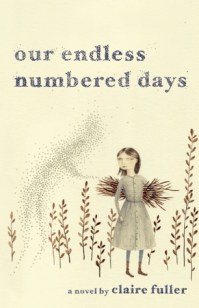
Book Review: our endless numbered days

our endless numbered daysour endless numbered days
by Claire Fuller
Contemporary Fiction
386 pages
Published 2015

I don’t like unreliable narrators. I didn’t realize, at first, that Peggy was one. Even though she mentions at the start of the book that a doctor said she had Korsakoff’s syndrome – meaning malnutrition has messed with her memories – I assumed that it was just because her experiences were so unbelievable that the doctor thought she’d made things up. I also don’t like unreliable narrators because the author obviously knows what truly happened. Leaving the reader in the dark about it seems rude.

Peggy’s narration does seem childlike, often. While at the beginning of the book, that can be excused because she is eight years old, by the end she is seventeen, yet still talking about things with a child’s understanding. I thought that was the effect of Korsakoff’s syndrome, not that she was entirely making some things up.

In our endless numbered days, Peggy is effectively kidnapped by her father when she is eight, and taken to some place deep in the German forest. She spends the next nine years alone in the forest with him, trapping squirrels, gathering roots and berries, and growing simple crops in a small vegetable patch. He tells her, repeatedly, making her repeat it back to him, that the rest of the world was destroyed in a massive storm. They are the last two people alive in their small, sheltered valley. She doesn’t question it until she sees a man in their forest, and that eventually leads her to find civilization again. The book is told in two timelines, flashing back and forth from her memories of her time in the forest, and the present where she’s attempting to re-acclimate to London.

I’m not really sure what to believe; Peggy’s memory or what her mother thinks happened. There are just enough oddities to make either story plausible. I think I prefer Peggy’s version. But that’s the trouble with unreliable narrators; there’s no way to actually know. I don’t like ending a book frustrated. Books should make you feel things, yes, but frustration is an odd emotion to aim for.

This book is odd.

From the cover of our endless numbered days:

Peggy Hillcoat is eight years old when her survivalist father, James, takes her from their home in London to a remote hut in the woods and tells her that the rest of the world has been destroyed. Deep in the wilderness, Peggy and James make a life for themselves. They repair the hut, bathe in water from the river, hunt and gather food in the summers, and almost starve in the harsh winters. They mark their days only by the sun and the seasons.

When Peggy finds a pair of boots in the forest and begins a search for their owner, she unwittingly unravels the series of events that brought her to the woods and, in doing so, discovers the strength she needs to go back to the home and mother she thought she’d lost.

After Peggy’s return to civilization, her mother begins to learn the truth of her escape, of what happened to James on the last night out in the woods, and of the secret that Peggy has carried with her ever since.


Book Review: All’s Faire in Middle School

All's Faire in Middle SchoolAll’s Faire in Middle School
by Victoria Jamieson
Graphic Novel
248 pages
Published 2017

For those who didn’t know, I work at the Maryland Renaissance Festival, helping a friend of mine sell leather masks (and other leather goods). Throughout the year, I actually get to help her make them, including stitching the codpieces we sell at the Fair. So when I learned about this graphic novel set at a Renaissance Festival, I knew I had to grab it. I worked Labor Day Monday at Fair, so I popped over to the Fair’s bookshop, Page After Page, and picked up the book. (They even remembered I’d asked about the book over the summer to make sure they were going to carry it!)

Once I recovered from the heat and humidity at Fair on Monday, I cracked this book open and fell into it. It’s set at the Florida Ren Faire, and it captures the spirit of Rennies and the festival very, very well. One of my favorite parts was when Imogene announced she was going to middle school, and all the adults around her reply with variations of “MIDDLE SCHOOL SUCKED.” Imogene asks “Aren’t adults supposed to encourage kids to go to school?” and her dad replies “You got the wrong kind of adults, kid.” Oh, Rennies. There are D&D games, and thrift stores, and going to the store in garb, and speaking in accents while doing normal mundane things – yeah. This is a book about Rennies, alright.

I was a little disappointed in the adults not understanding the kind of pressure Imogene was under as the new girl at school. They all commiserated with middle school sucking, but didn’t give Imogene any slack for it, and in a couple of cases dismissed how important things were to her.

I loved seeing her go from school to Fair, and seeing the different environments contrasted. The art style is great. Each chapter begins with a page illustrated like a medieval manuscript, and a paragraph written like an epic story. “After months of preparations, including but not limited to careful outfit selection and triple-checking of school supplies, young Imogene is ready to embark on her journey into the Great Unknown. Like all explorers before her, our heroine has only one thought on her mind….”

I really loved this book. It would make a great gift for any kid headed to middle school who loves Ren Faires. (Or Rennie parents!)

From the cover of All’s Faire in Middle School:

Growing up with parents who work at the Renaissance Faire, Imogene has always been sure of who she is: a brave and noble knight. But now, after being homeschooled her whole life, she is about to embark on the epic adventure of . . . middle school!

Imogene will quickly discover that in real life there aren’t always clear-cut heroes and villains like there were at the Faire. How will she find her place (and new friends) in this strange and complicated land?

Series Review: The Bone Witch

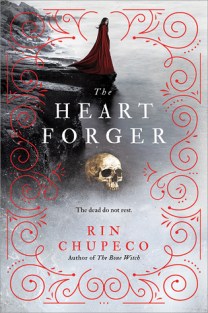
the bone witchThe Bone Witch/The Heart Forger
by Rin Chupeco
Young Adult Fantasy
411 pages/501 pages
Published 2017/2018

I’m reviewing the first two books of a trilogy here, The Bone Witch and The Heart Forger. The third book, The Shadowglass, is due out in March – but I wish it was out now!!

Both books are told in an alternating chapter format; short chapters, told from a nameless bard’s viewpoint as Tea tells him her story, and longer chapters told from Tea’s viewpoint, being the stories she’s telling the bard. All of the bard’s chapters take place over the course of a few weeks, while Tea’s story covers her entire life up to that point. So you get glimpses of what she’s currently doing, while getting backstory and explanation of why she’s doing it.

First thing I want to say is Tea is BADASS. The book opens on her raising a terrifying monster from the dead and making it into a pet. A PET. The bard she’s talking to is intimidated, to put it mildly. Then we launch into her story. Tea tells us how she went from farmgirl to Asha – think a geisha with magic and combat training, and you’ll get the picture. Tea’s world is fairly rigid on the gender roles – women with magic become asha, men with magic become Deathseekers. A significant side-plot revolves around a young boy with magic who wants to be an asha instead of a Deathseeker, and Tea’s efforts to help him. Tea turns out to be a rare kind of asha – a dark asha, or bone witch – whose powers are mostly concerned with raising the dead.

heart forgerA major point of this world is heartsglass – in several of the kingdoms (but not all of them) everyone wears a locket around their neck with their heartsglass inside. Heartsglass is basically a small ball of light summoned forth from a person’s soul when they come of age. It can’t be given away unwillingly, and the different colors of someone’s heartsglass means different things – whether they’re a magic user, or a bone witch, or an asha, or a heart forger. Or rather, whether they have the potential to become those things. Some people – the ashas, death seekers, any of the magic users, really – can see peoples’ emotions in their heartsglass, and can tell when people are lying, or guilty, or a number of useful things. People in love often trade their heartsglass with each other, literally holding each other’s hearts. This can be dangerous; the bone witch who trains Tea in the first book gave her heartsglass away, but her lover died without returning hers. And she doesn’t know where he hid it. Without a heartsglass, her powers – and life force – are dwindling.

I love Tea so much. She is incredibly powerful, but hurt and pissed off and out for vengeance. At the same time, she doesn’t want to be evil, so she is tempering her vengeance to a knifepoint so innocents aren’t caught in it needlessly. She’s doing horrifying things while you’re thinking “Oh. Yeah. That’s justified.” The writing in these books is excellent. The side characters are fleshed out with motivations of their own, the villains have interesting reasons for their villainy, strange events get revisited later and explained – it’s just amazingly well done.

Between raising the dead, flirting with princes, taking down army-destroying monsters, and taming dragons, the only bad thing I have to say is I HAVE TO WAIT UNTIL MARCH FOR THE THIRD BOOK?!

From the cover of The Bone Witch:

The beast raged; it punctured the air with its spite. BUT THE GIRL WAS FIERCER.

Tea is different from the other witches in her family. Her gift for necromancy makes her a bone witch, who are feared and ostracized in the kingdom. For theirs is a powerful, elemental magic that can reach beyond the boundaries of the living – and of the human.

Great power comes at a price, forcing Tea to leave her homeland to train under the guidance of an older, wiser bone witch. There, Tea puts all of her energy into becoming an asha, learning to control her elemental magic and those beasts who will submit by no other force. And Tea must be strong – stronger than she even believes possible. Because war is brewing in the eight kingdoms, war that will threaten the sovereignty of her homeland…and threaten the very survival of those she loves.

Lyrical and action packed, this new fantasy series by acclaimed author Rin Chupeco will leave you breathless.

From the cover of The Heart Forger:

Life isn’t fair. AND SOMETIMES, NEITHER IS DEATH.

No one knows death like Tea. A bone witch who can resurrect the dead, she has the power to take life…and return it. And she is done with her self-imposed exile. Her heart is set on vengeance, and she now possesses all she needs to command the mighty daeva. With the help of these terrifying beasts, she can finally enact revenge against the royals who wronged her – and took the life of her one true love.

But there are those who plot against her, those who would use Tea’s dark power for their own nefarious ends. Because you can’t kill someone who can never die…

War is brewing among the kingdoms, and when dark magic is at play, no one is safe.

Book Review: Sweet Little Lies

sweet little liesSweet Little Lies
by Caz Frear
Crime Fiction
344 pages
Published August 2018

Sweet Little Lies was billed as a thriller in Book of the Month’s description, but it’s more of a police procedural. I hadn’t read one before, though I watch plenty of them on Netflix – they’re a bit of a guilty pleasure! It was interesting having one in book form. It’s not my typical fare, but I did enjoy it, far more than I probably would have enjoyed a true thriller. It’s got all your typical parts of a police procedural – older family man cop, ball-busting female chief who isn’t as bitchy as she first appears, troubled main character who snapped on a case, police psychiatrist, puzzling case, lying witnesses. All we’re really missing is a partner who isn’t actually a cop but somehow worms his way into cases anyway.

I’m conflicted about Cat herself. I like her – but I disagree with some of her decisions. I think she should have come clean about her connection to the case immediately. She doesn’t because she’s trying to protect her dad, but why? She spends most of the book talking about how much she dislikes him! Her entire family dynamic is pretty weird. They have issues.

I really enjoyed the writing of this book. The pacing was excellent – slow enough to absorb each new reveal properly, but fast-paced enough that the action rolls along. Goodreads says the book is “Cat Kinsella #1” implying it’s the start of a series. I’ll have to keep an eye out for them. For a debut novel, I am impressed at the level of writing, pacing, plot, and characterization. There’s a lot of threads in this book that get gathered together at the end and tied up nicely, with only one escaping. That worried me until I discovered it’s the beginning of a series; the one loose thread makes sense in that context.

While I didn’t like this one quite as much as Goodbye, Paris, it’s still another great pick from Book of the Month. I’m curious if they’ll have Hank Green’s An Absolutely Remarkable Thing as one of their picks next month! I already ordered the Book Club version from Barnes & Noble, but I’d still be sorely tempted to get a Book of the Month edition. I really don’t need two copies, though!

From the cover of Sweet Little Lies:

Twenty-six-year-old Cat Kinsella overcame a troubled childhood to become a detective constable with the Metropolitan Police Force, but she’s never been able to  banish the ghosts of her past or reconcile with her estranged father. Work provides a refuge from her family dysfunction, but she relies on a caustic wit to hide her vulnerability from her colleagues.

When a mysterious phone call links a recent strangling victim to Maryanne Doyle, a teenage girl who went missing in Ireland eighteen years earlier, the news is discomfiting for Cat. Though she was only a child when her family met Maryanne on a family vacation, right before she vanished, Cat knew that her charming but dissolute father wasn’t telling the truth when he denied knowing anything about the girl’s disappearance. Did he do something to Maryanne all those years ago? Could he have something to do with her current case?

Determined to close the two cases, Cat rushes headlong into the investigation, crossing ethical lines and trampling professional codes. But the deeper she digs, the darker the secrets she may uncover . . . .

Narrated by the unforgettable Cat, Sweet Little Lies is both a compelling police procedural and a look at how we grapple with the shadows of our pasts.