Book Review: Future Home of the Living God

futurehomeFuture Home of the Living God
Louise Erdrich
Dystopia
288 pages
November 2017

Well that was a waste of time. This book spends its entire length asking one real question. Will the main character’s baby survive? There are a number of smaller questions – Will the baby be born normal? Why is evolution turning backwards, or sideways? What happened to the main character’s father? What happened to her friend from the hospital? What happened to her husband? Does she ever find freedom?

THE BOOK ANSWERS NONE OF THESE QUESTIONS.

I am really frustrated with this book. Why did I bother reading it if it refuses to resolve any of its plotlines?

We’re going to get a little bit into writing theory here. It has been a classic recommendation to have the climax of your book 2/3 of the way through the book, and have the last third be denouement. Wrap-up. Show us how the climax affected the characters and the world. John Green does this well – all his books follow a standard plot line. Character A is introduced. A meets B. B changes A’s life. B leaves A’s life. (Those last two are usually incorporated in the climax of the book.) A has to learn how to live without B in a world changed by B’s existence in it. It’s a little formulaic, but it works for Green, and his books are great. Some books do not do this so well. Wheel of Time had 5-6 pages of denouement after the series climax, and nothing was really revealed about how the events changed the world for the better. Future Home of the Living God had TWO. TWO PAGES AFTER THE CLIMAX. AND THEY ANSWER NOTHING. The main character talks about missing winter.

I finished the book and almost threw it across the room. I probably would have, except for two things: I was at a friend’s house, and it was a library book. That’s all that saved it from that fate. I have stacks of books I want to read, and I feel like I just wasted a few hours on this piece of crap.

The writing was actually pretty good, and the main character is an Ojibwe Indian, so there’s minority representation, but the book as a whole was just CRAP. Wrap up your plotlines. Answer the questions you ask. (At least the ones having to do with your plot – you can leave unanswered philosophical questions, that’s fine.)

Hard pass on this book.

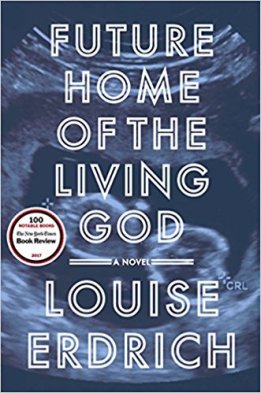
From the cover of Future Home of the Living God:

Louise Erdrich, the New York Times bestselling, National Book Award-winning author of LaRose and The Round House, paints a startling portrait of a young woman fighting for her life and her unborn child against oppressive forces that manifest in the wake of a cataclysmic event.

The world as we know it is ending. Evolution has reversed itself, affecting every living creature on earth. Science cannot stop the world from running backwards, as woman after woman gives birth to infants that appear to be primitive species of humans. Twenty-six-year-old Cedar Hawk Songmaker, adopted daughter of a pair of big-hearted, open-minded Minneapolis liberals, is as disturbed and uncertain as the rest of America around her. But for Cedar, this change is profound and deeply personal. She is four months pregnant.

Though she wants to tell the adoptive parents who raised her from infancy, Cedar first feels compelled to find her birth mother, Mary Potts, an Ojibwe living on the reservation, to understand both her and her baby’s origins. As Cedar goes back to her own biological beginnings, society around her begins to disintegrate, fueled by a swelling panic about the end of humanity.

There are rumors of martial law, of Congress confining pregnant women. Of a registry, and rewards for those who turn these wanted women in. Flickering through the chaos are signs of increasing repression: a shaken Cedar witnesses a family wrenched apart when police violently drag a mother from her husband and child in a parking lot. The streets of her neighborhood have been renamed with Bible verses. A stranger answers the phone when she calls her adoptive parents, who have vanished without a trace. It will take all Cedar has to avoid the prying eyes of potential informants and keep her baby safe.

A chilling dystopian novel both provocative and prescient, Future Home of the Living God is a startlingly original work from one of our most acclaimed writers: a moving meditation on female agency, self-determination, biology, and natural rights that speaks to the troubling changes of our time.
Book Review: Tomboy Survival Guide

tomboy survival guideTomboy Survival Guide
by Ivan Coyote
Memoir
208 pages
Published 2016

This is the second book I read for my personal 24 in 48 challenge, and it was excellent. Ivan is a natural storyteller – each chapter flows seamlessly into the next, even though each is a separate vignette from their life, and they aren’t chronological. I was never confused about where in the timeline we were; it was just like they were sitting down telling stories about their life, and that naturally ebbs and flows as people are reminded of different things that have happened to them.

It’s not really fully clear whether Ivan is a transman, or simply non-binary, not that it should matter. They use they/them pronouns, and straddle the androgynous line enough that bathrooms and dressing rooms are a constant issue for them, one they touch on repeatedly through the book. Maybe if our bathrooms weren’t so binary-focused, it wouldn’t be as much of an issue when someone is gender-nonconforming!

The book moves between stories of Ivan’s childhood in small-town Canada, their realization they are attracted to women, their experiences in largely male-dominated career fields, and their actual career as an author and public speaker. They talk about how their own family has been supportive of their transition (mostly) and how other parents have written them letters asking how to be supportive of their non-cisgender children. There are scenes of strangers being supportive, and scenes of shocking discrimination and transphobia.

The book is, overall, excellent, and a good introductory look at the life of a non-binary person. Ivan has written several other books, and I definitely want to track down Gender Failure, which they co-wrote with another non-binary person about, well, gender failure!

Ivan Coyote is Canadian, making this one of my Read Canadian Challenge books.

My other Canadian reviews:
1. An Astronaut’s Guide to Life on Earth
2. The Red Winter Trilogy
3. Station Eleven
4. The Courier
5. The Last Neanderthal
6. American War
7. Next Year, For Sure
8. That Inevitable Victorian Thing
9. All The Rage
10. The Clothesline Swing
11. Saints and Misfits
12. this book!
13. The Wolves of Winter

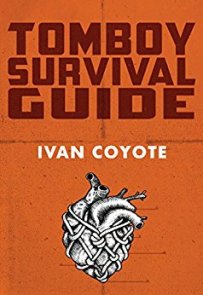
From the cover of Tomboy Survival Guide:

Ivan Coyote is a celebrated storyteller and the author of ten previous books, including Gender Failure(with Rae Spoon) and One in Every Crowd, a collection for LGBT youth. Tomboy Survival Guide is a funny and moving memoir told in stories, in which Ivan recounts the pleasures and difficulties of growing up a tomboy in Canada’s Yukon, and how they learned to embrace their tomboy past while carving out a space for those of us who don’t fit neatly into boxes or identities or labels.

Ivan writes movingly about many firsts: the first time they were mistaken for a boy; the first time they purposely discarded their bikini top so they could join the boys at the local swimming pool; and the first time they were chastised for using the women’s washroom. Ivan also explores their years as a young butch, dealing with new infatuations and old baggage, and life as a gender-box-defying adult, in which they offer advice to young people while seeking guidance from others. (And for tomboys in training, there are even directions on building your very own unicorn trap.)

Tomboy Survival Guide warmly recounts Ivan’s adventures and mishaps as a diffident yet free-spirited tomboy, and maps their journey through treacherous gender landscapes and a maze of labels that don’t quite stick, to a place of self-acceptance and an authentic and personal strength. These heartfelt, funny, and moving stories are about the culture of difference—a “guide” to being true to one’s self.

Book Review: Saints and Misfits

saintsSaints and Misfits
S. K. Ali
Young Adult
325 pages
Published June 2017

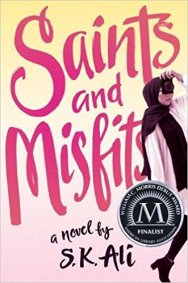
Yet another debut novel that I loved! Saints and Misfits covers a few months in the life of Janna, a Muslim high school student. It opens with her assault by “the monster” as she names him, a well-respected Muslim boy at her mosque. The book covers some normal high school events – finding out her crush likes her back, sneaking up to the roof of the school to talk to her best friend, struggling with her parents not understanding her – but also involves things unique to her experience. She has to exist in the same spaces as her assailant, and she’s better at it some times than others. She has to find a way to deal with leaked photos of her in gym class without her hijab. (Her gym classes aren’t co-ed, so it’s okay to be without her hijab – it’s not okay for men to see her that way.) Meanwhile, she’s playing chaperone for her brother’s courtship, and being forced to share a room with her mother because her brother is moving back in with them.

It’s an interesting, fairly light read about a culture Americans like to demonize, and a topic that doesn’t get enough attention. I enjoyed Janna’s personality and determination, and her relationship with the senior citizen she helps take care of down the hall.

I liked the ending. It showed her slowly building up the courage to confront her assailant, and then doing so. While we didn’t get a concrete resolution, it was strongly implied, and I’m okay with that.

S.K. Ali is based in Toronto, so this book is part of my Read Canadian Challenge.

My other Canadian reviews:
1. An Astronaut’s Guide to Life on Earth
2. The Red Winter Trilogy
3. Station Eleven
4. The Courier
5. The Last Neanderthal
6. American War
7. Next Year, For Sure
8. That Inevitable Victorian Thing
9. All The Rage
10. The Clothesline Swing
11. this book!
12. Tomboy Survival Guide
13. The Wolves of Winter

From the cover of Saints and Misfits:

There are three kinds of people in my world:

1. Saints, those special people moving the world forward. Sometimes you glaze over them. Or, at least, I do. They’re in your face so much, you can’t see them, like how you can’t see your nose.

2. Misfits, people who don’t belong. Like me–the way I don’t fit into Dad’s brand-new family or in the leftover one composed of Mom and my older brother, Mama’s-Boy-Muhammad.

Also, there’s Jeremy and me. Misfits. Because although, alliteratively speaking, Janna and Jeremy sound good together, we don’t go together. Same planet, different worlds.

But sometimes worlds collide and beautiful things happen, right?

3. Monsters. Well, monsters wearing saint masks, like in Flannery O’Connor’s stories.

Like the monster at my mosque.

People think he’s holy, untouchable, but nobody has seen under the mask.

Except me.

Author Diversity Results

So I went through this blog’s posts and recorded the ethnicity of all the authors I have read. (I included scheduled posts that aren’t live yet.) And the results are both sad and encouraging. Sad in that they HEAVILY skew white, but encouraging in that I can see the point where I began to try to fix that. It really brought home that it’s very very easy to NOT read diversely. It takes a little more effort to find good books in my preferred genres by diverse authors. But the catch is that it’s not because they don’t exist – it’s that they’re not marketed as heavily! The books are totally out there, I just have to make an effort to go find them myself.

The actual numbers:

63 white women
31 white men
1 white non-binary person
4 Black women
2 Black men
3 Middle-eastern men
1 Hispanic man
1 Greek man
1 Indian woman
1 Asian woman
1 Native American woman
1 Native American man
4 unknown ethnicities

Just looking at the numbers is pretty bad. However, 14 of my last 30 books have been by non-white cisgender authors! So once I started making an effort, it was fairly easy to find diverse reads. (I’m also amused that I read twice as many women as men.) So I am encouraged by the progress I have made, but saddened by how bad the numbers were. I will be making an effort to continue this trend in the future, and I’ll check in at the end of the year with my results.

Women’s History Month

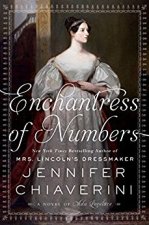
enchantress of numbersMarch is Women’s History Month! Most of the books I’m reviewing this month are by women, and several of them are about women. My review of Jennifer Chiaverini’s historical fiction about Ada Lovelace will be published towards the end of the month, a book about a Muslim teen dealing with rape culture is coming later this week (Saints and Misfits), and a dystopia dealing with the end of fertility, centered on the experiences of a Native American woman, (Future Home of the Living God) is also on the list this month.

I’ve always been pretty female-focused on this blog – I like female and minority protagonists, and female authors are pretty common in my preferred genres. I am reading several books this month focused on feminism or prominent women, but I probably won’t get reviews of those up until early April. I have a biography of Ruth Bader Ginsberg, a couple of books on non-white feminism, and another biography of the first black female millionaire in America.

saintsIn the meantime, a few interesting links for Women’s History Month!

The longlist for the 2018 Women’s Prize for Fiction has been released.

A few lists of books to read for Women’s History Month.

Children’s books for Women’s History Month. 

Middle-grade reads.

Women’s History Facts and Timeline.


Book Review: The Clothesline Swing

clothesline swingThe Clothesline Swing
Ahmad Danny Ramadan
Fictional Memoir?
288 pages
Published April 2017

I had to force myself to finish this book. It was okay at the beginning – I was hoping it would get better, and it did not. The Clothesline Swing is the the story of two gay Syrian refugees. It’s an interesting framework; the narrator, one of the two, is telling stories to his husband to keep him in the world of the living. (The husband is dying from an unnamed illness.) There’s a catch, though – Death is also with them, as an actual presence that can be talked to and interacted with. He smokes a joint with the narrator at one point, and tells stories of his own – even plans a party – at another point. The story flicks back and forth between their past and their present with some unpredictability as the narrator tells his stories.

Because of the presence of Death, and the kind of hazy, in-between space that the stories reside in (between life and death, between awake and asleep, between fantasy and reality), the entire book is a little dream-like. I don’t particularly enjoy ever-shifting books that don’t have some kind of solid foundation for me to start on.

The book did a good job of showing the dangers of being gay in middle-eastern society, and also showed how hard it is to be a citizen of a country at war with itself. The list of friends who have died in violent ways is threaded through the entire book of stories. She was caught in a crossfire in an alley – he killed himself after being forced to marry a woman – he died when his office was shelled – she died from a car bomb.

I don’t know. It’s a strange book. I’m hesitant to say don’t waste your time, because it covers important topics, but the dreamy quality just ruined it for me.

Ramadan is a Syrian refugee living in British Columbia, making this book part of my Read Canadian Challenge. It’s also my pick for “book about death or mourning” for the Popsugar 2018 challenge, and “unconventional romance” for the Litsy Booked Challenge.

My other Canadian reviews:
1. An Astronaut’s Guide to Life on Earth
2. The Red Winter Trilogy
3. Station Eleven
4. The Courier
5. The Last Neanderthal
6. American War
7. Next Year, For Sure
8. That Inevitable Victorian Thing
9. All The Rage
10. this book!
11. Saints and Misfits
12. Tomboy Survival Guide
13. The Wolves of Winter

From the cover of The Clothesline Swing:

The Clothesline Swing is a journey through the troublesome aftermath of the Arab Spring. A former Syrian refugee himself, Ramadan unveils an enthralling tale of courage that weaves through the mountains of Syria, the valleys of Lebanon, the encircling seas of Turkey, the heat of Egypt and finally, the hope of a new home in Canada.

Inspired by One Thousand and One Nights, The Clothesline Swing tells the epic story of two lovers anchored to the memory of a dying Syria. One is a Hakawati, a storyteller, keeping life in forward motion by relaying remembered fables to his dying partner. Each night he weaves stories of his childhood in Damascus, of the cruelty he has endured for his sexuality, of leaving home, of war, of his fated meeting with his lover. Meanwhile Death himself, in his dark cloak, shares the house with the two men, eavesdropping on their secrets as he awaits their final undoing.