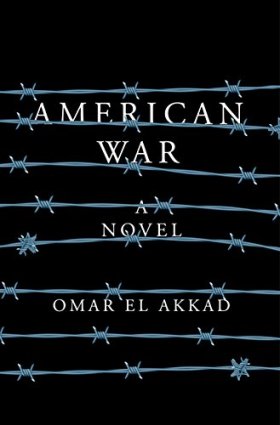
Book Review: American War

americanwarAmerican War
by Omar El Akkad
Alternate Future Dystopia
333 pages
Published 2017

By now you probably know there are a few things I tend to enjoy in novels. Dystopias, Fantasies, Debut Novels, and Diversity tend to peak my interest, and American War is a dystopian debut novel by an Egyptian-Canadian author.

And it’s FANTASTIC.

El Akkad did an absolutely amazing job of weaving together the North/South rivalry of the US, climate change, the changing nature of energy generation, and US wars in the middle east to write an all-too-plausible novel about the US, seventy years from now.

Alternating between narrative chapters following his protagonist, and “historical documents” about the time period, he masterfully tells the story of how a terrorist is made. Because that’s what Sarat, his protagonist, is. Let’s make no bones about that. She is a terrorist. But she is a terrorist whose reasoning makes sense to us. Perhaps because the territories and the peoples are familiar to us, perhaps because we see how she grew up and what drove her to it – but the end result is a terrorist act on an unheard-of scale.

I’d like to think this book would make people look at refugees and terrorists in a new light – with more understanding and compassion and maybe with ideas to help actually combat the attitudes and circumstances that lead to terrorist acts. But I doubt it. I doubt this will change any minds that don’t already understand the underlying reasons.

My only quibble with this book is while he manages to weave together so many other issues facing our country right now, he doesn’t really wrap in racism. And I have a hard time believing our country is past racism 70 years from now.

I was very pleasantly surprised to find the protagonist is a bisexual, gender non-conforming woman of color. How awesome is that? And her bisexuality isn’t mentioned, it’s shown, her one on-screen sex scene (and it’s only barely on-screen) being with a woman. (She’s also attracted to a man in the book.)

The author was born in Egypt, grew up in Qatar, and lived in Canada, earning at least one award for his investigative reporting while working at The Globe and Mail. He’s one of the Canadian Broadcasting Company’s 17 writers to watch this year, and I see why. American War is definitely one of my favorite books of 2017.

My other Read Canadian reviews:
1. An Astronaut’s Guide to Life on Earth
2. The Red Winter Trilogy
3. Station Eleven
4. The Courier
5. The Last Neanderthal
6. this book
7. Next Year, For Sure
8. That Inevitable Victorian Thing
9. All The Rage
10. The Clothesline Swing
11. Saints and Misfits
12. Tomboy Survival Guide
13. The Wolves of Winter

From the cover of American War:

In this fiercely audacious debut novel, Omar El Akkad takes us into a near future in which a politically polarized America descends into a second Civil War – and amid warfare, a family fights to survive.

Sarat Chestnut, born in Louisiana, is only six when the war breaks out in 2074. But even she knows that oil is outlawed, her home state is half underwater, and the unmanned drones that fill the sky are not there to protect her. A stubborn, undaunted, and thick-skinned tomboy, she is soon pulled into the heart of secessionist country when the war reaches Louisiana and her family is forced into Camp Patience, a sprawling tent city for refugees. There she is befriended by a mysterious man who opens her eyes to the injustices around her and under whose tutelage she is transformed into a deadly instrument of revenge.

Narrated by the one person privy to Sarat’s secret life, American War is a hauntingly told story of the immeasurable ruin of war – in a nation, a community, a family, an individual. It’s a novel that considers what might happen if the United States were to turn its most devastating policies and weapons upon itself.
Oh boy, Tonsillitis.

Might be taking a week or two hiatus from blogging as I recover from being pretty ill. I’ve mentioned in the past that I have some chronic illnesses, but I have been pretty steadily gaining new readers here and there, so I’ll update.

My main issues are migraines and Hashimoto’s Thyroiditis. Hashimoto’s is an autoimmune disease where the immune system gets confused and attacks the thyroid gland. This eventually destroys enough of the thyroid gland that it can’t produce enough thyroid hormone, and a supplement needs to be taken. That’s where I’m at now – I have a daily thyroid pill. On occasion, usually when I’m sick with something else, my immune system will flare up and attack my thyroid again, causing it to swell up, get inflamed, and deteriorate further.

So my chronic cough, that I’ve had for a couple of years now (Bronchitis a few years ago plus my migraine maintenance med has a side effect of chronic cough) turned into Tonsillitis and an ear infection this week. Which triggered the Hashimoto’s. So after an urgent care visit Thursday night, I’m on an antibiotic, a steroid/anti-inflammatory, and some prescription cough syrup with a pain med in it. My voice is almost entirely gone (I typed up my symptoms and history to hand to all my doctors at the Urgent Care instead of having to talk so much!), I’m still coughing though not NEARLY as bad as I was Thursday, and I’m having trouble staying awake. (All three meds cause drowsiness, yay!)

All three meds also have a side effect of headache, which is not playing well with my predilection towards migraines anyway. So as you can imagine, the last several days have not been the most fun.

I did manage to finish American War by Omar El Akkad (an Egyptian-Canadian author, so it qualifies for my Read Canadian challenge), and I have a LOT to say about it. It’ll be getting a review soon, but for now I’ll just say it’s one of my favorites of 2017. I also have No is Not Enough: Resisting Trump’s Shock Politics and Winning the World We Need, which is on the National Book Foundation’s longlist for their Nonfiction award this year. The same author has written a few other anti-capitalism books (Shock Doctrine, No Logo, This Changes Everything: Capitalism vs the Climate) so if I like her style in No is Not Enough, I might have to pick up some of her other work.

I tried reading Demon Hunting in Dixie, because I won book 6 through Goodreads, and wanted to start from the beginning of the series. I almost threw it across the room less than a hundred pages in, but that reason deserves its own post.

I have several other books from the library I’m still trying to work on – Dark Money, Hitlerland (which is really interesting, I just keep getting distracted), The Tigress of Forli, and The Daughter of Sherlock Holmes, among others.

I’m really sad because I had planned to go to the Baltimore Book Festival today – I’d been looking forward to it for months – and now I’m too sick to leave the house. Especially when it’s so hot outside, which I don’t deal with very well even when I’m not actively sick. So that’s REALLY disappointing.

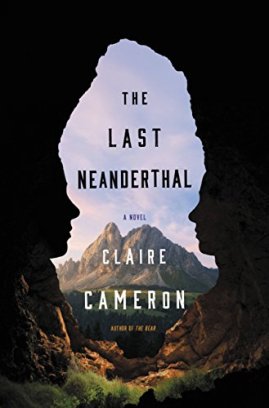
Book Review: The Last Neanderthal

neanderthalThe Last Neanderthal
Claire Cameron
Historical/Literary Fiction
272 pages
Published 2017

Maybe I need to stop trying to read the more literary types of fiction. I’m always left with this vague mixture of “what the hell did I just read?” and “why did I just read that?” Like – I don’t know what I’m supposed to have gotten out of this book. It’s another Canadian author, it’s apparently an International Bestseller and one of the most highly anticipated Canadian books of 2017 – but it just wasn’t that good.

The book covers two parallel storylines – the last neanderthal girl struggling to survive, and the archaeologist, 40,000 years later, uncovering her bones in a cave with those of a modern human. The first storyline, of the neanderthal girl, requires a complete suspension of disbelief. We just don’t know enough about neanderthals or how they lived to make a story of it. It’s complete fabrication, presented as a plausible reconstruction. And the second set of bones is never remotely explained. I agree with several other reviewers – the book feels like it’s missing its second half!

I’m really disappointed in this book. All the lists made it seem like this book was spectacular, from a proven author, and that it would explore the “ultimate question of what it means to be truly ‘human.'” But I’m just left wondering what point was supposed to be made. The book did NOT live up to its description. The Neanderthals had more character depth than the modern day people did, and I find the assumption that this was the last Neanderthal to be weird. Almost nothing of the Neanderthal’s story is verified by the modern-day dig. Maybe if they’d mentioned some weirdness like “these bones were dated later than any other bones we’ve found” or SOMETHING.

Don’t bother with this book. I kind of wish I’d spent my time on something better.

My other Canadian reviews:
1. An Astronaut’s Guide to Life on Earth
2. The Red Winter Trilogy
3. Station Eleven
4. The Courier
5. this book
6. American War
7. Next Year, For Sure
8. That Inevitable Victorian Thing
9. All The Rage
10. The Clothesline Swing
11. Saints and Misfits
12. Tomboy Survival Guide
13. The Wolves of Winter

From the cover of The Last Neanderthal:

Forty thousand years in the past, the last family of Neanderthals roams the earth. After a crushingly hard season, their numbers are low, but Girl, the oldest daughter, is just coming of age and her family is determined to travel to the annual meeting place and find her a mate. Before long, though, the unforgiving landscape takes its toll and Girl is left alone to care for Runt, a foundling, even as she sets out to discover what remains of her kind. With the dangers of winter quickly approaching, Girl realizes she has one chance to save her people, even if it means sacrificing part of herself. 

In the modern day, archaeologist Rosamund Gale works well into her pregnancy, racing to excavate newly found Neanderthal artifacts before her baby comes. Linked across the ages by the shared experience of birth and early motherhood, both stories examine the often taboo corners of women’s lives.

Drawing on the latest science to explore a misunderstood people, acclaimed author Claire Cameron has penned a haunting, suspenseful, and profoundly moving novel that asks us to consider what it means to be human.


This is Book #5 for my Read Canadian Challenge.

#1 – An Astronaut’s Guide to Life on Earth
#2 – The Red Winter Trilogy
#3 – Station Eleven
#4 – The Courier

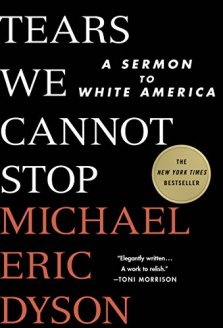
Book Review: Tears We Cannot Stop

tearsTears We Cannot Stop: A Sermon to White America
by Michael Eric Dyson
Nonfiction
228 pages
Published 2017

I’m always trying to continue to educate myself on my white privilege, America’s racist history, and civil rights and activism in general. Tears We Cannot Stop fits neatly into that category, but it’s not an easy-to-read book. I mean, it is – in the sense that it’s well-written and flows very well. But it’s not easy to read because of what it says. Dyson is a black pastor, and he wrote this book as if he was preaching to the white people of America, trying to make them understand the plight of the minorities we oppress. Black people specifically.

It’s a short book, but a very powerful one. It’s separated into sections like a sermon would be, with a Call to Worship, Hymns of Praise, Scripture Reading, the Sermon, a Benediction, and more. He’s correlated these sections of a sermon with that of the book – The Offering Plate, for example, is a short little section talking about how one university – Georgetown – apologized for their past use of slavery, and established an institute to study slavery and its effects. Tried to make reparations, in a way. In the scripture reading he quotes a lot of Martin Luther King. In the Benediction he actually talks about a lot of other books to read about the subject of slavery, all of which I’ve added to my already extensive Goodreads shelf on the subject of civil rights and activism. (I’ll be attempting to read as many of those books as I can.)

Tears is a really good opening book to read on the topic, especially for white people. It’s eye-opening, and both invites and provides guidance for further investigation into just how big of a mess we’ve made of things in this country. I highly recommend it.

And, if you happen to be local to Baltimore, the author will be speaking at the Baltimore Book Festival this Friday, September 22nd! Unfortunately, I can’t make it on Friday, so I’m going on Sunday. Sunday I’m planning to catch Daniel Jose Older, the author of the Bone Street Rumba series and Shadowshaper, and Kevin Shird, the author of Uprising in the City, about the Baltimore Riots in 2015 after the death of Freddie Gray. I’m really excited about it, even if it is going to be the hottest day we’ve had in a couple of weeks. (Still only mid-80s, though, so it could be worse!)

From the cover of Tears We Cannot Stop:

As the country grapples with racial division at a level not seen since the 1960s, one man’s voice is heard above the rest. In his New York Times op-ed piece “Death in Black and White,” Michael Eric Dyson moved a nation. Now he continues to speak out in Tears We Cannot stop – a provocative and deeply personal call for change. Dyson argues that if we are to make real racial progress we must face difficult truths, including being honest about how black grievance has been ignored, dismissed, or discounted. In the tradition of James Baldwin’s The Fire Next Time – short, emotional, literary, powerful – this is the book that all Americans who care about the current and long-burning crisis in race relations will want to read.

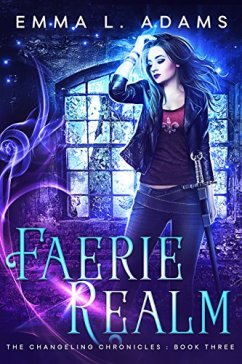
Series Review: The Changeling Chronicles

Faerie1Faerie Blood
Faerie Magic
Faerie Realm
Faerie Wrath
Faerie Curse
Faerie Hunt
Faerie War
Emma L. Adams
Urban Fantasy
Around 400 pages each
Published 2016-17

Oh my. This is a seven-book series, only available on Kindle, as far as I can tell, and they’re very good. (The whole series is free via Kindle Unlimited.) There were a few grammatical hiccups in the first book, and one or two spelling errors in the series, but overall, very well done writing. (Although calling them piskies instead of pixies was annoying after a while.)

So this series centers on Ivy Lane, a girl who was taken to faerie at age 13 when the faeries invaded our world and wrecked it. Seriously wrecked it. Supernaturals were faerie2revealed, whole swaths of cities destroyed, large numbers of people killed. I do mean wrecked. She spends 3 years in faerie, as the slave of an evil Sidhe, before escaping and making it back to Earth, where she finds that ten years have passed.
Like most urban fantasy series, each book sees Ivy fighting a world-ending threat. One slight difference here is that the world-ending threat in each one isn’t exactly different. As the series goes on, we discover the plot behind the initial invasion, how it was fought off, and how it ties into the current threat.

I wish Ivy’s best friend, Isabel, had been fleshed out more – even some of Ivy’s enemies and other side characters got more personality and character development that Ivy’s supposed best friend did, and that bugged me a bit. But the world-building and magic is pretty fascinating, and the romance is sweet. I was also pleased to see a couple of nods to non-traditional relationships, though I wish they’d not been in the same book, been a bit more explicit, and been more spread out in the series. (A faerie talking about her girlfriend, and a two lady mages who were….a bit more concerned about each other’s safety that most people expected.)

For all the tropes I’ve mentioned, though, I REALLY REALLY liked this series. She’s written a few other books in the same world – Earth wrecked by faerie invasion – a trilogy about a dragon shifter, and one book (so far) about a half-Sidhe girl. I’ll probably faerie 3read those next, after I get through some of the library books on my stack. (…I may have been hiding from the nonfiction by burying my face in urban fantasy – oops.) If you’re looking for a fun, light-hearted romp through Faerie to distract you from the real world, this is a great way to do it.

From the cover of Faerie Blood:

I’m Ivy Lane, and if I never see another faerie again, it’ll be too soon.

Twenty years after the faeries came and destroyed the world as we knew it, I use my specialist skills to keep rogue faeries in line and ensure humans and their magically gifted neighbours can coexist (relatively) peacefully.

Nobody knows those skills came from the darkest corner of Faerie itself.

When a human child disappears, replaced with a faerie changeling, I have to choose between taking the safe road or exposing my own history with the faeries to the seductively dangerous head of the Mage Lords. He’s the exact kind of distraction I don’t need, but it’s work with him or lose my chance to save the victims. It’ll take all my skills to catch the kidnappers and stop Faerie’s dark denizens overrunning the city — but if the faerie lords find out about the magic I stole last time I went into their realm, running won’t save me this time…

Book Review: Alice

aliceAlice
by Christina Henry
Fairy Tale Retelling
291 pages
Published 2015

I was a little wary going into this one – Alice in Wonderland is a difficult tale to reshape. You need enough crazy that it IS Alice, but not enough that it veers into “what is going on here anymore I can’t follow this.” This book did it wonderfully. It’s a dark re-telling – it begins in an asylum, that Alice and Hatcher (The stand-in for the Mad Hatter) break out of. Hatcher’s a murderer, and Alice is no wilting flower herself. Together they fight their way through a neglected, abandoned city run by gangs, to recover the one weapon that can vanquish the Jabberwocky.

It’s a dark book – rape is rampant throughout a city without law, though it’s never graphically described, at least. The weak are chattel to be used, sold, and killed by the strong. But Alice has been weak, and refuses to be weak again. She’s a bit of an avenging angel, descending on the oppressors and freeing anyone she can.

Both Alice and Hatcher have incomplete memories – their trauma both from the city and the asylum fracturing and hiding their pasts. They recover some of those memories throughout the story, and Henry has handled it perfectly, revealing to both them and us key parts of plotline when it’s needed, in a very natural way.

The romance plotline is unconventional, but also very believable, given what the two experience together. Though it’s also a love that I’m not sure can survive outside of their circumstances. After the book, when they (I assume) settle down in peace and quiet – I don’t know that their romance will persevere. They’re traumatized and broken and cling together to hide some of the sharp edges – or cling together in such a way that those sharp edges face out to protect them from the gangs in the city. When they no longer need to kill to survive, what happens?

I’m glad to find there’s a sequel, as they do still have an uncompleted task when the book ends. I’m also intrigued to read Henry’s other series, Black Wings.

Final verdict: I loved it. But it’s dark, so be prepared for that.

From the cover of Alice:

In a warren of crumbling buildings and desperate people called the Old City stands a hospital with cinder-block walls that echo the screams of the poor souls inside.

In the hospital, there is a woman. Her hair, once blond, hangs in tangles down her back. She doesn’t remember why she’s in such a terrible place – just a tea party long ago, and long ears and blood….

Then, one night, a fire at the hospital gives the woman a chance to escape. She tumbles out of the hole that imprisoned her, leaving her free to uncover the truth about what happened to her all those years ago.

Only something else has escaped with her. Something dark. Something powerful.

And to find the truth, she will have to track this beast to the very heart of the Old City, where the Rabbit waits for his Alice.