Book Review: Starless

StarlessStarless
by Jacqueline Carey
Fantasy
587 pages
Published June 2018

Jacqueline Carey has been a little hit or miss for me lately. I loved Kushiel’s Dart, read that years ago. Wasn’t fond of the second trilogy in that world. I read Miranda and Caliban a while back, and it was alright. This, though, blew me away. First, the idea that there are no stars in the sky. They have three moons and a sun, but no stars. Their mythology is that the Stars rebelled against their father, the Sun, and he threw them all to Earth, including one who hadn’t participated as it had been a babe in the womb during the rebellion! The stars now walk the earth as gods and goddesses, and we meet several in the book. (And hear about a few more.) The one god that hadn’t been part of the rebellion, but was punished anyway, has been nursing his hurt and resentment until, prophecy states, he will eventually wake and try to kill everyone. The problem is the prophecy was shattered into as many pieces as there are gods, and spread across the world. There are prophecy seekers that try to collect all the bits, but they’re not very successful.

In Khai’s country, the sacred twins are their gods. Pahrkun the Scouring Wind and Anamuht the Purging Fire. They can be seen on occasion striding across the desert. It is by Pahrkun’s will that Khai is bound to the youngest princess as her soul twin; very rarely the royal family gets one of these, and they are always meant to be bodyguards. So Khai is sent to the temple of Pahrkun’s warriors, deep in the desert, and trained in the many ways to kill. The warriors are all men, but Khai turns out to be non-binary, and this is what lets him guard the princess in a culture that includes harems and eunuchs. I love the relationship between Khai and Princess Zariya, and Zariya is no typical princess.

The book follows Khai and Zariya’s adventures in court intrigue, marriage proposals, sea battles, and prophecy-chasing. The action is perfect, the world breath-taking, and the people beautifully written. I’ve always enjoyed the fantasies where the gods show up commonly enough that people know how to identify them and how to treat them. From the Wind and Fire of Zharkoum’s arid country to the shape-changing Quellin and the terrifying Shambloth, the people that live near them build governments and societies around their gods, which makes each society stand out in their own way. World-building is definitely something that Carey is an expert at.

Starless is an amazing fantasy with a lovely queer romance at its heart. It’s full of varied cultures and enigmatic gods and goddesses and I just LOVE IT. Definitely one of my favorites this year.

From the cover of Starless:

“I was nine years old the first time I tried to kill a man . . .”

Destined from birth to serve as protector of the princess Zariya, Khai is trained in the arts of killing and stealth by a warrior sect in the deep desert; yet there is one profound truth that has been withheld from him.

In the court of the Sun-Blessed, Khai must learn to navigate deadly intrigue and his own conflicted identity . . . but in the far reaches of the western seas, the dark god Miasmus is rising, intent on nothing less than wholesale destruction.

If Khai is to keep his soul’s twin Zariya alive, their only hope lies with an unlikely crew of prophecy-seekers on a journey that will take them farther beneath the starless skies than anyone can imagine.

Series Review: The Bone Witch

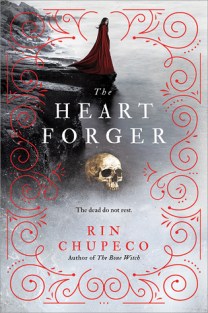
the bone witchThe Bone Witch/The Heart Forger
by Rin Chupeco
Young Adult Fantasy
411 pages/501 pages
Published 2017/2018

I’m reviewing the first two books of a trilogy here, The Bone Witch and The Heart Forger. The third book, The Shadowglass, is due out in March – but I wish it was out now!!

Both books are told in an alternating chapter format; short chapters, told from a nameless bard’s viewpoint as Tea tells him her story, and longer chapters told from Tea’s viewpoint, being the stories she’s telling the bard. All of the bard’s chapters take place over the course of a few weeks, while Tea’s story covers her entire life up to that point. So you get glimpses of what she’s currently doing, while getting backstory and explanation of why she’s doing it.

First thing I want to say is Tea is BADASS. The book opens on her raising a terrifying monster from the dead and making it into a pet. A PET. The bard she’s talking to is intimidated, to put it mildly. Then we launch into her story. Tea tells us how she went from farmgirl to Asha – think a geisha with magic and combat training, and you’ll get the picture. Tea’s world is fairly rigid on the gender roles – women with magic become asha, men with magic become Deathseekers. A significant side-plot revolves around a young boy with magic who wants to be an asha instead of a Deathseeker, and Tea’s efforts to help him. Tea turns out to be a rare kind of asha – a dark asha, or bone witch – whose powers are mostly concerned with raising the dead.

heart forgerA major point of this world is heartsglass – in several of the kingdoms (but not all of them) everyone wears a locket around their neck with their heartsglass inside. Heartsglass is basically a small ball of light summoned forth from a person’s soul when they come of age. It can’t be given away unwillingly, and the different colors of someone’s heartsglass means different things – whether they’re a magic user, or a bone witch, or an asha, or a heart forger. Or rather, whether they have the potential to become those things. Some people – the ashas, death seekers, any of the magic users, really – can see peoples’ emotions in their heartsglass, and can tell when people are lying, or guilty, or a number of useful things. People in love often trade their heartsglass with each other, literally holding each other’s hearts. This can be dangerous; the bone witch who trains Tea in the first book gave her heartsglass away, but her lover died without returning hers. And she doesn’t know where he hid it. Without a heartsglass, her powers – and life force – are dwindling.
I love Tea so much. She is incredibly powerful, but hurt and pissed off and out for vengeance. At the same time, she doesn’t want to be evil, so she is tempering her vengeance to a knifepoint so innocents aren’t caught in it needlessly. She’s doing horrifying things while you’re thinking “Oh. Yeah. That’s justified.” The writing in these books is excellent. The side characters are fleshed out with motivations of their own, the villains have interesting reasons for their villainy, strange events get revisited later and explained – it’s just amazingly well done.

Between raising the dead, flirting with princes, taking down army-destroying monsters, and taming dragons, the only bad thing I have to say is I HAVE TO WAIT UNTIL MARCH FOR THE THIRD BOOK?!

From the cover of The Bone Witch:

The beast raged; it punctured the air with its spite. BUT THE GIRL WAS FIERCER.

Tea is different from the other witches in her family. Her gift for necromancy makes her a bone witch, who are feared and ostracized in the kingdom. For theirs is a powerful, elemental magic that can reach beyond the boundaries of the living – and of the human.

Great power comes at a price, forcing Tea to leave her homeland to train under the guidance of an older, wiser bone witch. There, Tea puts all of her energy into becoming an asha, learning to control her elemental magic and those beasts who will submit by no other force. And Tea must be strong – stronger than she even believes possible. Because war is brewing in the eight kingdoms, war that will threaten the sovereignty of her homeland…and threaten the very survival of those she loves.

Lyrical and action packed, this new fantasy series by acclaimed author Rin Chupeco will leave you breathless.

From the cover of The Heart Forger:

Life isn’t fair. AND SOMETIMES, NEITHER IS DEATH.

No one knows death like Tea. A bone witch who can resurrect the dead, she has the power to take life…and return it. And she is done with her self-imposed exile. Her heart is set on vengeance, and she now possesses all she needs to command the mighty daeva. With the help of these terrifying beasts, she can finally enact revenge against the royals who wronged her – and took the life of her one true love.

But there are those who plot against her, those who would use Tea’s dark power for their own nefarious ends. Because you can’t kill someone who can never die…

War is brewing among the kingdoms, and when dark magic is at play, no one is safe.

Book Review: Too Fat, Too Slutty, Too Loud

too fat too slutty too loudToo Fat, Too Slutty, Too Loud: The Rise and Reign of the Unruly Woman
by Anne Helen Petersen
Feminism Nonfiction
266 pages
Published 2017

This is the first book Book Riot chose for Persist, their Feminist Book Club. I only just learned about the book club, so I’m reading the first two books before diving into the third. (Second book is Eloquent Rage by Brittney Cooper, and the third book is Headscarves and Hymens by Mona Eltahawy.) I really wish I could have read this book with their book club, as it definitely would benefit from being able to discuss each chapter with other readers.

The book is divided into chapters focusing on individual women and what they are guilty of being too much of. So Too Strong – Serena Williams, or Too Shrill – Hillary Clinton, or Too Slutty – Nicki Minaj. Then it dives deeply into why people think the woman embodies that negative, and often, what the woman herself thinks of it. We get cultural background on the adjective; in Too Pregnant, Petersen examines how celebrity pregnancies have changed how we treat pregnant women – how pregnancy has changed from something to be hidden to something to be valued and publicized and adored. But when someone isn’t pregnant in the right way – Kim Kardashian, for instance, suffered from swollen feet and preeclampsia and general misery and “poor” fashion choices – we judge them for it.

Too Loud delves into the world of publishing and book reviewing, profiling Jennifer Weiner’s fight against sexism in publishing. The chapter educates us on how the genre of “chick lit” started, and how women authors and readers are too often relegated to “chick lit” when if the same story had been written by a man, about a man instead of a woman, it would just be “literature” and eligible for review by things like the The New York Times Book Review.

Too Fat, Too Slutty, Too Loud was a highly educational look at pop culture and how women are judged much harsher than men are for showing the same traits. It is imminently readable – I only started to fall asleep once, and I think that’s more because I only slept four hours last night! I had a fiction book on the table beside me, ready to dive into when I needed a break from the nonfiction – it’s still there, untouched. This is a great book, but I’d definitely read it as part of a book club or a buddy read if you can. Get a friend to read it so you can discuss it!

From the cover of Too Fat, Too Slutty, Too Loud:

You know the type: the woman who won’t shut up, who’s too brazen, too opinionated – too much. It’s not that she’s an outcast (she might even be your friend, or your wife, or your mother) so much as she’s a social variable. Sometimes, she’s the life of the party; others, she’s the center of gossip. She’s the unruly woman, and she’s one of the most provocative, powerful forms of womanhood today.

There have been unruly women for as long as there have been boundaries of what constitutes acceptable “feminine” behavior, but there’s evidence that she’s on the rise – more visible and less easily dismissed – than ever before. In Too Fat, Too Slutty, Too Loud, Anne Helen Petersen uses the lens of “unruliness” to explore the ascension of eleven contemporary pop culture powerhouses: Serena Williams, Melissa McCarthy, Abbi Jacobson, Ilana Glazer, Nicki Minaj, Madonna, Kim Kardashian, Hillary Clinton, Caitlyn Jenner, Jennifer Weiner, and Lena Dunham. Petersen explores why the public loves to love (and hate) these controversial figures, each of whom has been conceived as “too” something: too queer, too strong, too honest, too old, too pregnant, too shrill, too much. With its brisk, incisive analysis, Too Fat, Too Slutty, Too Loud will be a conversation-starting book on what makes and breaks celebrity today.

Book Review: The Wrong Stars

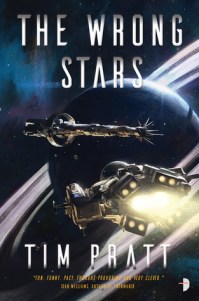
the wrong starsThe Wrong Stars
by Tim Pratt
Science Fiction/Space Opera
396 pages
Published 2017

I’ve watched my fair share of Space Opera (Firefly, Dark Matter, Farscape, Star Trek, Star Wars – don’t try to tell me those last two aren’t Space Opera, THEY TOTALLY ARE) – but I haven’t read much of it. I picked up The Wrong Stars mostly because reviews said it had a demisexual main character, rather than because it’s a Space Opera. Regardless, I am SO GLAD I DID. The book is excellent.

First off, the diversity! Over the course of the story, we meet people who are, in no particular order, gay, bisexual, demisexual, asexual, transgender, and non-binary. The story is set 500 years after Earth sends out its first colony ships, and in that time, culture has evolved. Marriage is not common, but contractually-bound relationships exist. Promiscuity and non-monogamy aren’t viewed any different than monogamy, and in the same way, the distinctions between gay, straight, and bi don’t carry any negative connotations. It’s not a complete utopia – it’s still a capitalist society, and there is still scarcity – but socially, at least, it has definitely evolved a lot from the present!

Elena, one of our main characters, was a biologist sent out on one of the first colony ships. Stocked with seeds, crude replicators, and cryo-sleep pods, a small crew was sent out, in stasis, on a five-hundred year journey to a system with probable life-supporting planets. They were called Goldilocks ships, in the hope they’d find a planet that was “just right.” What humanity didn’t expect was that in the intervening five hundred years, they would make contact with an alien species and be given the means for true space travel via wormholes. Some of the ships arrived at their destinations to find human colonies already thriving on their target planets! Elena, however, found something quite different, and it’s a very disconcerting difference. She is rescued by the motley crew of the White Raven, and they quickly get drawn into the mystery.

I really enjoyed the world-building and characterization in The Wrong Stars. The science of it made sense to me, but I’m not very versed in science, so I can’t really say how realistic it is. It was at least pretty internally consistent. I’d like to learn more about how the AIs are created, though. Luckily, there is a sequel coming! The Dreaming Stars should be coming out this September, and I’m DEFINITELY going to read it.

If you like Dark Matter, Firefly, or Farscape, you should definitely read The Wrong Stars. There’s a little bit of light romance threaded into the larger plot, and one fade-to-black sex scene. It’s definitely not the focus of the book. There is some violence, but nothing incredibly graphic. I would put it at about the same maturity level as Star Trek.

From the cover of The Wrong Stars:

The shady crew of the White Raven run freight and salvage at the fringes of our solar system. They discover the wreck of a centuries-old exploration vessel floating light years away from its intended destination. When they revive its sole occupant, she wakes from cryosleep with excited news of First Alien Contact.

The crew break it to her that, in the many years that she has been in stasis, humanity has already met and made an alliance with an alien race. But she reveals that these are very different extra-terrestrials . . . and the gifts they bestowed upon her could kill all of humanity, or take the human race out to the most distant stars.

Book Review: Period

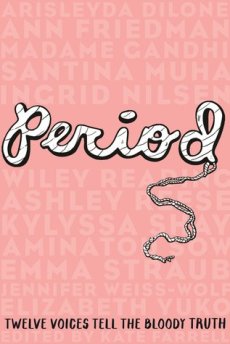
period twelve voices tell the bloody truthPeriod: Twelve Voices Tell The Bloody Truth
Edited by Kate Farrell
Nonfiction
208 pages
Published May 2018

Period consists of twelve essays about periods. The authors are wonderfully diverse, covering intersex, disabled, POC, and trans individuals. There are stories about fibroids, about wishing to have periods, wishing not to have periods, pads vs tampons, having periods at work, dealing with a period while being homeless, running a marathon while menstruating – just an amazing variety of experiences with periods. Some of the essays talk about how menstruation is treated in pop culture, from the famous “blue liquid” of pad commercials to the sitcom trope of “angry woman is irrational because she’s on her period.”

I think this is a book that every parent of a young daughter should read. I say that because it’s a little advanced, so perhaps not a book to hand to every pre-pubescent girl, but there’s a lot in it about what we teach our girls about their periods. Any person who has ever wondered if their period is normal should also read this book. There is SO. MUCH. VARIETY. when it comes to menstruation. But while there is plenty of variety that is normal, there is some that isn’t. The essay about the fibroids is an example of this. That level of bleeding is NOT normal, and it’s dangerous to tell people that it is. But because we don’t TALK about periods, people unfortunately assume things are normal that aren’t.

The book also makes me want to put together some hygiene kits for the homeless women I see in Baltimore. I’d never really thought about how difficult it is to deal with your period while homeless. Some pads/tampons, some hand sanitizer, and some cleaning wipes in a ziploc would go a long way towards making their lives a lot easier. The essay about having periods while homeless includes some ideas for kits to give out.

Overall, this is a very educating (and entertaining!) read. For those with periods AND those without. Menstruation should stop being a shameful topic. It’s a health issue.

From the cover of Period: Twelve Voices Tell The Bloody Truth:

Periods enter the spotlight, raising a diverse group of voices on a topic long shrouded in shame and secrecy.

In this collection, writers of various ages and across racial, cultural, and gender identities share stories about the period. Each of our twelve authors brings an individual perspective and sensibility. They write about homeless periods, nonexistent periods, male periods, political periods, and more. Told with warmth, humor, and purpose, these essays celebrate all kinds of period experiences. 

Periods are a fact of life. It’s time to talk about them. 

Book Review: Always Never Yours

always never yoursAlways Never Yours
by Emily Wibberley and Austin Siegemund-Broka
Young Adult Romance
336 pages
Published May 2018

This is the fifth book from my summer TBR – I’m slowly working through them! I mused on the TBR list that this might remind me of high school, and so it did. Megan is much bolder than I ever was, and dated a lot more, but her underlying feelings of being passed over for other girls – oh, I felt those. I wasn’t very socially adept in high school, unlike Megan.

The premise of the story is that every guy Megan dates falls madly in love with the girl he dates after Megan. This has happened enough that she’s come to expect it, so when her last boyfriend broke up with her to date her best friend, she wasn’t even very upset with them. She understood. That’s what her boyfriends DO. Which means she approaches relationships as temporary, and doesn’t bother to fight for them when they end.

The book is really about learning what’s worth fighting for. A family that seems to be moving on without her? A role in a play that her understudy fills better than she does? A boy who will go on to find his true love after her? A best friend who stole her boyfriend? Megan struggles with feeling imminently replaceable and misunderstood, and her vulnerability grabbed my heartstrings and yanked. I wasn’t expecting to, but I LOVED this book.

Megan’s worries are so very real, and her friends are such quintessential high schoolers. Every look, every word, every relationship has so much more intense meaning at that age because EVERYTHING is so important and felt so deeply. I loved how supportive Megan is of her friends, even if she doesn’t always realize that she comes across a little strong. I liked the side plot of Megan’s gay friend Anthony, and the closeted boy he has a crush on.

As a Shakespeare lover, I enjoyed that each chapter started with a line from Romeo and Juliet, the play that Megan’s school Drama department is performing her senior year. I also enjoyed seeing the comparisons between Megan and Rosaline, and characters in the book saying how interesting Rosaline is as a character, even though we don’t actually see her in the play! It reminded me of Bright Smoke, Cold Fire, which is a VERY different book, but another one that delves further into the character of Rosaline. And now I’m wondering if there are any other books that do the same….

I loved this book. It made me cry but then laugh through my sniffles. Books that can do that are special things.

From the cover of Always Never Yours:

Shouldn’t a girl get to star in her own love story?

Seventeen-year-old Megan Harper is about due for her next sweeping romance. It’s inevitable – each of her relationships starts with the perfect guy and ends with him falling in love . . . with someone else. But instead of feeling sorry for herself, Megan focuses on pursuing her next fling, directing theater, and fulfilling her dream college’s acting requirement in the smallest role possible.

So when she’s cast as Juliet (yes, that Juliet) in her high school’s production, it’s a complete nightmare. Megan’s not an actress, and she’s used to being upstaged – both in and out of the theater. In fact, with her mom off in Texas and her dad remarried and on to baby #2 with his new wife, Megan worries that, just like her exes, her family is moving on without her.

Then she meets Owen Okita, an aspiring playwright inspired by Rosaline from Shakespeare’s R+J. A character who, like Megan, knows a thing or two about short-lived relationships. Megan agrees to help Owen with his play in exchange for help catching the eye of a sexy stagehand/potential new boyfriend. Yet Megan finds herself growing closer to Owen, and wonders if he could be the Romeo she never expected.

In their fresh and funny debut, Emily Wibberley and Austine Siegemund-Broka break down the high school drama to find there’s always room for familial love, romantic love, and – most importantly – self-love.