Library Loot Wednesday


I picked up three books this week; two to review for Pride in June, and one is Elizabeth Acavedo’s newest, With The Fire On High. I recently reviewed her fantastic The Poet X, so I’m really looking forward to this one. (And that cover is spectacular!) The two I requested for Pride month are House of Nutter: The Rebel Tailor of Savile Row and Unbound: Transgender Men and the Remaking of Identity, both nonfiction. I’ve already started Unbound, and it’s looking to be quite good. The author is lesbian, so not only is it LGBT-themed, but LGBT-written as well, even though it isn’t #ownvoices. She’s a sociologist, though, so she brings that academic background to the table, too.

Edit: Unbound is NOT recommended, I will be publishing a review in July detailing my issues with it.

TTT – Favorite Releases in the Past Ten Years

Top Ten Tuesday is a weekly meme hosted by That Artsy Reader Girl. This week’s topic is my favorite releases in the past ten years; one for each year. (One? Well….I tried!)

2019

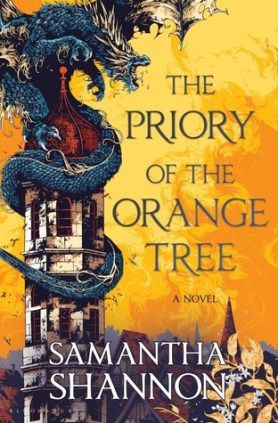
priory of the orange treeHands down, my favorite release of 2019 so far is The Priory of The Orange Tree. It is an amazing epic feminist fantasy, revolving around several female characters. It has court intrigue, battle, assassins, dragons, pirates, undead – everything. It is absolutely one of my favorite books ever.

2018

These next three years were impossible to pick just one for. SO MANY GOOD BOOKS came out! The Book of Essie is probably my top pick for 2018, but also Circe and Starless and The Astonishing Color of After, The Poet X, A Spark of White Fire, Vox, How Long ‘Til Black Future Month? Give the Dark My Love, Damsel, The Book of M, Invisible, Smoke Eaters…. I could go on.

2017

2017 also had an amazing list of books. City of Brass, When Dimple Met Rishi, Dear Fahrenheit 451, The Bone Witch, All’s Faire in Middle School, Into the Drowning Deep, Girls Made of Snow and Glass, and American War lead the pack.

2016

I couldn’t pick just one for 2016, either! The Power, Crooked Kingdom, The Crown’s Game, The Star-Touched Queen, The Courier, The Diabolic, and Rebel of the Sands were all amazing.

2015

six of crowsSix of Crows by Leigh Bardugo – one of today’s masters of fantasy politics. LOVED this book and its sequel, Crooked Kingdom.

2014

great zoo of chinaThe Great Zoo of China by Matthew Reilly – think Jurassic Park, but in China, and with dragons. Action horror, not my usual fare, but pretty awesome.

2013

golemThe Golem and The Jinni by Helene Wecker – an enthralling, atmospheric read that I reviewed back when the blog was young.

2012

Krampus the Yule Lord by Brom, a dark Christmas story, but also My Ideal Bookshelf, because I love books about books.

2011

Reading Women: How the Great Books of Feminism Changed My Life, but also Backyard Harvest, a fantastic reference book for the home gardener.

2010

the thing beneath the bedThe Thing Beneath the Bed – Patrick Rothfuss – an amazing “children’s” book, introduced to me by a player in our old D&D game. Amazing and hysterical. But not exactly child-appropriate. Read it yourself first!

2009

elementsElements: A Visual Exploration of Every Known Atom in the Universe by Theodore Gray – a gorgeous reference book.

I also just realized that’s eleven years, but The Elements is a gorgeous book more people should be reminded of, so I’m leaving it up!

Book Review: Rising: Dispatches from the New American Shore

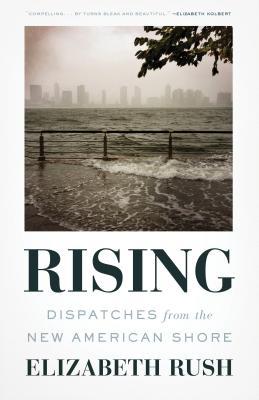
risingRising: Dispatches from the New American Shore
by Elizabeth Rush
Nonfiction/Climate Change
300 pages
Published 2018

Content Warning: Sexual Assault

This is actually the second book on climate change I read. The first one, The Water Will Come, by Jeff Goodell, was quite good until halfway through the book when it abruptly was not. Because halfway through the book, we get this tiny little scene from the signing of the Paris Climate Accords:

Standing among them, I watched French president Francois Hollande stand at the podium in the front of the hall and slam the gavel down, marking formal acceptance of the 2015 Paris climate accord. Everyone cheered. Some cried. To my surprise, I hugged the person next to me, a young Asian woman I had never met or talked to. I felt her pull away, perhaps shocked that a stranger would grab her so suddenly, but then she hugged me back. I never learned her name or even what country she represented, but our shared expression of the power of the moment was genuine. (p. 165)

I stared at this paragraph in shock. He really just – just sexually assaulted a woman he’d never met, and just moved on to other things. He didn’t realize what he’d done, to the point that he put it in his book with absolutely no idea what effect that paragraph would have on any survivors reading his book. I skimmed through the rest of the chapter, and he never mentions this scene or woman again. He felt her pull away, he says, but assumes her hug back means she’s excited too, not that she’s decided hugging back is the best way to avoid further violence.

I set aside the book. I couldn’t read any further. Up until that point it had been quite good – lots of facts and investigation, interviews and adventures with climate scientists and geologists and other neat stuff. But I could not continue, and instead picked up Rising.

Halfway through the first book on climate change, I find a depiction of sexual assault perpetrated by the male author. Halfway through the second book on climate change, I find an entire chapter devoted to the sexual assault of the female author.

“Hold on,” he says, turning my body away from him. Then he reads aloud the E. E. Cummings quote I have tattooed on my back, the final line of which reads, “will never wholly kiss you.”

Suddenly I feel his damp lips pressing into my skin, into the letters inked there. My stomach slams into the roof of my mouth, locking my words in instead of out. And my body takes over. It wants to punch him but knows it shouldn’t. Instead it walks straight out into the ocean, into a flotilla of spawning jellyfish at the northernmost edge of the Gulf. It starts to swim.

What are the chances? Yes, it’s only an unwanted kiss. It could have been worse. (How often have we heard, or said, THAT statement?) The first part of this chapter, titled “Risk” had been devoted to the calculated risk taken by people living in flood plains, and her initial fear upon going to interview a man by herself who might have been a threat. It’s revealed, after this scene, that she wasn’t actually alone; the man in this scene, her colleague, was with her, as a kind of safety net. It turned out she’d misjudged who was a risk and who was not. The rest of the chapter weaves these ideas together, and extends to one of the author’s students, who was also sexually harassed in the field.

I was struck by the difference in the two books; the male author casually mentioning forcefully hugging a woman he didn’t know, and not appearing to realize he’d even done anything wrong, and spending a single paragraph on it, vs. the female author freezing up when the victim of a similar action, and spending an entire chapter on the topic. She turns down an advancement in her career because of this interlude; it was offered by the colleague who kissed her. She’d intended to take it until then. She eventually tells him why, and his reaction is telling.

Eventually I tell Samuel that I cannot continue our professional relationship and I tell him why. First he says, “Oh my god.” Then he says, “I had no idea.” Followed by, “I don’t remember.” And then, “I had no further intentions.” He says, “I love my family.” And, “Let me know when you get over it.” The words spill out of him fast like floodwater.

He can’t stop talking, so I invent a student knocking on my door and hang up. I don’t present at the National Academy of Sciences. I don’t take the senior fellowship. I don’t coauthor an article with him. When I put down my cell phone, I realize I have been shaking.

In the era of #metoo, how can men not understand the effect these things have?

*deep breath*

All of that unexpectedness aside, Rising is an insightful, evocative book. Elizabeth Rush spends time not only with climate scientists and biologists, but with the people that actually LIVE in the places most affected by sea level rise. It’s an intimate look at the real, human cost of sea level rise and climate change. Spaced throughout the book are letters from people she interviewed, writing to her weeks to months after she met them, telling her of changes in the areas she visited. When she first visited the Isle de Jean Charles, for example, the Native Americans there weren’t interested in leaving the island. Then she includes a letter from one of them, saying they were leaving together, selling their land to the state and being provided a new community, together, farther inland. She then goes back to visit.

While Goodell is taking helicopter rides over glaciers, Rush is slogging through rotting tidal marshes with teams of scientists and grad students, and that is really indicative of the difference between the two books. Rush is on the ground, getting her hands dirty, while Goodell interviews and gathers information about the big picture. And that would make the two books an excellent pair, were it not for the casual sexual assault in the middle of his book. That isn’t to say that Rush doesn’t talk about the big picture; she does, it’s just not her focus.

If you’re interested in climate change, you’ll probably enjoy Rising. The Water Will Come was also very enjoyable, at least the half that I read, but I don’t believe in giving a man like that more of my time. So you can make your own decision there.

From the cover of Rising: Dispatches from the New American Shore:

Harvey. Maria. Irma. Sandy. Katrina. We live in a time of unprecedented hurricanes and catastrophic weather events, a time when it is increasingly clear that climate change is neither imagined nor distant – and that rising seas are transforming the coastline of the United States in irrevocable ways.

In this highly original work of lyrical reportage, Elizabeth Rush guides readers through some of the places where this change has been most dramatic, from the Gulf Coast to Miami, and from New York City to the Bay Area. For many of the plants, animals, and humans in these places, the options are stark: retreat or perish in place. Weaving firsthand accounts from those facing this choice – a Staten Islander who lost her father during Sandy, the remaining holdouts of a Native American community on a drowning Isle de Jean Charles, a neighborhood in Pensacola settled by escaped slaves hundreds of years ago – with profiles of wildlife biologists, activists, and other members of the communities both currently at risk and already displaced, Rising privileges the voices of those usually kept at the margins. 

At once polyphonic and precise, Rising is a shimmering meditation on vulnerability and on vulnerable communities, both human and more than human, and on how to let go of the places we love.

Sunday Stuff

I hope everyone is having a relaxing Memorial Day weekend! We have plans for every single weekend in June, plus the first half of July, so aside from doing a good deep clean on the house yesterday, we are trying to do ABSOLUTELY NOTHING on this long weekend.
I think I’m starting to get back on track with my reading, after the short slump I’ve had the past couple of weeks. (Politics lately may have played a part in this; it’s hard to read when I’m SO. ANGRY.) I’ve got some exciting stuff out from the library right now, so that’s helping. I also think I might start a new feature here – Bookish Stuff. I’m subscribed to three different book services; Illumicrate, which is a young adult box with one book and various accessories each month, Book of the Month, which is 1-3 books each month, no accessories, and Life’s Library, which is John Green’s book club. It’s a paperback book, unlike the new releases in the other two, along with a few small items, and it ships every six weeks. I’ve got several of each of these already, so I have a backlog to get through if I want to feature them here weekly. Saturdays, maybe?
Book Review: The Shadowglass

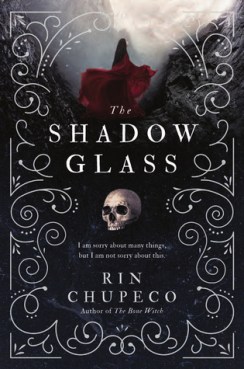
shadow glassThe Shadowglass
by Rin Chupeco
Fantasy
456 pages
Published 2019

I wish I had the first two books in front of me to refer back to while reading this one. Specifically, the last few chapters of book two. Like the first two books, this one alternates chapters between the bard’s point of view, and the story told to the bard by Tea. The difference is that they have separated paths at this point; so instead of the bard’s chapters being very short, getting clarification on the story she’s telling, he’s now telling what’s happening to him in present day, interspersed with Tea’s letters that he’s carrying, with the rest of her story. This gets VERY confusing. It’s confusing even trying to explain the timeline! Okay, if we split up all three books between Tea’s story and the Bard’s viewpoint, chronologically they’d look like this:

The Bone Witch – Tea’s Story
The Heartforger – Tea’s Story
The Shadowglass – Tea’s Story
The Bone Witch – Bard’s Viewpoint
The Heartforger – Bard’s Viewpoint
The Shadowglass – Bard’s Viewpoint

See why I’d like to have the other two books to refer back to? This book is giving me part 3 and part 6. And while it was pretty easy to keep them straight in books one and two, because the Bard wasn’t doing much besides having a conversation with Tea, in this book, he’s off seeing OTHER important events that are happening while Tea is doing other things – and occasionally flitting in and out of his orbit too!

It is a good conclusion – the end, especially, had me crying into my book – but most of the book was very, VERY confusing. Like another conclusion I’ve read recently, if you moved straight through the trilogy with no waiting time, it might not be too bad.

What ESPECIALLY annoys me, is in the Bard’s viewpoint in the first two books, she does something that is supposed to be impossible. So in her story in The Shadowglass, this thing is impossible. But in the Bard’s viewpoint, she’s ALREADY DONE IT. And there’s no explanation of HOW. That’s really what I’d like to refer back to the other two books about. Having that particular task be in the time gap between the two parts of the book was poorly done. Like, really? I read Book 2 almost a YEAR AGO. I don’t remember how that part happened.

So that’s particularly frustrating. I wish Book 3 had condensed to one timeline. I don’t really see why it couldn’t have. It would have been much less confusing!

From the cover of The Shadowglass:

I had no plans of living forever.

In the Eight Kingdoms, none have greater strength or influence than the asha, who hold elemental magic. But only a bone witch has the power to raise the dead. Tea has used this dark magic to breathe life into those she has loved and lost . . . and those who would join her army against the deceitful royals. But Tea’s quest to conjure a shadowglass, to achieve immortality for the one person she loves most in the world, threatens to consume her.

In this dramatic conclusion to Tea’s journey, her heartsglass only grows darker with each new betrayal. She is haunted by blackouts and strange visions, and when she wakes with blood on her hands, Tea must answer to a power greater than she’s ever known. Tea’s life – and the fate of the kingdoms – hangs in the balance.

Friday 56 – Rising: Dispatches from the New American Shore

risingThe Friday 56 is hosted by Freda’s Voice. The rules are simple – turn to page 56 in your current read (or 56% in your e-reader) and post a few non-spoilery sentences.

This week’s quote is from Rising: Dispatches from the New American Shore by Elizabeth Rush. I have an interesting dual review planned for this one, once I finish it. I read most of another climate change book (I stopped reading for reasons I will explain in the review) and I’ll be comparing the two.

All along the Eastern Seaboard, workers took shovels to swampy land, hoping to drain the sections prone to retaining water.

The Civilian Conservation Corps didn’t care that ditching would transform the hydrology of the entire ecosystem. The standing water in which mosquito larvae hatched was greatly reduced – and with it went hundreds of other species. Dragonflies and water beetles. Mummichogs and silversides. The seaside sparrow. The great egrets and white ibis. So, over a decade ago, the US Fish and Wildlife Service started plugging the ditches. They thought intervening in an already altered hydrological system might be able to return the marsh to a state of equilibrium. They thought they might be able to bring back the water beetles and wading birds. But, it turned out, layering one kind of human intervention on top of another only dragged the Sprague further from its starting point.